

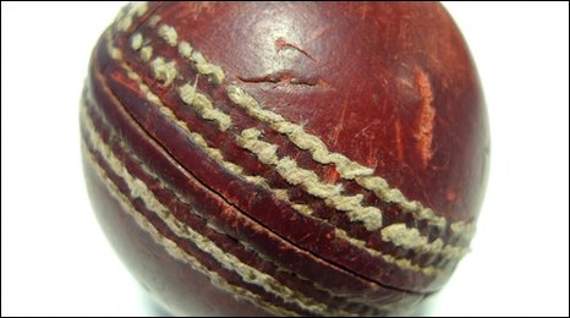
FOUNDED in 1834, Abergavenny Cricket Club is in its 182nd year of existence. Over the next few months the Chronicle will be running updates from the present alongside a look at some of the historic figures who became local heroes at the Cricket Club. This week we feature John Reginald Jacob.
During a continuous existence of over 182 years Abergavenny CC have produced many notable players, but few have carved their name so deeply in its history as John Reginald Jacob, who was the backbone of the club for over 35 years and more.
JR was the seventh son of Mr James Jacob of Glancibi and educated at King Henry VIII Grammar School and Llandovery College.
Learning his cricket in Llandovery he was established in the Abergavenny first team whilst still a schoolboy.
In 1890, Abergavenny appointed the youngster Reginald (JR) Jacob as acting captain. Apart from his absence from the town in 1896 and 1897 on professional duties, JR Jacob continued as captain well into the 20th century.
JR Jacob grew in stature in the office of captain as the years went by and developed that intangible talent for leadership which is based on enthusiasm, a deep knowledge of the game, and skill with bat and ball, much of which he instilled into the team.
In those early days cricket was played in Bailey Park on poor wickets. This did not prevent JR scoring his maiden century with a 108 in 1894 against Llanvair. A unique performance as every hit was run out (no boundaries).
It was in 1896 that the Club moved to Pen-y-Pound, and JR soon notched up another century with a 100 not out against Usk.
JR Jacob was par excellence, a playing member whose patronage was to some extent concealed. Starting an active role in club affairs at about 20 years of age in 1890, he continued as a player for another 40 years and as a driving force in times of crisis for longer. When he retired from the captaincy in 1920 it was a short lived decision for he was recalled in 1921 until the club was restored to an even keel.
He was a remarkable man. Running a legal practice and a practising solicitor for half a century, he found time to help train soldiers in the Territorial Army, rising to the rank of Major. He was keenly interested in Volunteer and Territorial movements. In 1905 he was gazetted a Subaltern in the 4th Vol. Batt. South Wales Borderers and continued to be an officer in the 3rd Mon. Regiment, retiring as Major after 12 years of commissioned rank.
In 1913 he was elected to the Town Council, serving for 16 years. For some years he was Chair of the Market Committee.
He was articled to his brother Hier Jacob who was practising in Abergavenny as far back as 1878. He was concerned in several business ventures in the town, becoming a town councillor and Mayor the office to which he was elected in 1923. A bachelor at the time, his sister Mrs Frank Mason acted as Mayoress. He remained a bachelor until 1925.
In 1929 he was strong minded enough to resign from the council in protest at the method of appointing aldermen. He was a Governor of King Henry V111 School and the girls County Intermediate School.
He was also Chairman of the Management Committee for Abergavenny Horse Show, President of The Abergavenny Amateur Dramatic Society, Honorary Solicitor for Abergavenny Cottage Hospital, Hon. Secrtary of Abergavenny County Club, as well as one of the elder brethren of St John’s Lodge
He assisted in the formation of the neighbouring bowling club at Avenue Road and became a member. In 1924 was one of the prime movers in establishing the Bailey Park bowling green and club.
He played rugby as a youngster but preferred cricket and it was as a cricketer that he strode like a colossus across the cricket fields of Monmouthshire.
He stood six feet tall and was an imposing figure with a degree of athleticism in his batting. It was recorded in June 28, 1904 that, “any ball Jacob touches he hits with a certainty broadside on and audibly registers the fact.”
A sound batsman, between 1895 and 1912 he frequently played for the Monmouthshire County Team.
He had over 50 years connection with Abergavenny CC. Successively Secretary and Captain and finally he was President of the club from the crisis period in 1931 through to the end of the war. Quite remarkably, although he was in his mid-seventies he played for the Old Crocks against an Abergavenny X1 in 1946.
He died in 1948 aged 77.
Comments
This article has no comments yet. Be the first to leave a comment.