

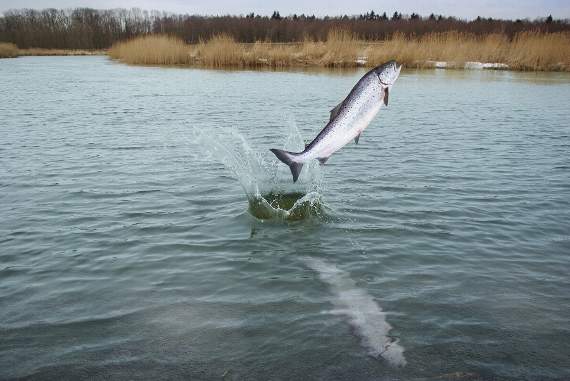
Some salmon stocks in Wales are facing an ‘unprecedented’ threat after a dramatic decrease in the numbers of salmon fry in several rivers including the Usk.
Routine monitoring by Natural Resources Wales (NRW) officers revealed fry numbers (young salmon hatched in the spring of 2016) at critically low levels on the Usk, Tywi and Clwyd in most of the sites fished - rivers which previously produced consistent fry numbers.
Of the 13 survey sites on the Usk, for example, eight had no salmon fry at all and the remaining five had very low numbers.
Peter Gough, NRW Principal Fisheries Advisor, said, “These initial survey results are unprecedented in Wales in 30 years of monitoring and are clearly very concerning, especially as our salmon and sea trout stocks already face serious challenges.



“The decline in fry numbers will not only harm the biodiversity of our rivers but could also have an economic impact on the angling and tourism sector.
”It is therefore imperative that we continue our investigations to discover the cause of the decline and put in place actions to ensure the maximum number of fish are able to spawn this winter and in future.”
While the cause of the decline remains a mystery possible reasons include extremes of river flow over the winter and high water temperatures in the affected rivers. The possibility of disease or parasites is also being considered but is thought most unlikely.
NRW’s fisheries team is stepping up its monitoring programme as part of its investigations into the cause of the decline, carrying out fish health checks and is consulting with the Centre for Environment, Fisheries and Aquaculture Science (Cefas) and the Environment Agency to establish whether there are similar problems in England.
“We are working closely with our partners and sponsoring Government departments to investigate the causes,” said Peter. “It is too early to be sure on the cause or causes, however we note that December 2015 was the warmest and wettest December since records began.”
Dr Stephen Marsh-Smith, Chief Executive of Afonydd Cymru, (the association of rivers trusts in Wales) said, “It’s important to understand that this finding by NRW will not immediately impact on returning salmon and sea trout numbers but will be evident in two to four years’ time.
“It is crucial that NRW, the Rivers Trusts and Welsh Government get together to press forward a recovery programme for this valuable resource as well as a full investigation into the cause and effects.
“In the meantime, it is vital that every salmon and sea trout is left to spawn this year and of course in the coming years. We are therefore appealing to anglers to build on their excellent response to earlier appeals, and ensure that they release all of their fish as well as strongly encouraging others to do the same.”
Comments
This article has no comments yet. Be the first to leave a comment.