

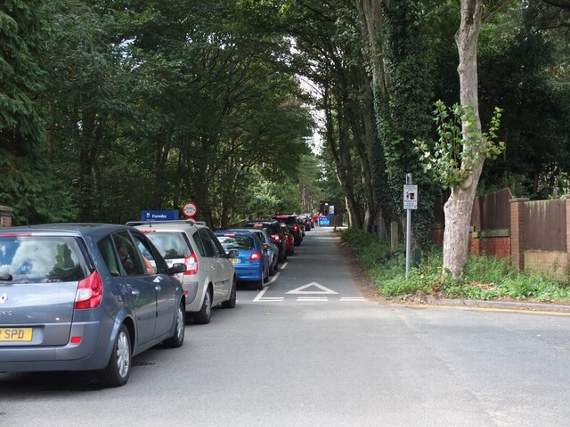
TORFAEN council’s cabinet is expected to progress plans to adopt new parking powers from Gwent Police at a meeting on Tuesday.
Cabinet members will discuss a report prepared ahead of the meeting which has outlined the positives and negatives of the scheme.
Local authorities across Gwent have been told that civil parking enforcement (CPE) will be in their hands from December 31, 2018.
The report, written by head of highways and transportation Stephen Jarrett, states: “There are a number of advantages to Torfaen County Borough Council (TCBC) taking on enforcement powers including the council being able to enforce as they feel appropriate and potentially more responsively to residents’ concerns, potentially improved compliance, improved traffic flow, knowledge that any parking schemes future enforcement would be within the gift of the council and the potential to make enforcement more locally adaptable to allow the council to make a greater impact in some of its functions.”




However, Mr Jarrett said several disadvantages had also been identified.
In the report, he added: “These include a projected operational financial deficit, public perception of any change in enforcement regime and of enforcement officers, and potential for aggression to be aimed at any council employed enforcement officers.
“All these issues would need careful consideration and appropriate active management.”
Under the scheme, Torfaen council would be enforcing “signs and lines” violations such as vehicles parked on double yellow lines, disabled parking bays and limited vehicle waiting times.
Members of the cabinet will also discuss several different financial models relating to the scheme.
Providing the service in-house is estimated to cost the council £190,000, while a completely outsourced operation would reduce the figure to £127,000.
All of the models have greater costs than income, with revenue deficits ranging from £45,000 to £11,000.
The report adds: “It can be seen that all models have costs greater than income so no model provides an income, but the business case has been modelled on a conservative basis, and amendments could be made to during any implementation process that could result in an operationally break even position for the council.”
The previously preferred option has a potential £163,000 set up cost, with ‘at best’ a £24,000 per year average deficit.
The council believes this figure can be reduced with “careful management.”
A report has recommended that cabinet members approve the progression of the plans.
Comments
This article has no comments yet. Be the first to leave a comment.