
.jpeg?trim=91,0,245,0&width=752&height=501&crop=752:501)
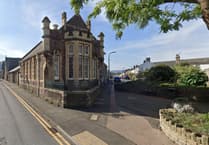
IT was a glorious August day when the entire battalion of the 3rd Mons gathered outside Abergavenny Market Hall on August 5, 1914. Dawn was breaking, and the air was full of promise.
Jovial and full of high spirits, the troops marched to Bailey Park for morning tea.
The battalion colours were handed over to the custody of the Town Mayor.

The soldiers then proudly marched out of the town to the railway station as crowds cheered and flags were waved.
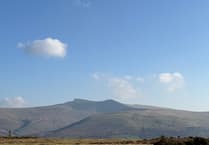
Sitting aboard a train bound for Pembroke Dock, many of the Monmouthshire men would have gazed out of the windows at the surrounding mountains.
As the Blorenge, the Sugar Loaf, the Skirrid, and the Deri faded from view, some may have even felt the first pangs of homesickness and uncertainty about the road ahead.
Most would have felt excited about what would have been seen through the optimistic eyes of a young man as the adventure of a lifetime.
That optimism was to be cruelly short-lived.
Of the 1020 soldiers of the 3rd Battalion of the Monmouthshire Regiment who had arrived in France in February 1915, only a scattered few remained alive to see the dawn break on the morning of May 10.
The Second Battle of Ypres had decimated the 3rd Mons and only 134 officers and men were left standing.
Their part in the engagement is remembered as one of the most gallant stands in military history, but it came at a heavy cost.
Their sacrifice was remembered on Friday with a short service at Abergavenny’s War Memorial.
.jpeg?trim=0,160,0,1080&width=752&height=501&crop=752:501)
The gathered assembled paid tribute to the brave men of the 3rd Battalion, The Monmouthshire Regiment, who were always in the thick of the fighting and played a crucial part in the outcome of the First World War.
.jpeg?trim=185,0,151,0&width=752&height=501&crop=752:501)
The Royal British Legion Abergavenny Branch’s Peter Farthing told the Chronicle, “When obeying the order to stand to the last man, the battalion was practically annihilated without giving an inch of ground to the enemy. Today, we pay our respects to those courageous men.”
.jpeg?trim=0,336,0,896&width=752&height=501&crop=752:501)
Not long after his part in the Second Battle of Ypres, Private Badham, of Abergavenny, wrote to a friend from hospital, “The 8th was the day I shall never forget. They started bombarding the same time in the morning, and about half an hour afterwards we could hear a long blast of a whistle, and the attack started. We were only a handful of men, and they came on in thousands, but we kept them at bay; but I knew we would have to give way before long. The fellows on our left and right were retiring and we had orders to do the same, but we did not go until we put some more shots into them.
.jpeg?trim=330,0,6,0&width=752&height=501&crop=752:501)
“It was in the retirement that we lost a lot of men. They were bayoneting our wounded that we had to leave behind. Well, we got back to our second line of trenches, and reinforcements came up. After that I don't know what happened. I went to the hospital with shrapnel in my back and a big bruise on my shoulders and the gas in my eyes."
.jpeg?trim=28,0,308,0&width=752&height=501&crop=752:501)
Comments
This article has no comments yet. Be the first to leave a comment.