
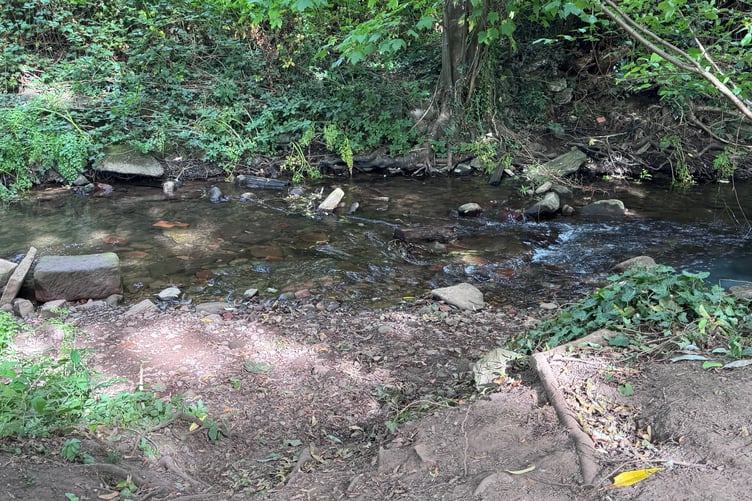
DRYING out is no fun. Just ask an old soak the morning after a three-day bender. Yet it’s a lot harder for rivers than our livers.
A case in point is the River Gavenny.
Our waterways haven’t been in the rudest of health for some years now, but the hat-trick of heatwaves and lack of recent rain has made a bad situation worse!
The River Gavenny’s mighty torrents have slowed to a trickle, and its wide expanse has receded faster than a waistline pounded and pumped by fat jabs.
Its shallow depths have become even shallower and even a sausage dog would struggle to swim in it.
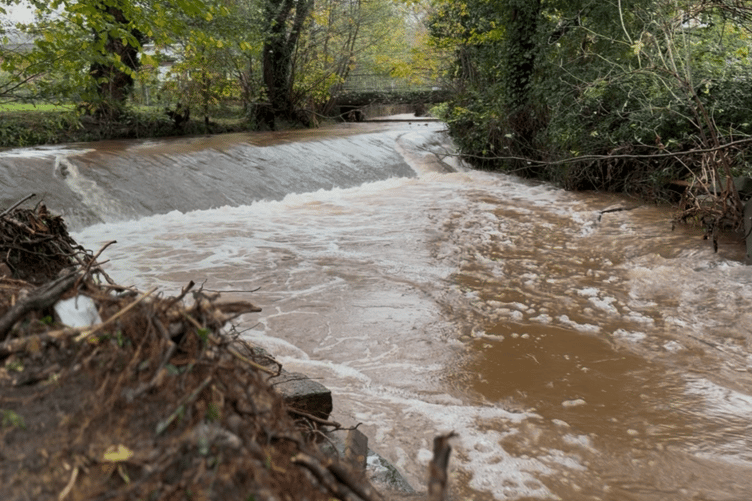
Can this be the same river that late last year bubbled over to swallow large parts of the town with its watery greed?
Sadly yes.
It now limps instead of runs and what little fish live in its currents are probably hitting the panic button!


What’s to be done?
Well, as a town we could collectively stage a rain dance in Swan Meadows.
Yet apart from the problem of cultural appropriation, that would just make us look ridiculous. And after suffering the indignity of being represented on a national and cultural stage by an AI-generated hellscape, that’s the last thing Abergavenny needs.
It’s probably best to sit in the sun, drink a Pina Colada and wait for the downfall. Because you can bet your carbon neutral footprint, it’ll come, and the Gavenny will flow and burst its banks again.
Yet therein lies the real problem, and it’s called hydroclimatic whiplash.
Sounds cool, doesn’t it? A bit like a cocktail made from vodka, energy drinks and crushed ice.
It’s not! It’s hot. Hot like global warming!
According to research conducted by the University of East Anglia (UEA), climate change is pushing our rivers into dangerous extremes, where one minute they’re close to drought, and the next minute they’re flooding everything in their vicinity. It’s a phenomenon, and it’s called hydroclimatic whiplash.
Dr Yi He, of the Tyndall Centre for Climate Change Research at UEA, said, “Our projections show sharper swings between heavy downpours and long dry spells, with river catchments shifting more suddenly from flooding to drought.
“These rapid shifts are making water management increasingly difficult, putting pressure on both flood defences and drought-response systems at the same time.
“As warming increases, traditional approaches to flood and drought planning may no longer be enough. Instead, region-specific adaptation strategies will be critical to protect water supplies, infrastructure, ecosystems, and communities.”
Dr He added: “Climate change is expected to increase both floods and droughts in many regions, so understanding how these changes will play out locally is crucial for managing water resources and preparing for future risks.”
The report suggests that their findings stress the need for regionally tailored adaptation.
Let’s hope that the powers that be are listing because so far, we’ve had floods, we’ve been close to droughts and not a lot of proactive measures appear to have been taken!
Comments
We've recently changed our login process. If you have an account for commenting, you will need to re-register on the login window.
This article has no comments yet. Be the first to leave a comment.