
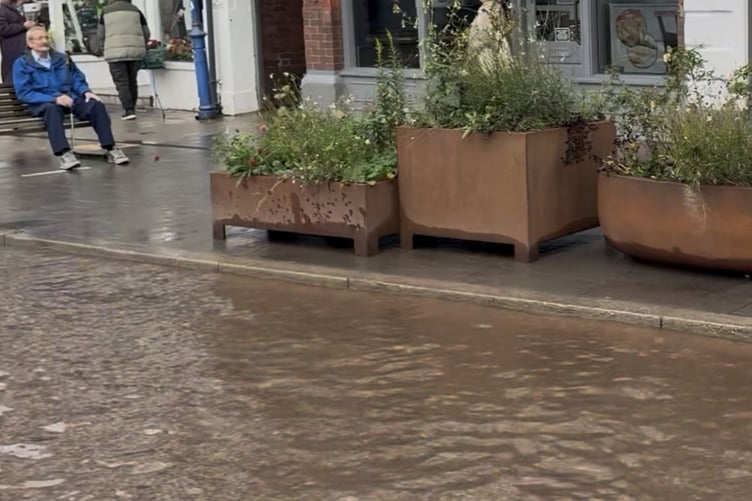
It started not unlike a typical rainy day in Wales.
A dispiriting downpour, unrelenting in its tenacity, but nothing too ferocious or frantic in its initial forays to indicate the tempest to come.
We’d been warned in advance that there would be a storm. There were yellow warnings, amber warnings, and a warning only to travel if absolutely necessary and stay indoors.
Yet it was nothing we hadn’t heard before.



In modern times, particularly in November, which has been renamed the ‘flood season,’ we’ve seen storms come and go.
Some fail to live up to the hype and blow out relatively quickly, and just occasionally, there’s a rare few that leave the sort of mark that’ll last decades.
Claudia did!
The first inkling that something wasn’t quite right began in the afternoon.
As the rains fell, and the River Gavenny, the Cibi, and Priory Brook began raging with a seldom-seen intensity, Abergavenny became something of a ghost town.
People abandoned the coffee shops, pubs, and shops and fled the streets. Businesses shut up early, and collectively we realised we were in it for the duration.
Yet no one had any idea of the nightmare to come.
By sundown, drains, blocked or otherwise, were struggling to cope with the abundance of surface water covering the roads and pavements.
And still the storm didn’t let up.
It was after dark when reports of Frogmore Street being underwater started to flood in.
There had been a terrible breach at Pen-y-Pound.
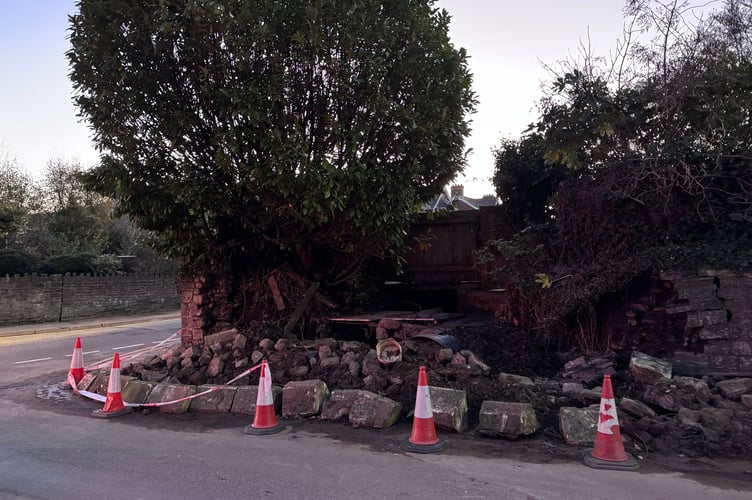
That long forgotten stream, the Cibi, which makes its winding and often hidden way through the streets of Abergavenny, had resurfaced in a violent fashion.
A wall had been destroyed, and the Cibi was announcing its liberation with an unstoppable surge of floodwater.
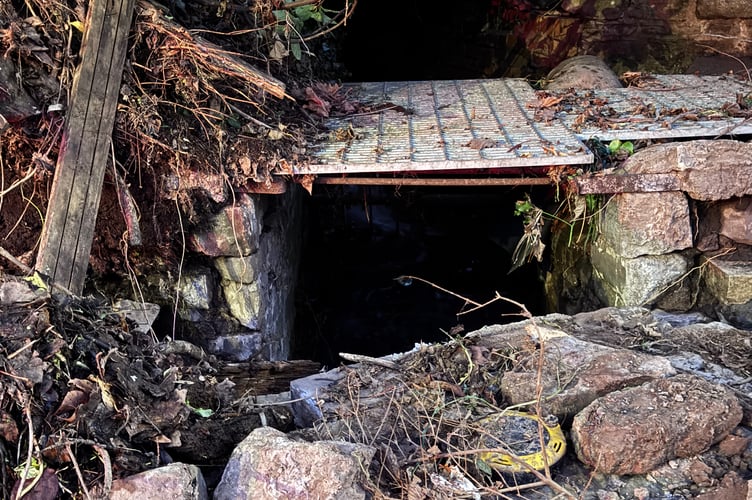
A small reservoir fed by the Cibi used to be located in Pen-y-Pound, and its underground pipes supplied large parts of the town with water.
What forgotten pathways had now been opened?
In a terrible reminder of the Great Mill Street Flood of 1931, the Gavenny had also burst its banks.
The water surged into Lower Monk Street, Monmouth Road, and Swan Meadows was lost, albeit temporarily.
Yet unlike that apocalyptic night nearly 100 years ago, the waters never ventured further afield.
It was a different story in Monmouth, where the Monnow caused the sort of scenes not witnessed since the winter of 1947.
In that year, blizzards, follow by heavy rain conspired to make Monnow Street only approachable by boat.
Yet throughout the storm, that majestic and meandering body of water that is the Usk remained relatively quiet. As the storm raged and lesser rivers unleashed their fury, the Usk kept its own counsel and travelled indifferently, as always, to the sea.
The question remains.
Why was this little corner of Wales hit so hard by Storm Claudia?
The flooding caused by Storm Claudia was largely the result of the Gavenny, the Cibi, and the town’s drainage system being unable to hold the huge amount of water falling from the skies and running off the mountains.
However, the Usk remained relatively stable, and Castle Meadows escaped the deluge relatively unscathed.
What, if anything, are we to deduce from this?
We’ll let the experts decide. Let's hope they get it right.
Comments
We've recently changed our login process. If you have an account for commenting, you will need to re-register on the login window.
This article has no comments yet. Be the first to leave a comment.