

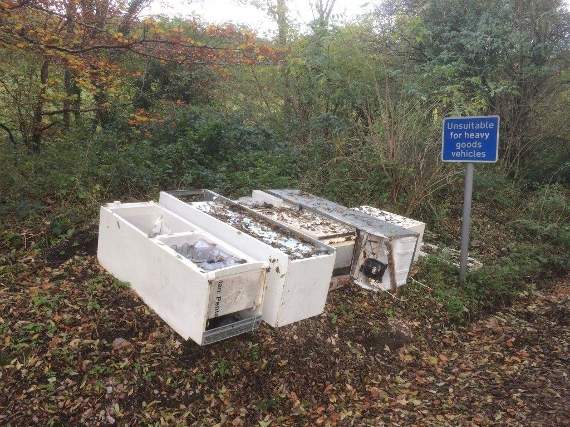
Tougher action is needed to crackdown on countryside fly tippers, according to rural affairs specialists at Bruton Knowles.
High charges at local authority waste transfer sites have been blamed for the latest spate of incidents across Wales.
Rebecca Parry from the rural team at Bruton Knowles’ Wales office said new fixed penalties and even CCTV cameras had been brought in to tackle the problem.
Rebecca said: “Local authorities in Wales are now able to issue fines for small scale fly-tipping of up to £400 as an alternative to prosecution, following the introduction of new Government regulations on the unauthorised dumping.




“Private landowners may not realise it, but it is their responsibility to remove fly-tipped waste and dispose of it legally, and at their expense. They can be fined £5,000 and a further £500 per day if they don’t which is why it now makes economic and environmental sense to implement measures such as CCTV systems to prevent fly-tipping in the first place.
“Whether the private individuals and tradesmen carrying out these infuriating attacks will take any notice is another matter.
“With disposal costs rising people seem to be thinking it would be worth taking the risk of fly tipping in a back lane or over farm land and hedges rather than pay the going rate at the local tip.”
Bruton Knowles is advising landowners that they are liable for any waste that is fly-tipped on their land and are at risk of prosecution if they do not clear it away - often at considerable cost to themselves.
Rebecca added: “DEFRA say up to 900,000 fly-tipping incidents were dealt with by local authorities during 2014/15 but if anything, the problem is getting worse.
“It costs a good deal of money to clear up and if there are any contaminated materials involved then the cost implication as well as health issues are very high.
“Each year 42,000 tonnes of fly-tipping waste is reported in Wales and it costs the Welsh tax payer more than £2.1 million to clear up.
“Waste material could also include glass, metal and other items which could also pose further physical and health problems to walkers, farm workers, farm livestock and wildlife.”
Rebecca said the fall in the scrap metal price was also having an effect as more burnt out cars were being dumped in the Countryside.
She added: “Before they were taken to scrap – now there could be a charge to dispose of them. It’s very difficult to police and it is up to the rural community to be vigilant.
“Country lanes leading out of our suburbs have always been favourite tipping grounds but according to the CLA said the figures exclude much of the waste dumped on private land where it poses risks to local wildlife, livestock and the environment.”
Comments
This article has no comments yet. Be the first to leave a comment.