

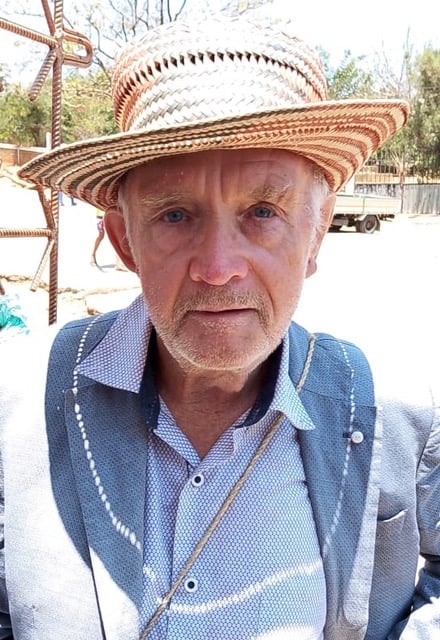
Welsh travel author Stephen Powell, who spent nearly two decades living in the Abergavenny area, has been on the road again, this time turning his attention to a country in southern Africa. He published his third book, Letters from Mozambique, in January.
Mozambique is a former Portuguese colony and over the decades the slender news coverage out of the country has largely focused on the bad stuff. Powell , a former Reuters correspondent, said: “I learned Portuguese when Reuters posted me to Brazil 40 years ago and I decided to use my knowledge of the language to write about an under-reported country and discover what there was to say beyond the clichés of poverty and war.




“My motivation was partly to see a country I didn’t know at all, but I also wanted to write about people doing inspiring work. Bad guys when they are powerful get so much attention. To redress the balance a little, freelance journalists are at liberty to put the spotlight on good guys. I consciously try to do this as a roving reporter.
“In Mozambique I went to the Gorongosa National Park to talk to the Idaho millionaire Greg Carr. He has spent more than $100 million helping to restore the park which was ravaged by civil war. Some species - hyenas, leopards, jackals and painted wolves - disappeared. Now the wildlife has returned and Gorongosa has become a role model for Africa. The key is deep engagement with local people and Gorongosa does that brilliantly, introducing new crops, expanding education and health facilities.”
In Gorongosa, he spent some time enjoying beer and conversation with fellow Welshman Aaron Bentham, from Rhyl, who was in charge of training the park’s 269 rangers. Bentham, nicknamed Benny, spent 22 years in the Marines and reckoned that an upbringing in North Wales had prepared him for the toughest of environments. “If you can survive on the streets of Rhyl, you can survive anywhere,” he told Powell.
In a very different vein, Powell also went to Moatize, a coal-mining town in the northwestern province of Tete. He reported on an initiative by the town’s inhabitants to take on the Indian owners of the mine, whom they accused in an open letter signed by more than 300 people of committing a crime against humanity. Black clouds of coal dust from mine explosions are a regular feature and the mine uses a lot of water in a region hit by drought.
“One thing I try to do is to take my time,” said Powell. ”Journalists are generally under serious time pressure and those of us who are retired from full-time work can gift our time. I spent about three months in Mozambique, with a little side-trip into Malawi. In Moatize I spent several days talking to people. I was very moved by the commitment of one man in particular, businessman Amadssen Veterano, to throw his energy into campaigning for less pollution. Veterano is a married man with four daughters, but he was tireless in the work he did for the community.
With the caveat that there is an insurgency in the north, Powell said he recommended Mozambique as a travel destination.
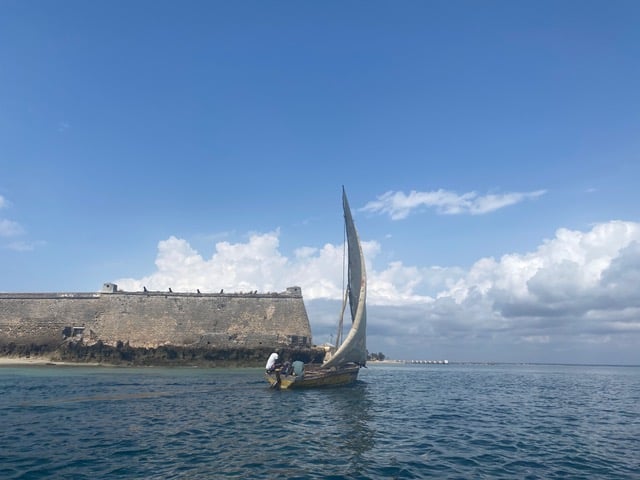
“The country is two-and-a-half times the size of the United Kingdom and it should be easy to steer clear of trouble. I found the people very friendly and the landscapes, in particular the coast, supremely beautiful. The roads can be awful, but nowhere’s perfect, and visitors need have no concerns about over-tourism.”
Powell, who learnt Welsh in Abergavenny in his 50s, said he very much hoped to publish a Welsh-language edition of his book. His two previous volumes focused on travels in the South Caucasus and on a walk through Portugal, where he now lives. Letters from Mozambique can be purchased from publishers SilverWood Books of Bristol, or from Amazon or other major outlets.
Comments
We've recently changed our login process. If you have an account for commenting, you will need to re-register on the login window.
This article has no comments yet. Be the first to leave a comment.