
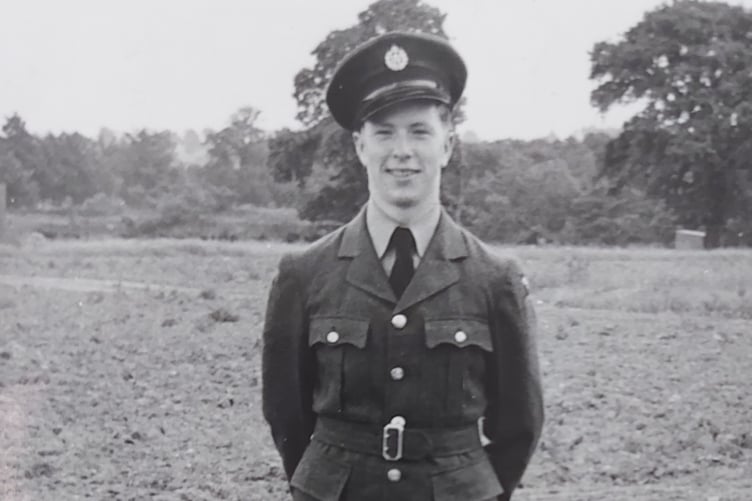
REG Edwards started his career in the Royal Air Force before joining the county ambulance service as well as becoming a retained firefighter based in Abergavenny.
He joined the Royal Air Force in 1951 and served as a regular until 1958. He took part in Exercise Ardent — A major Air Defence Exercise which took place in 1952, the largest such exercise in Britain since WW2. Over 1,300 aircraft flew 7,500 sorties with RAF Bomber Command pitted against Fighter Command, with Royal Navy and allied units testing the UK air defence systems. This was a realistic test against a strong simulated bomber offensive in the shadow of the Cold War.
He also worked on the Vulcan aeroplane which was one of the three original “V-bombers,” forming the backbone of Britain’s nuclear deterrent.
In 1956 he served during the Suez Crisis preparing the RAF planes ready for the biggest paratrooper drop since D-Day.


For several years he served at RAF Pembroke Dock which was a major RAF Coastal Command base, and the largest operational flying-boat base in the world, with nearly 100 aircraft, the majority of which were the famous Sunder lands used for maritime patrol and antisubmarine operations.
Reg was part of the ground crew, working with Nos. 201 and 230 Squadron. As any good RAF pilot will tell you, the ground crew are the backbone of the Royal Air Force, because although it may be the aircraft that most often takes all the glory, they only ever left the ground because of men like Reg.
One of his saddest days at Pembroke Dock was when a Sunderland MR.5, Registration: RN288 of 201 Squadron crashed at Eastbourne. The aircraft had departed RAF Pembroke Dock, en-route to RAF Calshot. It was assigned to take part in the RAFA Annual Conference at Eastbourne, an event which included a planned display for the Duke of Edinburgh. During the display the Sunderland attempted to land on the sea about a mile from Eastbourne Pier. The sea conditions were extremely rough with a significant swell. On touchdown the aircraft hit a freak wave then nosed down sharply before breaking up.
A large rescue response followed and ten of the crew were rescued but some had received life changing injuries. Four of Reg’s close friends were among the dead and this inspired him to join the ambulance and fire service on leaving the RAF.
The enquiry concluded that there was no mechanical or pilot error and the accident was put down “to a freak wave”.
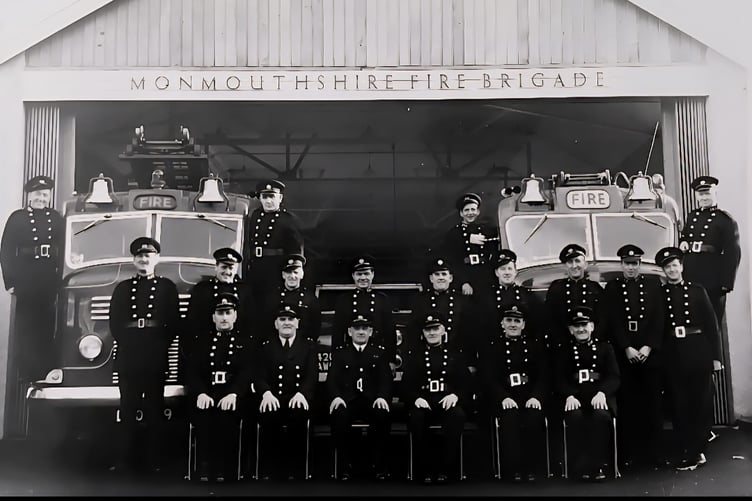
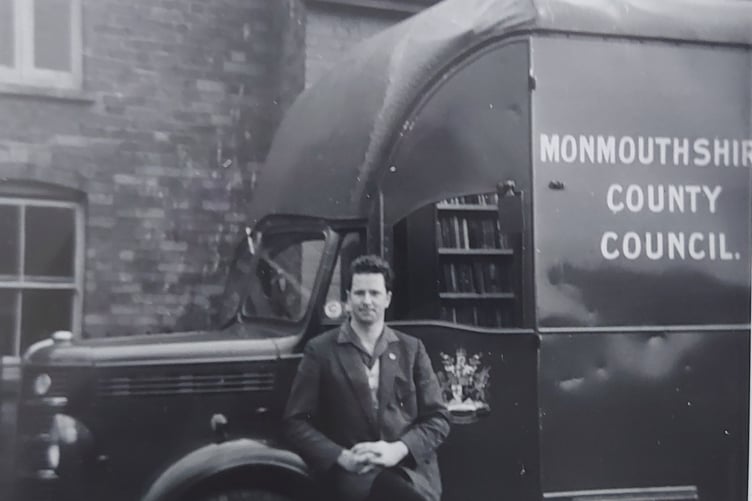
On leaving the RAF Reg joined the local ambulance service but he also became a retained firefighter with the Abergavenny Fire Brigade. He drove the mobile library on one of his rare days off.
Reg was one of the last ambulance men to be employed by Monmouthshire County Council, before becoming one of the original three NHS ambulance men stationed in Abergavenny. The ambulance station was located at the end of St Mary’s Road behind where the present Fire Station is located.
In the late 1950’s and 1960’s the ambulance service was run on a “Load First, Ask Questions Later” attitude, with one instruction: get the patient to hospital as fast as possible!
In those pre-NHS days, the ambulance men wore white coats which led to a lot of confusion in that many patients believed they were being treated by doctors.
Reg always talked of the chaotic charm of that early era: with far fewer resources than available today; unpredictable equipment, faulty stretchers and vehicles that needed push starting. Ambulances were often repurposed vehicles, which handled “like bricks on wheels.” They were fitted with unreliable radios, or no radios at all, and were tiny by today’s standards. They were often underpowered, poorly heated and prone to breakdowns.
Reg would often recount humorous episodes that were necessary to keep the vehicles on the road and his mechanic’s training in the RAF came in handy!
Sirens would often keep working which often resulted in crews having to drive through the quiet villages of Monmouthshire sounding like a runaway fire engine.
In fact, Reg told one story of where he was driving one patient at night to the Victoria Cottage Hospital, and because of mechanical failure his vehicle had no working lights and no siren, and when he arrived at the hospital and a nurse asked him why he was driving with no lights and no siren, Reg replied, “I didn’t want to wake the patient!”
The shift towards modern paramedicine in the late ’60s and early ’70s created a contrast that made earlier practices seem both astonishing and incomprehensible. In fact, Reg was one of the first to undergo training to become a paramedic.
Retained firefighters in Abergavenny were called to the fire station by an old WW2 air raid siren which was situated on top of the Fire Station’s training tower in Monk Street. His son recalls many evenings when his father would take him to the local cinema, only for the manager to announce that the siren had sounded, prompting his father to rush off and leave him in the care of the manager or an usherette until he returned.
When Reg first joined the Abergavenny Fire Brigade, they still had one engine where the bell had to be rung manually, and like a lot of his generation he would never go into details of the callouts he attended. There were several occasions when lives were saved thanks to the swift response of the retained firefighters, who would come running from every direction — from shops, farms, pubs and even their beds — leaving bicycles piled outside the station, shops unattended and cows mid-milking.
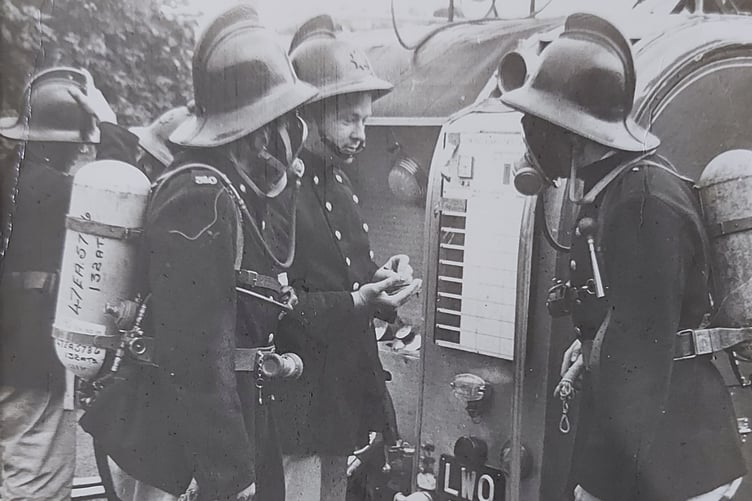
Reg did tell of two amusing incidents. One involved a distress call from an elderly lady begging the crew to rescue her ‘cat’ from a tree. When they arrived, they discovered that the stranded feline was in fact her drunken forty-three-year-old son, dressed in a pantomime cat costume and stuck at the very top of a tall tree he had attempted to climb in his inebriated state. The lady herself was also rather the worse for drink.
On another occasion, as retained crews were often summoned from wherever they happened to be, Reg recalled a callout during an important darts match taking place at the old London pub situated on the corner of Monk Street. The entire team dashed out mid-game, leaving darts still in the board, pints half-finished and a very confused visiting team.
Reg said they returned an hour later, smelling faintly of smoke, but insisted on finishing the match. …. which they won!
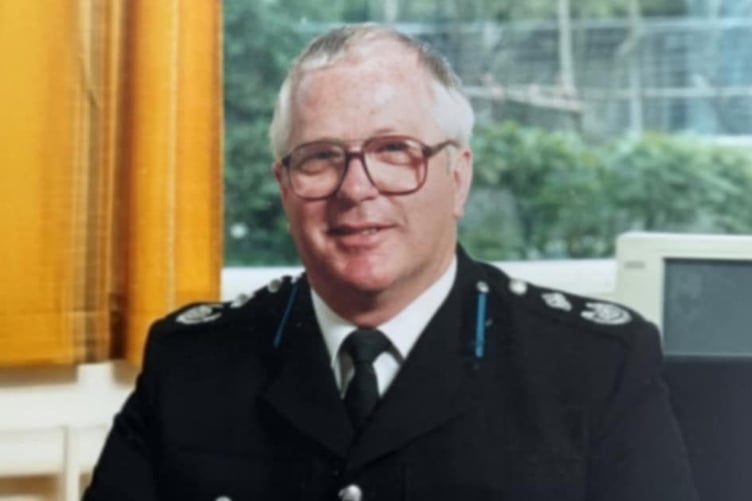
In 1973 Reg had to reluctantly give up his role as a retained firefighter when he was promoted to Ambulance Officer and transferred to Caerleon which was then the headquarters of the Monmouthshire Ambulance Service before becoming the Gwent Ambulance service. He remained there for the next twenty years rising through the ranks to become Acting Chief Ambulance Officer in 1991 before retiring in 1993.
Reg was one of many local unsung heroes who make a meaningful, often crucial contribution to the local community, but receive little or no recognition for it. They don’t seek praise because they are motivated by duty, kindness, and responsibility, rather than attention. Others often benefit from their actions without always noticing.
Comments
We've recently changed our login process. If you have an account for commenting, you will need to re-register on the login window.
This article has no comments yet. Be the first to leave a comment.