
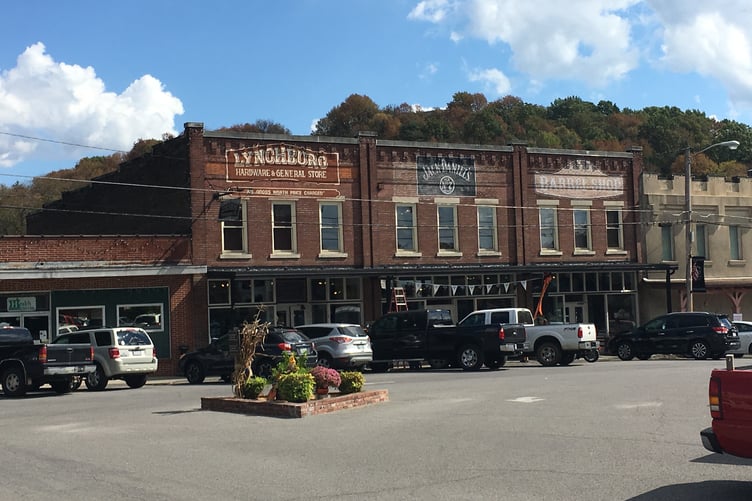
JACK Daniels whiskey is the world’s best-selling whiskey brand by volume, with over 150 million bottles sold annually.
Yet none of this might ever have happened had his grandparents — Joseph “Job” Daniel, born in Wales, and his wife Elizabeth Calaway, born in Scotland — not emigrated to the United States in the late 18th century.
The National Welsh American Foundation and the Welsh American Heritage Museum have both listed Daniel among “Americans of Welsh descent.”
Though records of early immigrants are often fragmentary — with many Welsh listed as “English” or left undocumented altogether — family tradition, local records, and linguistic clues point to Daniel’s unmistakably Celtic roots.
Driving through the Kentucky and Tennessee countryside today, one might easily imagine the green hills of Wales. The same soft valleys and rolling meadows surround Lynchburg, Tennessee, about an hour south of Nashville, where the sweet smell of sugar maple still drifts through the air from barrel houses stacked high with aging whiskey.
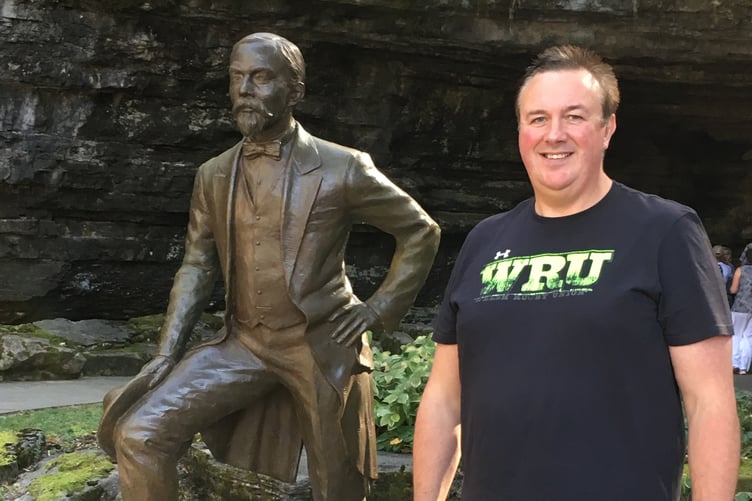
There, on a small plot of limestone-rich land, a teenage orphan named Jasper Newton “Jack” Daniel began a journey that would shape American culture forever.
Jack Daniel was born around 1849 in Lynchburg, the youngest of ten children. His mother, Lucinda Daniel, died when he was still a child.
His father, Calaway Daniel, remarried, but soon abandoned the family, leaving Jack orphaned.
.jpeg?width=209&height=140&crop=209:145,smart&quality=75)
To compound the mystery of his origins, the courthouse that stored Lynchburg’s birth and death records was destroyed in a fire — erasing the official trace of his early years.
Despite that hardship, Jack was taken in by Dan Call, a local storekeeper, preacher, and distiller. Call’s household was a mix of pulpit and pot still that became the unlikely cradle of an American legend.
Among Call’s enslaved workers was a man named Nathan “Nearest” Green, a master distiller whose skill and knowledge would shape Jack’s destiny. After emancipation, Green became the first African American master distiller in U.S. history and Jack Daniel’s lifelong mentor and friend.
It was Nearest Green who taught Jack the charcoal-mellowing process that distinguishes Tennessee whiskey from all others, the method now known as the Lincoln County Process.
As Reverend Call’s religious congregation grew uneasy with his whiskey-making, he was given an ultimatum: “Give up the whiskey business or give up the ministry.”
Around 1866, Call chose the ministry, selling his still, land, and equipment to young Jack Daniel, who was barely sixteen years old. With that purchase, Jack officially registered the distillery, making it the oldest registered distillery in the United States — a title it still holds today.
After the Civil War, Jack hired Nearest Green as a free man and his first master distiller. A surviving photograph in Jack’s office shows him standing proudly with his distillery crew including a black man, believed to be George Green, Nathan’s son, standing directly beside him. It is a quiet yet powerful testament to friendship, mentorship, and equality in an age still shadowed by division.
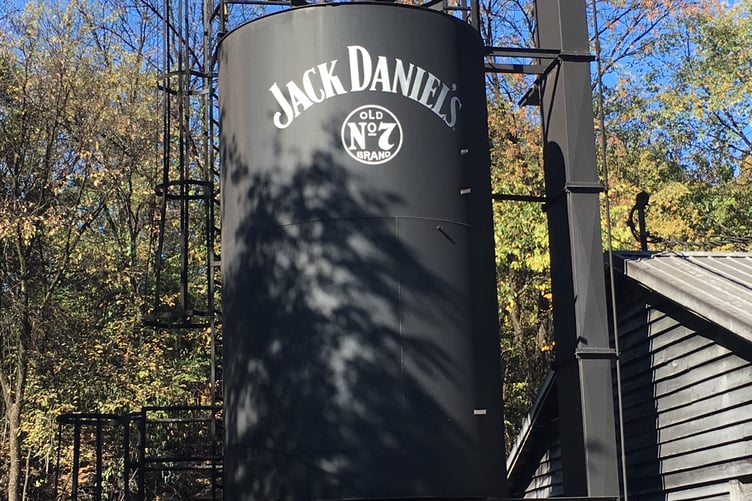
The process they perfected became legend. Clear, newly distilled whiskey called “white dog” was slowly filtered drop by drop through ten feet of sugar maple charcoal before being stored in oak barrels. The result was smooth, mellow, and distinctively sweet known worldwide today as the defining character of Tennessee whiskey.
Jack Daniel’s insistence on patience, craftsmanship, and integrity became the foundation of his brand values that guides every bottle that bears his name.
The town of Lynchburg grew around the distillery; its people bound to Jack’s creation and to the enduring friendship between a poor orphan of Welsh descent and the freed Black distiller who taught him his trade. Today, nearly every resident of the town is connected to the distillery in some way through work, family, or local lore.
Each month, employees receive a bottle of Jack Daniel’s whiskey as part of an old tradition called “Good Friday,” dating back to Jack himself. Ironically, Lynchburg sits in Moore County, a dry county where the sale of alcohol remains illegal, a curious twist for the home of America’s most famous whiskey.
Jack Daniel died on October 10, 1911, reportedly from blood poisoning after kicking a safe in frustration and injuring his toe which turned to gangrene, a death as humble as it was ironic. Unmarried and childless, he left the distillery to his nephew Lem Motlow, who guided it through Prohibition, Depression, and World War II, turning it into one of the world’s most recognized brands.
The mystery of the label “Old No. 7” endures to this day, perhaps his original registration number, perhaps a lucky charm, or maybe just Jack’s sense of humour. Whatever its origin, it became a symbol of pride, craftsmanship, and identity that are the mark of the man himself.
Jack Daniel’s nickname carries another echo of his heritage. His grandfather, Joseph “Job” Daniel, was also known by a nickname Job a practice deeply rooted in Welsh working-class culture, where nicknames passed naturally through generations, workplaces, and communities.
In Wales, especially around Swansea, “Jack” was a name synonymous with toughness and skill. Local sailors were famously called “Jack Tars,” and the proud rugby team of Swansea — The Jacks — whom this author had the honour of playing for took their nickname from that same seafaring tradition. It is entirely plausible that Jasper Newton Daniel’s Welsh family carried the nickname and culture with them to America, where it stuck for life.
Thus “Jack Daniel” was not a branding invention, but a reflection of family habit and a nod to a cultural tradition stretching back across the Atlantic.
My research has not uncovered Jack being called Jasper or Newton with Jack not being a name he acquired later from friends or during his work days, so it is believed he was called Jack from birth, then this could very well be in line with reference or testament to the location in Wales his family may very well have originated.
If “Jack” reflects a living Welsh nickname tradition, then “Jasper Newton” anchors Jack Daniel more firmly within the historical and geographical landscape of south-west Wales.
Jasper was his formal Christian name and is inseparable from Jasper Tudor, one of the most powerful Welsh figures of the 15th century. Born at Pembroke Castle, Jasper Tudor was Earl of Pembroke, guardian and protector of Henry VII, and a dominant authority across Pembrokeshire and the wider south-west Welsh coast, including Swansea and its surrounding communities. His name endured locally as a symbol of Welsh resilience, legitimacy, and pride.
In 17th- and 18th-century Wales, families commonly named children after historical figures, religious leaders, or locally significant names. The continued use of “Jasper” in south-west Wales fits this tradition. When viewed alongside strong Welsh nickname customs, it is entirely plausible that a child christened Jasper would refer to early as “Jack” in a family which had immigrated from the Swansea area then taken with him and stuck with him throughout life.
The middle name “Newton” further strengthens this regional alignment. Newton was a well-established settlement just west of Swansea when Jack Daniel’s ancestor Jacob (Job) Daniel who emigrated in the late 18th century. Naming children after places of origin was a recognised Welsh custom, particularly among migrating families, further reinforcing this geographic link.
Taken together, the names Jasper, Newton, and Jack do not appear accidental or purely Americanised, but align closely with Welsh naming conventions, historical memory, and regional identity rooted in Swansea and greater Pembrokeshire. The absence of evidence showing Jack Daniel being called “Jasper” or “Newton” in daily life only reinforces this pattern: formal Welsh baptismal names paired with informal, culturally resonant nicknames.
This continuity extends one generation further back to Jacob (Job) Daniel, whose biblical Christian name carries deep resonance in Welsh religious culture and aligns closely with St Davids, the most sacred ecclesiastical centre in Wales.
Situated in Pembrokeshire, St Davids Cathedral was a spiritual focal point whose influence radiated across south-west Wales, including the Swansea region. Biblical names such as Jacob were especially prevalent in communities shaped by this religious gravity, reinforcing the likelihood that the Daniels family emerged from a chapel-centred Welsh tradition rooted in this sacred landscape.
Taken together, these names point repeatedly back to south-west Wales, lending further weight to the belief that the founder of the world’s most famous Tennessee whiskey carried more of Wales with him than history has yet fully acknowledged.
Unravelling history would be simple if there were always a complete and unbroken paper trail. In its absence, historians much like lawyers must weigh patterns, context, and cultural continuity to establish what might best be described as probable cause: not absolute proof, but the most plausible explanation grounded in evidence, tradition, and place.
So, my assessment is this: did Jacob Daniel, come from the village of Newton approximately five miles from Swansea and was his grandson named Jasper Newton Daniel in honour of the Earl of Pembroke and protector of the Welsh born King V11, who landed in Pembroke, gathered an army there on his way to the English throne and was later given the nickname “JACK” a term commonly used at the time to describe men who had left the greater Swansea area?
In south-west Wales, particularly around Swansea, “Jack” was widely used as a regional identifier, associated with sailors, industrial workers, and emigrants from the area, giving rise to the long-standing nickname “Swansea Jacks.”
From a poor Welsh orphan to one of the most recognisable names in global culture, Jack Daniel’s story embodies the enduring spirit of Welsh determination, courage through hardship, skill through mentorship, and success through perseverance.
Seven generations of the Green family have worked at the distillery, preserving the methods Jack and Nearest perfected together. Every drop of whiskey that leaves Lynchburg carries with it not only the taste of Tennessee but also the shared legacy of Welsh, Scottish, and African American craftsmanship and friendship united in the pursuit of excellence.
Jack Daniel’s whiskey remains more than a drink; it is a symbol of resilience and friendship, of a Welshman’s tenacity and an African American’s mastery, distilled together into the very essence of the American frontier spirit.
They may rank among the oldest commercial distillers of America’s favourite drink, but Evan Williams and Jack Daniel’s are anything but relics. Each has carved a distinct and enduring place in modern American society. Evan Williams aligned itself with tradition and community becoming a long-standing sponsor of Major League Baseball, the World Series, and American college sports. It has often been described as a working man’s bourbon for a working man’s game, bound to continuity, ritual, and shared national moments rather than spectacle.
Jack Daniels chose the rebel image and music road. From an early alignment with Hank Williams, generations of artists carried the brand naturally into rock and country, where it became synonymous with rebellion, independence, and authenticity. That image was permanently cemented by Lemmy Kilmister of Motörhead who grew up in Anglesey, North Wales before becoming a roadie for Jimi Hendrix and recording his first record at Rockfield Studios in Monmouth, Wales with Hawkwind.
Lemmy never advertised Jack Daniel’s; he lived it. As he once put it, “I don’t drink to get drunk. I drink to stay drunk.”
From there, Old No 7 became the drink of choice for artists across rock, country, and southern rock, Metallica, AC/DC, Slash, Willie Nelson, Eric Church, and many more. Its presence was never polished or manufactured; it was earned. As Keith Richards observed, American whiskey “tells the truth quicker” and Jack Daniel’s has long worn that reputation comfortably.
That same spirit was alive when this author took two Welsh bands touring through the southern states, having first secured a branding endorsement from Wales’s national whiskey company, Penderyn. Along the way I befriended outlaw country musicians who embodied that same edge and independence. From North Carolina came Preacher Stone, a southern rock biker band whose music featured in HBO’s Sons of Anarchy, a series built around an outlaw motorcycle club. I heard their song “That’s Just the Whiskey Talking” before its release, the song opening with the line, “Old No 7 running through my veins” The lineage was unmistakable.
They may be among America’s oldest whiskey names, but these brands—rooted in Welsh and Celtic blood—remain as relevant today as they ever were and not just spirits in a bottle but living symbols of tradition and rebellion. That story did not end in the past. Today, the Welsh American whiskey tradition continues, with much of Penderyn’s whisky finished in Kentucky bourbon barrels, a modern echo of an old transatlantic bond.
In that sense, the very founding of the American whiskey story is also a Welsh story: one of endurance, defiance, and a people who carried their fire across the Atlantic and never let it die.
The Fighting Welsh by Andrew Sutton is available on Amazon.com.
Comments
This article has no comments yet. Be the first to leave a comment.