
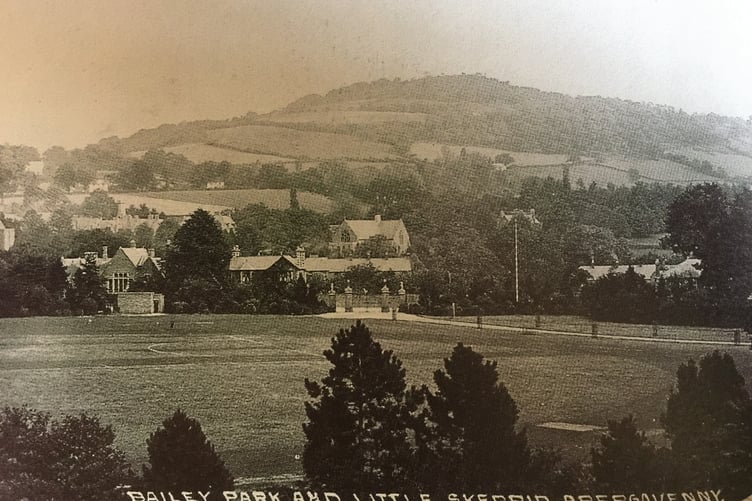
Crawshay Bailey Junior (1841-1887)
Unlike his father, the ironmaster Crawshay Bailey Senior, Crawshay Junior led a privileged life from the start.
His baptism in 1841 at Aberystruth records his parents as Crawshay Bailey and Sarah Baker.
Sarah was a 41year old servant in the Bailey household and presumably a surrogate mother to provide a son and heir to Crawshay Senior.

Sarah sadly died just three years later. Her death certificate records the cause of death as ‘dropsy’ but this is a symptom, not strictly speaking a cause of death. When Crawshay Senior died in 1872, Crawshay Junior inherited his father’s extensive landholding that amounted to 12,248 acres in Wales alone.
It was reputed that the total income from all his assets was £60,000 per annum, a sum in the region of £8 million in today’s money.
Crawshay was just 31 years old at this time and living in a house on one of his father’s landholdings on the Maindiff estate but went on to build a new mansion house, since demolished, on the site of the present-day car park of Maindiff Court hospital.
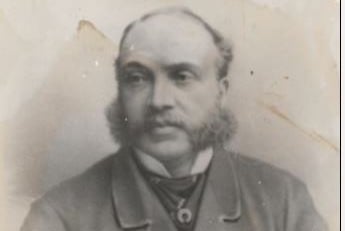
He lived there with his wife, two daughters and ten servants. He managed his inherited estate in style and became known as the “Squire of Maindiff.”
Maindiff Court acquired a reputation for “unbounded hospitality” and parties were frequently put on for tenants and their families. Crawshay and his wife made themselves at home among the locals and provided food and dance music as well as allowing everyone to explore the house and gardens. Among his many interests were fox-hunting, agricultural shows, local Eisteddfodau, militia and freemasonry, he was a Justice of the Peace, Deputy Lieutenant for Breconshire and Monmouthshire and he was appointed the High Sherriff of Monmouthshire in 1874.
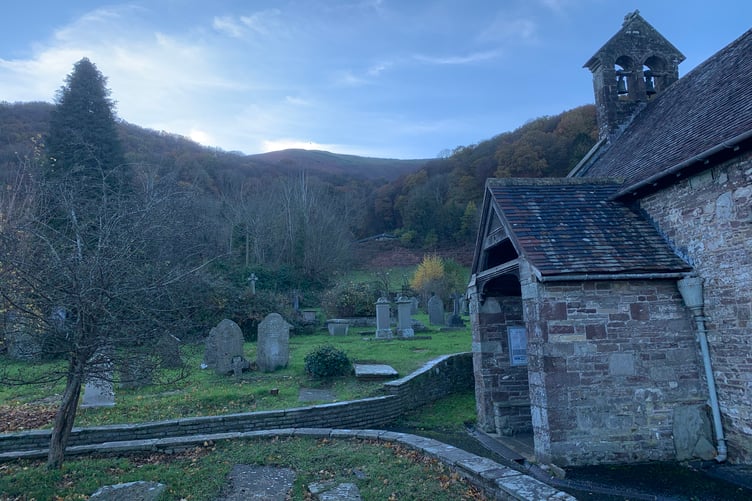
Crawshay was very benevolent to the churches around Abergavenny, but it appears that he fell out with the local vicar at Llantilio Pertholey and moved his allegiance to Llandewi Skirrid where he and his natural mother, Sarah Baker, are both buried.
In 1879, he paid for the church to be almost completely rebuilt and fitted with new bells and an organ as well as a nearby assembly room designed and constructed by Hampton & Bromley of Abergavenny. He also provided the means to refurbish St Faith’s church in Llanfoist where his father is buried. There are numerous other instances of his benevolence in the district besides Bailey Park.
An example of the way the Bailey family spent their fortune is given by the marriage of Crawshay Bailey Junior to Elizabeth, Countess Bettina, daughter of the Count Metaxa, on the 29th of September 1863. (Count Metaxa was a Greek noble and formerly connected with the embassy at the court of Great Britain.)
The ceremony took place at St. Luke’s church, Cheltenham, which was the bride’s home town. Around 1400 guests were inside the church and another 900 were outside. Crowd control became an issue, both inside and outside the church, as stewards tried to keep the roads and aisle clear for the bride and groom to reach the altar.
The ceremony was followed by a sumptuous wedding breakfast, arranged by the bride’s father, in a local hotel.
The Monmouthshire Merlin newspaper devoted a whole page to the celebrations that the Bailey family had put on across South Wales. In Nantyglo, the home of the Bailey ironworks, streets and houses were festooned with flags and banners with guns firing throughout the day.
The whole of the ironworks workforce, 6000 in total, were treated to a quart of beer each. 400 school children feasted on tea and cake. A lavish breakfast, with an abundance of champagne, was laid on for Crawshay Senior’s agents in a marquee. Many glowing speeches were made about both Crawshay Senior and Junior.
Similar events took place in Aberaman, Beaufort and Brynmawr. At Newport, a dinner was provided for the employees of the Bailey & Co. Bank and of Bailey’s yard. In addition, a public dinner took place at the Crown Hotel. In Abergavenny: “The inhabitants of this town, where Crawshay Bailey Senior is held in high esteem, and the neighbourhood, where he has considerable landed property, determined to celebrate the event with that geniality and good feeling which are their decided characteristics. Not only have the people of this place always looked up to the proprietor of the Nantyglo works as a gentleman who contributed greatly to their material prosperity, but the way in which Mr Bailey recently came forward as promoter of the Merthyr, Tredegar & Abergavenny railway line, naturally tended to increase the respect with which he has always been regarded by the tradesmen of the town.”
A dinner for around 50 guests, one of whom was Edwin Tucker, was arranged in the Angel Hotel.
Many speeches were given but part of a speech given by Captain Hill is worth noting: “The bridegroom started not with an iron spoon in his mouth, nor yet a silver one, but with a golden spoon (laughter) and it will be his own fault if he is not prosperous and happy. He will eventually, when he is called to occupy the place of his father – and God grant that may be many years hence – be a very wealthy man. I only hope and trust he may derive as much pleasure in spending wisely and adding to his immense wealth which his father found in creating it. Should that prove to be the case, and if Crawshay junior be located in the town of Abergavenny, I believe he will be a pride, a pleasure and a blessing to the town. I give you the health of Mr Bailey Junior and his bride.”
Despite his wealth and privilege, Crawshay Bailey Junior died in 1887 aged just 47 years. The last few years of his life saw him become a recluse and he left his family and set up a substantial home in Dublin.
The local people did not know exactly who this wealthy man was and only found out when he died suddenly. His body was brought back to this country and he was buried in the graveyard of the church at Llandewi Skirrid. His will was valued at £219,386 (£25 million in today’s money) but his widow and children started an action in the High Court to set aside the will and it’s three codicils and Mr Frederick Whinney, a chartered accountant, was appointed to be the receiver of the estate and letters of administration were granted on 29th of October 1887. His widow moved to Cardiff where she died in 1909 and is buried in the village of Hartbury in Gloucestershire.
It was three years earlier that Crawshay Bailey Junior, together with Edwin Tucker and E.A. Johnson (architect), had addressed a meeting of the Board of Abergavenny Improvement commissioners in February 1883. It was stated that the new park would be under the control of a park keeper appointed by Mr Bailey who wished that the public should have full privilege of using the park except on reserved occasions.
Games would need a licence from the park keeper and there would be a schedule of charges. Mr Bailey reserved the right to let the whole of the park for special occasions that he would consider of benefit to the town. The Board was quite happy to agree to the plans as they were not called upon to finance any part of the proposed park except for the diversion of a few public footpaths. Crawshay then told the Board that Mr Johnson has my orders to proceed at once and will hope to finish by the 1st of May albeit that some work may be outstanding at that time. The grand opening of the park did not take place until the bank holiday of August 6th 1883.
Legal issues about the park came to light in 1886 after Crawshay Bailey had left the area to go and live in Dublin. There seemed to be some difficulty in regard to making the park available to the public as Crawshay had retained overall control but the Commissioners were obliged to have an annual expenditure of over £100 on the park that they had not budgeted for.
The conditions and agreement for the use of the park had not been finalised with Crawshay before he left Abergavenny. After Crawshays’s death in 1887, the park was managed by his estate until 1894 when the issues were highlighted once again.
After negotiations with the Bailey estate the Commissioners ended up by taking over the management of the park on the 1st of May. Further complications arose when it was realised that the original lease that Crawshay had taken out on the land was for 21 years and would subsequently revert back to its original owner. After much negotiation with the Crawshay family and the trustees of the estate, the Board of Commissioners came to a financial agreement with them that resulted in the purchase of the freehold of the park for the townspeople of Abergavenny. There was a shortfall but this was covered by a loan that was repaid by 1936.
Edwin Tucker (1827 – 1885)
When Crawshay Bailey Junior met with the Board of the Abergavenny Improvement Commissioners, he introduced two people to speak on his behalf. The first was Mr. Edwin Tucker who had been Chairman of the Abergavenny Board of Commissioners for many years and his name had been identified for more than 30 years in all matters relating to the welfare and interest of the town.
In his capacity of a Town Commissioner, perhaps no man devoted more anxious care and attention to the fulfilment of his office, and no project for the sanitary improvement of the town was undertaken without his approval.
Both the Commissioners and the town generally placed the most implicit confidence in his judgement and discernment, and his advice was invariably adopted.
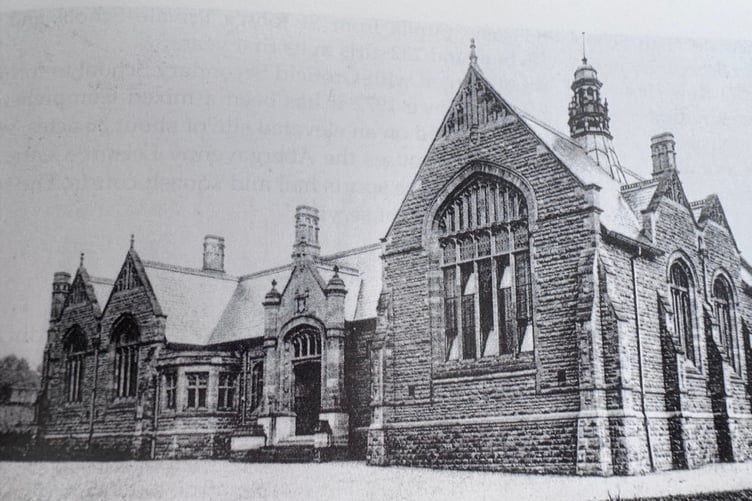
On his retirement from office a public subscription raised enough money to purchase a handsome present of various pieces of silver plate as a mark of the town’s appreciation of Mr. Tucker as a worthy citizen. He was also instrumental in the scheme to build a new grammar school in Pen-y-Pound but did not live long enough to see it materialise.
The foundation stone of the school was laid on 25th of June 1887 by Mrs. Bury Capel, wife of the vicar of St. Mary’s church, who paid tribute to Edwin Tucker for all his hard work in getting the project started.
Edwin Tucker was born at No. 5 Frogmore Street where his father had a corn mill and farm and also an interest in the Golden Lion public house at No. 6 Frogmore Street. No. 5 is now a café but will be remembered by most people as the shop of S. J. Ruther & son from 1910 until about 1947.
The Tucker family were millers and seed/corn merchants and owned nearly all the property in Lion Street, on both sides, as far as the Black Lion public House. The corn mill was one of the largest buildings in Abergavenny and was driven by steam that was produced by two coal-fired boilers. It was reputed to be the first steam mill in the country. They had a steam bakery on the other side of Lion Street that was fed by an underground pipe from the mill.
The Coliseum was the site of their stables and they had their own blacksmiths and shoeing shop for their horses and machinery maintenance. Their workers had living accommodation in the company’s houses in Tiverton Place.
By 1861 Edwin Tucker was living at Derrystone in Chapel Road and the census of that year describes him as a miller and corn & seed merchant employing 60 men. By now, he was in partnership with his brother Thomas and the company name was Tucker Brothers, Abergavenny Ltd. and they had premises in Newport and Crickhowell as well as other towns on market days.
At the meeting of the Board of Commissioners in February 1883, Edwin Tucker spoke on behalf of Crawshay Bailey and outlined all the legalities of the project such as the necessity to divert existing footpaths, the draft rules for the management of the park and for Crawshay Bailey to reserve rights to use the park for special occasions etc.
When the day arrived for the grand opening of the park on 6th of August, Edwin Tucker had received the following letter from Crawshay Bailey who was staying at the Pier Hotel in Brighton and dated 3rd of August 1883: “Dear Mr. Tucker – I am very sorry that in consequence of absence from home I shall not be able to be present at the opening of the new park on Monday next. Will you, therefore as an old inhabitant of the town, and as chairman of the Board of Improvement Commissioners for so many years, kindly represent me on that occasion? You are well aware of my views with regard to the park both as to management and otherwise, and I sincerely trust it may further conduce to the welfare of the town of Abergavenny, in which I feel so great an interest. – I remain, &c CRAWSHAY BAILEY.”
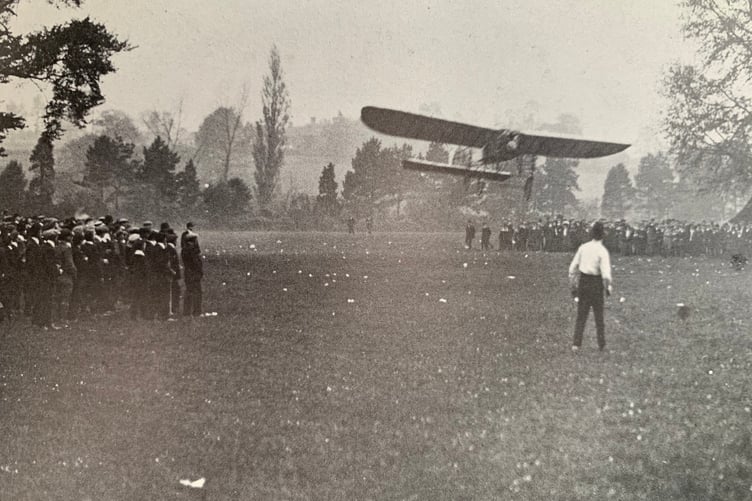
The day’s festivities started at 9 o’clock in the morning with a grand cavalcade of all the local gentry that went for a carriage drive through the town, under a display of flags and banners, and around the Sugar-loaf drive and returned via Chapel Road.
See next week's Chronicle for the concluding part of the people who built Bailey Park.
Comments
We've recently changed our login process. If you have an account for commenting, you will need to re-register on the login window.
This article has no comments yet. Be the first to leave a comment.