
The project to restore Abergavenny’s historic Gunter Mansion took a significant step last Friday with the opening of a pop-up exhibition.
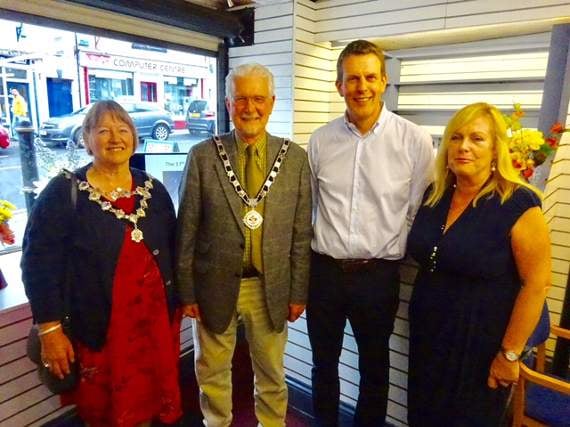
Friends of Gunter Mansion restoration gathered to celebrate the opening of a pop-up exhibition on the ground floor of the building. The Mayor and Mayoress attended, along with Andre Beckett of the Welsh Georgian Trust which, following a successful appeal, secured the mansion for the town in 2016.
Wine glasses were filled and the room was a-buzz with chatter among members of the town’s community, pretty much as it would have been back in the 17th century when Thomas Gunter lived there.
Visitors back then would have entered via the main door at what is now considered the back of the building and they would have been entertained in the first floor reception area which houses a fine, largely intact, ornate plaster ceiling.



On Friday, visitors entered via the Cross Street entrance and gathered in what were likely to have been the offices of its 17th century owner, the lawyer Thomas Gunter.
The pop-up space – which now sports a ‘Gunter Project’ shop-front sign – charts the fascinating history of the building in photographs and information boards. Another exhibition celebrates the 40th anniversary of the Abergavenny Local History Society.
“We’ve been trying to get something done about preserving this mansion since 2007,” said Gill Wakeley, Chair of the society. “It was the intervention of the Welsh Georgian Trust that saved it and this pop-up exhibition will make the story of the mansion accessible to everyone in the town.”
The Grade II-listed Gunter Mansion is historically important because its owners were practising Catholics when this was illegal. They built a chapel in the attic where Catholics worshipped in secret.
The exhibition is open Tuesdays, Fridays and Saturdays from 10.30 – 4pm and as Amanda Peters, Chair of the Friends group, emphasised, it is reliant on volunteers for its success.
Mrs Peters asked for volunteers to help with the 10.30 till 1pm and 1pm to 4pm shifts. She said, “It’s an opportunity for people to get involved in a community project that will become a major attraction for townspeople and tourists.”
Visitors will be invited to sign up for the Gunter Project newsletter and follow it on Facebook (The Gunter Mansion Project, Abergavenny) and Twitter (@thomas_gunter).
Part of the pop-up space is available for other exhibitions about Abergavenny and plans are afoot for podcasts and digital stories about people’s memories of the town.
The group is keen to hear ideas for other exhibitions in the pop-up area and is urging young people to help in the gathering of stories.
“During the summer holidays, grand-parents will be helping with childcare and it’ll be a great opportunity for young people to interview them about their early memories of Abergavenny,” said Mrs Peters. “They can start by posting them on Facebook or emailing them to us at [email protected]”
David Simcock, Abergavenny’s mayor, said that the historical focus provided by the restoration of the building would be very positive, especially for the Cross Street area of town.
“The centre of town has shifted and has left this bit behind so it will help regenerate this part of Abergavenny.” Mr Simcock, and wife Penny, wished the group luck with its application to the Heritage Lottery Fund for funds to restore the building.
The building’s historical significance was discovered in 1907 when its owners at the time, the Fosters, discovered an altarpiece depicting the Adoration of the Magi.
92-year old Ken Key, who attended on Friday, clearly remembers this mural being transported from the mansion in a wheelbarrow to the town’s museum in 1963. It had been rediscovered in what is now the ‘Pot and Pineapple’ part of the building.
“We got wind of it and thought that this had to be rescued. So we took it to the museum,” said Mr Key. A painter-decorator turned self-taught antiquarian called Alan Probert had brought a van along to transport it, “but because he couldn’t park very close to the museum it was easier to take it in the wheelbarrow,” he added.
Monmouthshire society in the late 1600s was riven by conflict between Catholic and Protestant supporters. Catholic worship was forbidden under Charles II because of paranoia about a plot involving the French and Spanish to murder the King and replace him with a Catholic monarch.
The exhibition tells how the owner of Llanfihangel Court, John Arnold, denounced the two Catholic priests who held secret mass at the Gunter mansion, leading to their arrest and execution at Usk. One of them, Fr David Lewis, was made a saint and was Wales’ last Catholic martyr.
Another aspect of the Gunter family history will be broadcast on BBC2 on Wednesday 26th July. “The Sweet Makers”, episode 2, reveals how significant this family became in the manufacture and retail of confectionery. James Gunter, who was born in 1745, went into business in London with his uncle-in-law, Domenico Negri. Their first London shop was called The Pot and Pineapple, and when Amanda Peters opened an old-fashioned sweetshop in Abergavenny’s Gunter building in 2012 she gave it the same name. The London shop was later renamed Gunter’s and was renowned in the trade.
Anyone interested in volunteering a few hours a month at the pop-up exhibition can either call in during opening hours or email Ann at: [email protected].
Comments
This article has no comments yet. Be the first to leave a comment.