

FOLLOWING on from the Chronicle’s story about a mysterious ancient underground archway found in Abergavenny’s St. John’s Square by workmen carrying out improvement works in the vicinity, we have been inundated with explanations and possible theories surrounding the nature of the unexpected find.
The more adventurous amongst you suggested it led to an underground network of tunnels once used by none other than the legendary Prince of Wales Owain Glyndwr, who guided his troops through the dark and winding maze to breach Abergavenny’s walls and plunder the poor old unsuspecting mother duck senseless in 1404.
There were even fantastical suggestions that the underground arch formed part of an entrance to a dungeon once used by the now defunct Chevron nightclub to dump their more rowdy clientele until they had a chance to sober up.
Some even claimed the archway was a secret portal to the labyrinth of a supernatural and terrible beast like creature which had lied dormant beneath the Gateway to Wales for centuries, but which was now awoken by the inferno of modern machinery and men in high-vis jackets.

Many feared that unwisely prodding this foul scourge of centuries, was like hitting a grumpy bear with a big stick, and might just cause it to rise from its slothful slumber and go berserk in time for the National Eisteddfod.
As theories go, mot of the above are pushing the envelope somewhat, but a lot of our readers appeared to be of the agreement that an archaeological watching brief should have been put in place on such a historically sensitive site as St. John’s Square before the diggers moved in.
Matthew Savagar remained cynical about the find and explained, “As a student of archaeology and having been on placement at the Gwent Glamorgan archaeological trust, who oversee the planning process for the council. I cannot believe no archaeological work has been done here. Last time any substantial work was done on that area of the town they found half the Roman settlement. The pessimist inside says corners were cut so we can be ready for the Eisteddfod, considering a real dig would take half the year.”
Meanwhile Jacky Perkins added, “It is astounding that no archaeological observer was on site in an area. After the civic vandalism of the 1950/60s and losing so much of the town’s heritage, one would think the first people on site would be those who care about the history of the town and actually want to preserve it. It is tragic to think of what has been lost and replaced by ugly architecture. The old buildings may have been deemed ’slum’ housing of the day, but now they would have Grade II protection.”
Qualified Archaeologist Heather Ruck told the Chronicle, “I too find it very strange and concerning that St John’s square is not being investigated by an archaeology team. I wonder if it has anything to do with the Eisteddfod being around the corner?
“Such a find would draw interest and tourism to the area. People always like to speculate when an archaeological dig is taking place.
“This town has already lost valuable historic buildings and finds. Let’s not allow another to take place.”
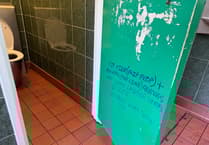
Although taking five days to respond, Monmouthshire County Council did eventually get back in touch with the Chronicle and had this to say, “Whilst undertaking excavation works to plant trees in St John`s Square, our contractor uncovered an underground structure which appeared to be a cellar.
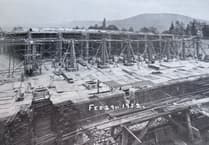
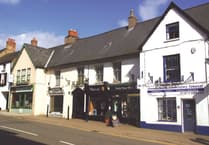
“To make the area safe, the excavated void was filled with soft excavated material. Examination of the historic maps indicated that there was a row of houses and, in particular, a public house at or near this location. These properties were demolished circa 1960.
“It seems most likely that the structure is the cellar of the public house which formerly occupied the site.
“There is no other reference to listed structures or sites of interest on our records at this location.
"The discovery of the cellar was reported to the Monmouthshire County Council Conservation Officer and the Glamorgan and Gwent Archaeological Trust. It was not considered the cellar was of any significant interest but it was agreed to retain the undamaged section of the structure intact. The void is to be filled with stone and the surface works are to proceed as planned.”
So there we have it. The mystery is solved. The archway that got everyone gossiping probably led to nothing more mysterious than a pub cellar. Now the real question is this - ‘what sort of wine you keeping down there landlord?’
Comments
This article has no comments yet. Be the first to leave a comment.