
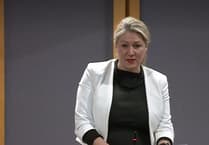
ABERGAVENNY’S MP - who attracted nationwide attention for his outspoken views on the Calais migrant camp - has ventured into the lions’ den to see the problems at first hand.
David Davies, no stranger to controversy, ventured into the so-called ‘Jungle’ on a fact-finding mission to learn more about the human crisis which has afflicted the French port for years.
He revealed afterwards that the trip had only served to underline his conviction that the UK needs a proper immigration policy.
And he repeated his contentious assertion that many of those holed up in the camp, allegedly infiltrated in part by activist groups with sinister intentions, were single young men.
“The Calais migrants are there because they want to live in the UK as opposed to staying in a safe zone near their home countries, or seeking asylum in any of the dozens of countries they pass through en route,” he said.
And he added, “One reason for this, I was told, was because it is easy to find work on the black market in the UK.
“I saw a handful of women and children - but I would estimate that the overwhelming majority of people there are young men. If they are genuine refugees fleeing war, why they are so willing to leave behind wives, mothers and children?”
Sinister
He said of the activists, “Some are doing genuine charity work, although I suspect others had more sinister motives.
“I saw posters offering migrants help on what to say to claim asylum. There was also evidence that outside groups are organising demonstrations.”
The Monmouth MP described living conditions at the camp as appalling.
He travelled to France last week to help make a documentary for the Welsh language current affairs programme Y Byd ar Bedwar, which will be shown next Tuesday at 8.25pm on S4C.
He said, “My position has always been that we cannot simply open the borders and allow in everyone who wishes to come.”
“Indeed, my visit reinforced to me the importance of a proper immigration policy. From what I could see, there were many more people in the camp from Iraq, Pakistan and Sudan than from Syria.
“The different groups live in separate areas. I was told it is a dangerous place after dark and tensions between these various ethnic groups can often erupt into violence.
“Many have paid people traffickers large sums of money to get them to the UK. One man told me on camera that he had paid 17,000 euros. The criminal gangs are making fortunes.”
While Mr Davies expressed sympathy with the migrants’ plight, he said the UK had already spent nearly £1bn financing official refugee camps with full facilities throughout Turkey and other parts of the Middle East.
In response to the worsening humanitarian crisis, the UK is to provide resettlement to 20,000 Syrian refugees over the next five years.
Prime Minister David Cameron has said the extra refugees would be taken from camps bordering Syria, not from among those already in Europe.
“I think this is a much more sensible approach, enabling us to target the most vulnerable refugees whilst trying to ensure they do not have extremist beliefs,” said Mr Davies.
“I don’t blame anyone individually for wanting to come here - but we surely have a responsibility to those already in the UK, especially those waiting for housing or working in low paid jobs, who have competition from people willing to work for very low wages?”
Comments
This article has no comments yet. Be the first to leave a comment.