

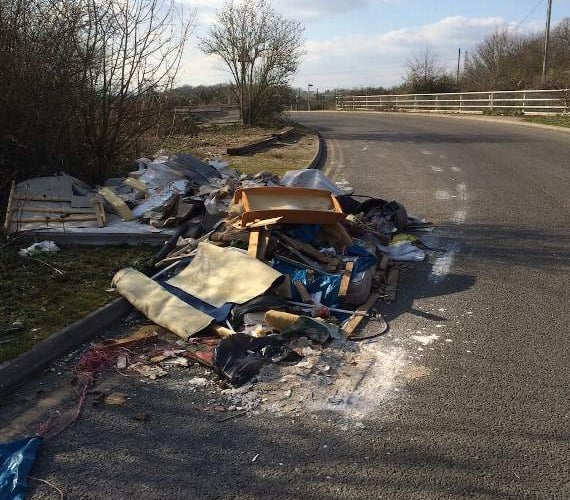
Increasingly stringent regulations on what members of the public can and can’t drop at their local recycling centre will be a major contributory factor to a steep increase in fly-tipping across Wales.
That’s the view of land experts at the Wales office of rural affairs experts Bruton Knowles, who says the tightening by local councils on what bin lorries will or will not take, fortnightly collections and stricter monitoring at recycling centres are all adding to the problem.
With recycling centres also charging tradesmen to offload their waste means unscrupulous builders are looking for other means to get ride or their rubble.
Mark Cunningham, senior surveyor from Bruton Knowles said, “We believe the clamp down for both home owners and tradesmen to take rubbish to the tip will backfire on local councils.
.png?width=209&height=140&crop=209:145,smart&quality=75)



“Van drivers and ordinary members of the public are now being quizzed very carefully on the materials they are dropping off. Add into the equation fortnightly bin lorry collections, has created the perfect storm for fly tipping to increase across Wales.
“With fly tipping on the increase homeowners, farmers and landowners are usually left to clear up the mess. In cases where the land is council owned, the cost of the clear up will be down to the local authority, which ultimately is paid for by the taxpayer.
“There is even talk of having to book an appointment at recycling centres – which is clearly not practical for traders, SMEs and jobbing builders who are reluctant to pass the costs of waste disposal on to their clients for fear of losing business.
“Councils should review tipping charges and what tips can be used for in order to encourage people to use them rather than the countryside to dispose of their waste.
“While not attempting to make excuses for the idiots who dump waste in country lanes, verges and farm land the problem is clearly being exacerbated by the squeeze on what can be taken and increased charges.”
Mark said Bruton Knowles were taking up the cudgels on behalf of council tax payers across the region who are having to pick up the bill to have fly tipping sites cleared, not to mention the farmers and landowners who have had to pay out thousands of pounds to have other people’s trash removed from their land.
He added: “In attempting to shave money from their own budgets, local authorities are actually shifting an increasing percentage of the disposal costs on to the farmers and landowners who are having to clear up the mess.
“Bruton Knowles is advising landowners that they are liable for any waste that is fly-tipped on their land and could be at risk of prosecution if they do not clear it away - often at considerable cost.
“Homeowners who are having work done to their house also need to be aware because any dumped waste that is traced back to them will result in a hefty fine.
“It costs a good deal of money to clear up and if there are any contaminated materials within then the cost implication, as well as health issues are very high. Waste material could also include glass, metal and other items which could pose a problem to cattle, walkers, farm workers and wildlife.
“This is not only a rural issue. The problem is just as bad in urban areas. Rather than attempt to track down every single van or tipper truck carrying out this noxious crime, the authorities should be looking at the root causes of the problem – at the local tip.”
Comments
This article has no comments yet. Be the first to leave a comment.