
The British Film Institute has just announced ‘Rural Life’ - the release online of over 750 films from 1900 to 1999, many unseen since they were first shown.
The films form part of the BFI’s Britain on Film project, that reveals hidden histories and forgotten stories of people and places from every corner of Great Britain from the UK’s key film and TV archives, available free on BFI Player via an interactive map.
The archive films will also be visiting over 125 locations around the country for special screenings and events.
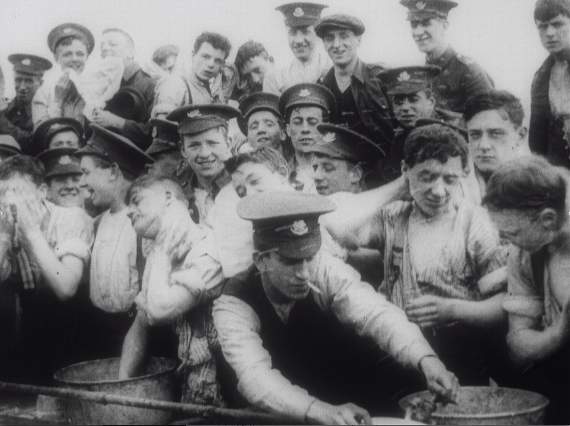
Highlights from the treasure trove of local footage include a 1913 film titled, ‘Cheshire Territorials at Abergaveny’ (the title card was misspelt), showing troops leaving Stockport and setting up camp at Abergavenny.


The two week summer training camp was a significant part of the appeal for those joining the Territorial Force after its formation in 1908.
For the men of industrial towns like Stockport, a camp in South Wales was a welcome break, despite all that marching.
It’s noticeable that the film focuses on the more relaxed proceedings, such as the camp kitchen and sports, with many happy faces on show – good propaganda for those at home.
Despite being drawn from English towns, the 159th (Cheshire) Brigade was part of the Welsh Division of the Territorial Force – hence the camp in Abergavenny.
Stockport was the home of the 6th Battalion, but this film may include other local troops.
Summer camp plans in 1914 would be overtaken by events, and after mobilisation at the outbreak of the First World War the 6th Battalion were already in France by November.
Other films of local interest in the Rural Life collection include:
The Wonderful Wye - a 1926 promotional film on the attractions of the Wye River and surroundings;
The Wye Valley – a 1948 journey from the mouth to the source visiting the castles and towns of Monmouth, Ross-on-Wye, Hereford and beauty spots such as Symonds Yat;
Silage Making – a film from 1950, one of a series made by or for Monmouthshire’s organic farming pioneer Lady Eve Balfour, founder of the Soil Association. Lady Eve ran a farm in Monmouthshire for the Women’s War Agricultural Committee during World War One.
Rural Life charts the changing countryside and rural life, highlighting activities, pursuits and traditions still surviving today, as well as customs, trades and skills that have since dwindled or disappeared.
Robin Baker, Head Curator, BFI National Archive said, “These films offer an unrivalled record of our rural heritage in all its richness across the 20th century. It’s an immersive experience to watch them, and often deeply moving. People who live and work in the countryside will be fascinated to see how their forbears used to live. Like many other city dwellers, I was born and bred in the countryside, and this collection of films offers all of us an extraordinary and very real social history of the British countryside. It’s a very potent portrait of an often neglected cornerstone of our national life.”
The Screen and Sound Archive of Wales has teamed up with the BFI on the Britain on Film project.
Film development officer Iola Baines said, “There are some absolute treasures from Wales in Britain on Film’s Rural Life collection. Golden harvests, tales of bandits, sheep shearing, beautiful travelogues – they all tell us so much about our shared history and a rural way of life. Unlocking film heritage in this way allows us to share these glimmers to the past with the wider public.”
Since Britain on Film’s launch, over six million people have visited the site to discover their country’s heritage. With this new collection, there are now over 5,000 films to see online – 97% of which are free. By 2017, thanks to National Lottery funding and the support of the Esmée Fairbairn Foundation, 10,000 film and TV titles from 1895 to the present day will be newly digitised and available to view.
Go to: player.bfi.org.uk/britain-on-film or follow facebook.com/BritishFilmInstitute or twitter.com/bfi#BritainOnFilm
Comments
This article has no comments yet. Be the first to leave a comment.