

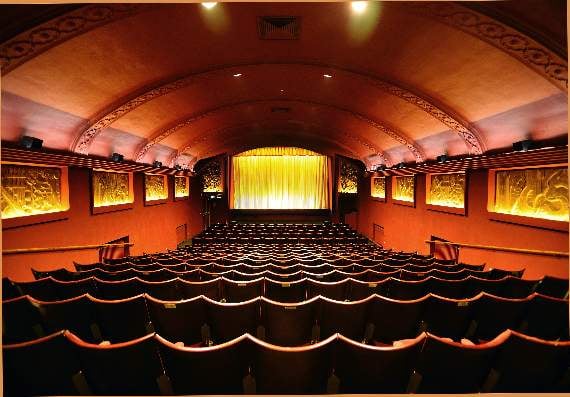
THE queue shuffled and we inched closer to the desk. The contraband hidden in the bottom of my daughter’s bag and in my coat pockets seemed to grow heavier and more conspicuous by the second.
We knew what we were doing carried a risk. I took a deep breath to calm myself, close by a security guard gazed lazily over the queue. We tried to act naturally - but not too naturally; we were almost at the front now. A man with two excited children in front of us handed over some money and went on his way. It was my turn.
‘Two for number four please.’ Did my voice sound high-pitched, had I spoken too quickly? In my peripheral vision the security guard walked toward us but his hand-held radio emitted a distorted and illegible voice to which he responded and turned away. I picked up our passes and we headed hastily away trying not to make eye contact with anyone.
We found our seats and breathed a sigh of relief, as long as were not too obvious now we would get away with it. There were many others there but they ignored us. We had succeeded. We were seasoned smugglers and our experience had paid off where so many others had been caught.




Our ‘contraband’ consisted of two cheese and salad sandwiches, two packets of nuts and two bottles of diet cola. Not the stuff of high-end narcotics cartels but it would have been enough to have us ejected from the multiplex if we had been caught transgressing their hard and fast rule stating ‘Food and drink purchased elsewhere must not be brought into or consumed in this cinema!’
We had bought our snacks in the supermarket around the corner for a total of £4.25. The same, or very similar, in the cinema would have come to £10.20, hence the need in these austere times for our little act of subterfuge.
The snacks on offer in cinemas and other places of entertainment have changed out of all recognition in the space of a generation. It used to be a choc-ice or a packet of popcorn. Now it’s not just the films that are predominantly American. There is a hot dog stand, a whole cornucopia of sweets and chocolates and even licensed bars in many multiplexes.
But the biggest and most immediately noticeable change that would hit a time traveller from the seventies would be the gargantuan size of the snacks. Popcorn used to be in a small bag. Now it comes in three sizes, huge, massive and downright industrial.
The drinks too have evolved from a dainty and rather elegant bottle into a hideous paper bucket capable of holding far more liquid than a human bladder is designed for.
And if you think the snacks are big, take a look at the prices. In our closest multi screen cinema a hot dog was on sale for £4.10. It claimed to be a six-incher and while the bun measured up, the rather miserable sausage could only muster four and a half inches, that’s almost a pound an inch!
For £11.75 I could have had a ‘Cincinnati Family Sizzler’ I asked the girl behind the counter what it was and she replied, ‘Well it’s like… some meat.’ I decided to give it a miss, I’d come to watch a film not have a barbecue.
The cinema chains and entertainment venues have huge purchasing power at the wholesalers and yet still deem it necessary to add seemingly exorbitant mark-ups. Going to a live concert recently I was asked £2.75 for a bottle of cola and £1.25 for a bag of crisps costing 25 pence in the nearby Sainsburys.
It’s not only the cost of the snacks but the fact that these paragons of free enterprise appear to be terrified of healthy competition. Surely, having paid to see the entertainment where is the harm in supplying your own food and drink? It’s not as if catering is their primary source of income.
If you were to take supermarket beer into the pub the landlord would have a legitimate reason for being a little miffed, it is after all his primary business, but where’s the harm in taking a sandwich to the cinema? It’s not as if you’ve paid to see the film and then sat there watching an entirely different movie on your iPlayer!
Vue Entertainment, who operate 68 multi screen cinemas in the UK and Ireland, claim most of the money goes to film makers and distributors forcing them to charge premium prices for food and drinks. ‘The alternative is to charge a higher price for tickets which would restrict more people from enjoying the cinema,’ they stated.
However, unlike a number of their competitors they do allow customers to supply their own food and drink, ‘With the exception of hot foods, foods purchased from other restaurants or alcohol.’
Cineworld, operators of 78 complexes throughout the UK and Ireland however, apparently do not. Phoning different cinemas within the group brought different responses. The Bristol site stated quite clearly that no food and drink bought elsewhere could be brought into the cinema; however another branch gave the response, ‘Yeah, that’ll be OK as long as you don’t tell us about it.’
I asked Cineworld for a definitive statement on their pricing policy and a spokesperson responded, ‘We try to offer a complete entertainment experience by showing the latest movies and offering a range of snacks, where profits are needed to help fund the running of local complexes.’
As a child I recall going to the cinema and watching the film through clouds of smoke as hundreds of people lit up at once. It was always an eye-stinging and wheezy experience and served to keep many people, children especially, from attending their local flea-pit.
But as belts tighten ever more and disposable income becomes disposable all too quickly, cinemas and similar entertainment venues are in danger of pricing themselves out of the market.
Seeing the latest films on the big screen will always be popular but the multiplexes will soon be forced to face the reality of their customers’ need to make ends meet.
Savings have to be made so until the entertainment centres learn to accommodate the ever shrinking family budget it’s going to be case of carry on smuggling.
Comments
This article has no comments yet. Be the first to leave a comment.