

Dog owners across Monmouthshire are being urged to take extra precautions when out walking their pets this summer and beyond, to help combat the deadly disease, Alabama Rot.
The mysterious illness first appeared in the late 1980s affecting greyhounds in America,
A total of 78 dogs in the UK have been confirmed with the disease since 2012, with 14 in the first four months of 2016.
London, Monmouthshire, West Sussex and Surrey have seen two confirmed cases this year, while Cheshire, Greater Manchester Lancashire, Wiltshire, East Sussex and Wrexham have all had one confirmed.



Scotland and Northern Ireland are thought highly likely to have also had cases recently, but both remain unconfirmed.
Now vets are working together, to increase awareness and help find the causes, including Alabama Rot experts Anderson Moores Veterinary Specialists and Vets4Pets.
“The cause of Alabama Rot, clinically known as idiopathic cutaneous and renal glomerular vasculopathy (CRGV), is still unknown and there is no known way to prevent a dog from contracting the disease,” said David Walker, from Anderson Moores.
“While there is currently no known way to prevent a dog from contracting the disease, there is a very useful guide available online to help people understand where in the UK confirmed cases have been found and advice on how to spot signs.
“Any concerned dog owners should visit www.vets4pets.com/stop-alabama-rot/.”
To help collate correct data for dog owners, Anderson Moores is calling for all UK vets to contact them if they see a dog they suspect has Alabama Rot.
“Only tests on a kidney from an affected dog (most likely post mortem) will give 100% confirmation of the disease,” added David.
“There have been a number of cases ‘confirmed’ by vets, but unless we carry out analysis of the affected pet, we will never be able to confirm the disease.”
Vets4Pets, which has nearly 400 practices across the UK, is supporting the research work carried out by Anderson Moores Veterinary Specialists to help understand the disease, how it can be treated and possibly prevented.
“The concern among vets in the UK is that, unlike the Alabama Rot that affected greyhounds in America, the disease in the UK does not seem to target any specific breed, age, sex or weight of dog,” said Dr Huw Stacey, director of clinical services at Vets4Pets.
“Treatment is supportive, but is only successful in 20-30% of cases, which is why we’re encouraging all dog owners to use the online interactive guide to help them understand the clinical signs and confirmed locations of Alabama Rot.
“The first sign that is normally seen is a skin sore that isn’t caused by a known injury. Most commonly these sores are found below the elbow or knee and appear as a distinct swelling, a patch of red skin or are open and ulcer-like.
“If a dog becomes affected the best outcome will probably come from early and intensive veterinary care, which has resulted in some dogs successfully recovering.
“Any dog owners who are worried that their pet might have Alabama Rot should contact their veterinary practice immediately.
“This will help build knowledge about the disease and also give a dog the best chance of survival.
“We would also encourage all vets and owners to work with David and his team at Anderson Moores so we can have a clear picture of confirmed cases in the UK, to help prevent more dogs falling victim to this terrible disease.”
To find out where in the UK cases of Alabama Rot have been confirmed follow this link www.vets4pets.com/stop-alabama-rot/.
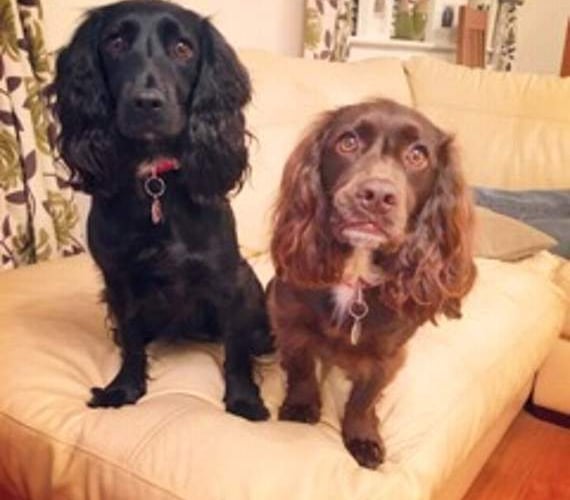
In December 2015 Jess Worthington from Swindon in Wiltshire had walked her two working cocker spaniels, Pippa and Molly in woods near her home.
It was a common location for them all, but just two days later Jess noticed sores on Pippa’s legs and within 24 hours Molly was also affected.
The veterinary nurse immediately suspected something serious and took them to her surgery for examination.
Both dogs were treated as suspected Alabama Rot cases and transferred to Anderson Moores Veterinary Specialists near Winchester, Anderson Moores is the leading UK specialist centre on Alabama Rot.
While Molly responded well to treatment, Pippa was rushed to the Royal Veterinary College in London for a new treatment technique that at this stage, and with current level of knowledge about Alabama rot, is of unknown benefit.
Sadly, despite the best efforts of vets and nurses, Pippa died just one week after the walk on December 15.
Molly was eventually allowed back home after treatment at Anderson Moores and has fully recovered, but she will undergo regular check-ups.
Jess said, “It was a very upsetting time as my dogs are like family and went everywhere with me.
“When Anderson Moores rang me to confirm Pippa had developed Alabama Rot it confirmed something I had already suspected it was going to be.”
Jess has since helped to raise awareness about the disease and recently raised £10,000 to support research into the cause and possible vaccine.
All the money raised has been donated to the New Forest Dog Owners Group and Anderson Moores have subsequently used this money to investigate the cause of this devastating disease in the hope of helping save dogs in the future.
“The disease is horrible and indiscriminate, so I’m hoping dog owners take note of the advice given by Anderson Moores and Vets4Pets, to stop this happening to their dogs,” she added.
“Some people still don’t know about the disease so it is really good to get the word out.
“Molly is recovering really well and her lesions have now fully healed up, I just hope we find a cure for it soon to stop people going through what Pippa and I did.”
On February 4, 2015 Lulu (then aged 6), went on her usual walk with owner Michael Barlow on the south coast near Lymington.
The following morning she was showing potential signs of Alabama Rot so was seen by Michael’s local vet and kept in overnight.
Within 24 hours Lulu was being transferred to Anderson Moores near Winchester under the care of Alabama Rot expert, David Walker.
Unfortunately three day passed and Lulu wasn’t improving. Michael was told to prepare for the worst.
But then a special treatment was offered to try and help save Lulu. Michael, who has recently moved to London, immediately approved the suggestion.
He said, “We agreed there maybe nothing to lose in admitting her to the Royal Veterinary College’s (RVC) Queen Mother Animal Hospital in Hertfordshire, to undergo a non-guaranteed treatment called Plasma Exchange Therapy (PET).
“At the hospital, following two rounds of PET and three weeks of round-the-clock intensive care, Lulu eventually came through.
“It was such a relief to see Lulu come through after such a grueling treatment, and I can’t thank enough my local vet, Anderson Moores and the RVC for literally saving Lulu’s life.
“As a result of the experience I went through, and the suffering of Lulu, I resolved that I would try to make a contribution to help prevent this awful condition and the distress it can suddenly bring.
“I felt indebted to all the medical staff who treated my dog and wanted to build on the excellent work done by the New Forest Dog Owners Group to set up a national charity aimed at raising money to fund research into the causes and hopefully successful treatment of Alabama Rot.”
The charity is called Alabama Rot Research Fund and is looking to raise enough money to fund a researcher to work with Anderson Moores to investigate the causes of the disease and ultimately lead to the development of a cure or effective preventative treatments.
Michael added: “The disease is horrible and indiscriminate, so we’re wanting to raise £240,000 and fight this ‘invisible’ illness.”
Comments
This article has no comments yet. Be the first to leave a comment.