
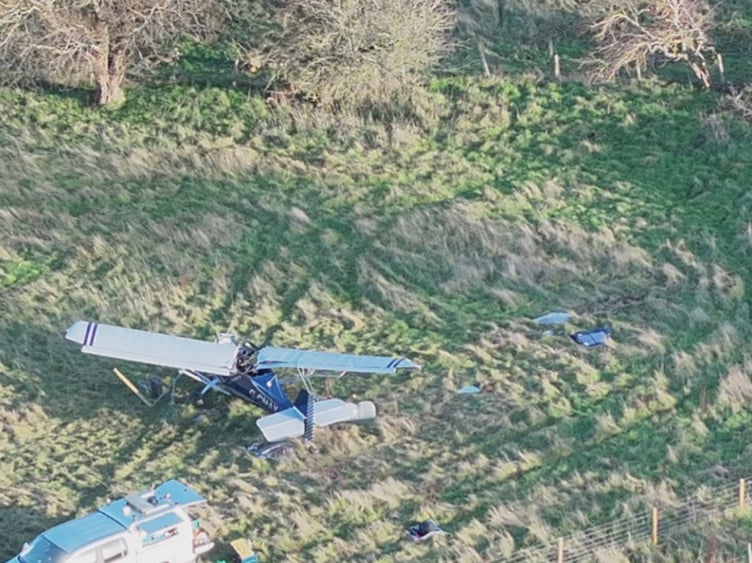
HEAVY crosswinds probably caused a glider tug airplane flown by an 81-year-old pilot to crash in a field after take off, investigators have said.
The accident at the Black Mountains Gliding Club’s Talgarth Airfield happened around 11.30am on December 27, 2025, and left the pensioner pilot seriously injured.
A report by the Air Accident Investigation Branch said: "The tug aircraft in a glider-tug launch combination rolled, uncommanded, to approximately 60 degrees left wing down.
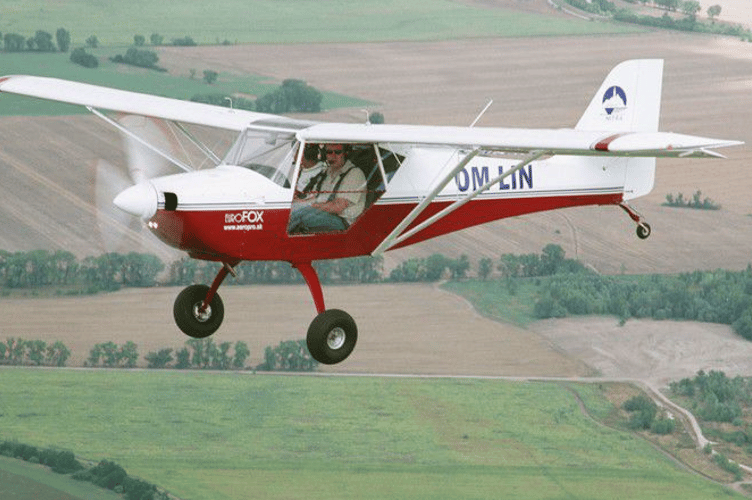
"The glider disconnected and landed safely ahead, but the tug aircraft turned left and touched down within the airfield boundary before becoming airborne again.
"Control of the aircraft was then lost and it struck the ground in an adjacent field. The sole pilot was seriously injured."
The wind at the time of the accident was fully across the runway in use and may have been above the crosswind limit of the Eurofox 2K aircraft, investigators said.
"Turbulence encountered by the aircraft during the flight immediately before the accident indicated that the air mass over the runway was unstable and is likely to have been so during the accident flight, probably causing the initial roll and subsequent loss of control," added the report.
"As a result of this accident ,the gliding club improved the weather reporting system to provide more accessible and accurate wind measurements to pilots and began work to improve the safety culture at the gliding club."

The initial take off had been switched from one runway to another because the original strip was too wet and boggy.
But the tug aircraft was seen being "rocked considerably by turbulence" during a previous landing that morning on the chosen runway, when it had to make a second attempt to land successfully.
At lift off towing the glider, the tug aircraft was then observed "rocking from side to side and then to drop the left wing by approximately 60 degrees".
The tyres touched the ground briefly on the airfield boundary whilst tracking towards a line of trees, but the aircraft then climbed “almost vertically” passing over the trees and a small hangar before descending rapidly into a field beyond.
The aircraft clipped the top of a fence with its wingtip before striking the ground in a nose down attitude and spinning 270 degrees, displacing the wing and causing damage to the cockpit and a propellor.
The report noted that the pilot of the tug aircraft was an experienced glider and powered aircraft pilot, who had held a licence for 45 years and had completed over 12,000 aero-tow operations since 1978, while the glider pilots were also experienced.
It said the club had since instilled a culture whereby pilots asked themselves "Should we fly, rather than can we fly?", and "What’s trying to catch me out today, what mistakes would make that more likely, and what am I going to do about it before launch?"
The club has also introduced a live wind indicator on its website, accessible to all club members, showing a mean two-minute wind and the maximum ten-minute gust.
It also displays headwind, tailwind and crosswinds for all three runways.
Comments
We've recently changed our login process. If you have an account for commenting, you will need to re-register on the login window.
This article has no comments yet. Be the first to leave a comment.