
The picture of the old horse and cart we featured a fortnight ago transported many a Chronicle’s reader’s wayward mind far over the rainbow, through the murk and mist of yesteryear, and to a run-down and ramshackle house in memory lane called ‘long ago and far away.’
For those of you of a less poetic bent that translates as - the photos jogged a fair few memories of the good old days.
One such reader who was transported back in time through the hallways of always was Hugh Jones.
Upon seeing the pic of the Redwood’s Bakery delivery van parked up outside the Hen and Chicks watering hole he thought he’d get in touch and tell us a few things we failed to mention. Over to you Mr Jones.


“Not many may now recall but the picture you featured was taken from outside Redwood’s Bakery which was, at that time, across Flannel street from the Hen and Chickens pub.”
Mr Jones added, “When I was a boy, we lived in Trinity Terrace, and Mr English, delivered bread on a daily basis to the customers on the bread round. While he made deliveries to the houses, the horse would walk on to the next stop entirely on its own. You wouldn’t have a vehicle do that today.”
Indeed you wouldn’t. But progress is a comfortable disease and everyone’s got to earn a crust, especially bakers, and so our four-legged friends slowly made way for the ease, speed, and convenience of the infernal automobile.
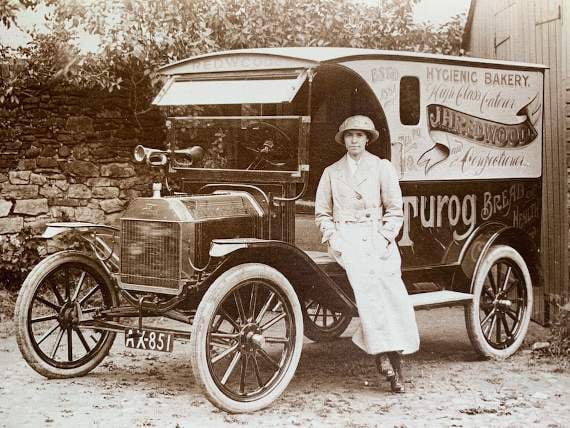
Just check out this picture of Redwood’s Bakery making the leap into the modern world. It’s a lady driver sitting pretty in the Year Of Our Lord 1914 alongside the sort of vehicle you’d be hard-pressed to catch outside of Abergavenny’s annual Steam Rally.
Of course, Redwood’s Bakery is no more. In its place lies a car-park and the universally adored thin white slice of dubious substance, but once upon a time on that spot stood a place where the dough was pressed, the yeast rose like a slightly chubby angel of the morning, and the bread was baked for people to break, chew the fat, and count their blessings over.
As Lewis Carroll once wrote, “‘A loaf of bread,’ the Walrus said, ‘is what we chiefly need.”
Comments
This article has no comments yet. Be the first to leave a comment.