
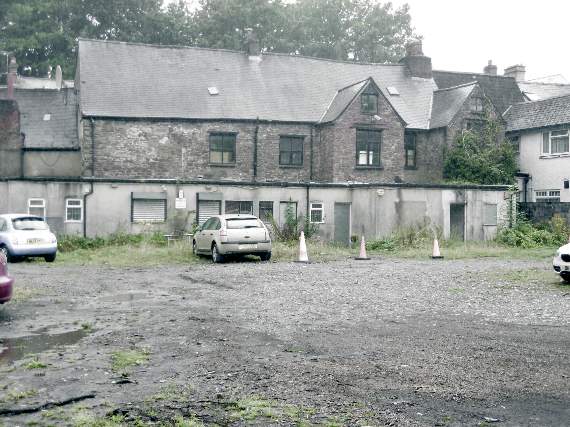
A RECENTLY discovered Roman road in Abergavenny town centre could be lost for good if planning permission is given next week for a housing development in the historic Gunter Mansion’s back yard.
Conservation groups have expressed alarm about the impact on the 2,000-year-old relic which archaeologists found during excavation work at the contentious site behind ‘listed’ 34-39 Monk Street earlier this year.
Abergavenny and District Civic Society has lodged its objection to eight dwelling units being built on the land currently used as an ad hoc car park.
Members of Monmouthshire County Council’s planning committee are being urged by officers to accept the proposals when they are considered on Tuesday at County Hall in Usk.




But they are insisting that “no development shall take place until the implementation of a programme of archaeological work in accordance with a written scheme of investigation which has been submitted by the applicant and approved in writing by the local planning authority.”
The civic society says in its objection, “Recent investigations appear to justify further archaeological explorations and possibly some protection of finds - especially the Roman road.”
Its opposition is based on the ‘detrimental effect’ on the setting of important listed buildings.
Members felt a more creative and sympathetic revision of the application, including the dropping of a two-bedroom flat, could ease some anxieties.
Local resident Amanda Peters complained, “If this gets approved it will be irreversible. It’s Tudor Street all over again.
“Once it’s gone, it’s gone. There will be no point regretting anything afterwards. People should write to MCC to make their views felt.”
Abergavenny Town Council is also objecting to the development.
It accepted that the scale of the development had been reduced, but reservations remained over traffic access problems and the proximity of the scheme to the historic buildings.
Town and county councillor John Prosser called for the application to be considered by the full planning committee in the light of the discovery of a section of Roman Road at the site, the first of its kind unearthed in the town centre.
Councillor Prosser, who is not on the planning committee, hoped that the final outcome would give the town much needed residential accommodation and still preserve its archaeological heritage.
“I would like to see improvements over access and ensure we can maintain the important history of the town,” he said.
He hopes to attend a planning committee site visit in Monk Street on Monday.
The Civic Society stressed, “Clearly, consideration of this proposal requires special regard to be paid to the setting of these important listed buildings which have notable historic value as well as architectural interest.”
Just a few weeks ago the Monmouth-based Welsh Georgian Trust launched a £200,000 appeal to transform the ‘at risk’ 16th century Gunter Mansion as a sympathetically restored tourist attraction and information centre.
It was in 1679 that Wales’ last Catholic martyr - St David Lewis who prayed at the mansion - was arrested and executed.
Comments
This article has no comments yet. Be the first to leave a comment.