
IT may have occurred over 30 years ago but the legacy of the Chernobyl disaster still blights the lives of those who live with the aftermath.
The catastrophe occurred in April, 1986, when technicians at reactor Unit 4 attempted a poorly designed experiment. Workers shut down the reactor’s power-regulating system and its emergency safety systems, and they withdrew most of the control rods from its core while allowing the reactor to continue running.
These mistakes were compounded by others, and at 1:23 AM on April 26 the chain reaction in the core went out of control. Several explosions triggered a large fireball and blew off the heavy steel and concrete lid of the reactor.
This and the ensuing fire in the graphite reactor core released large amounts of radioactive material into the atmosphere, where it was carried great distances by air currents. A partial meltdown of the core also occurred.



The plume of irradiated dust and steam from the stricken Ukrainian plant swept across Europe, reaching as far as North Wales. But, because of prevailing weather conditions at the time, it was the south-eastern corner of neighbouring Belarus that bore the brunt of the catastrophe.
Decades on, children who live in the heavily contaminated area suffer with health issues exacerbated by poverty and groups throughout the UK have sprung up to provide material help and relief.
One such group, Friends of Chernobyl Children Raglan, will be welcoming thirteen youngsters aged 7-8 in June for a month of respite, good food, health checks and hospitality.
The group relies on public donations and with visas for each child costing £100, financial help is vital for the project’s success.
A key aim of the group is to send the children home with enough clothes to serve them throughout the rest of the year, in particular the long Belarus winters where temperatures can hit -15 celsius.
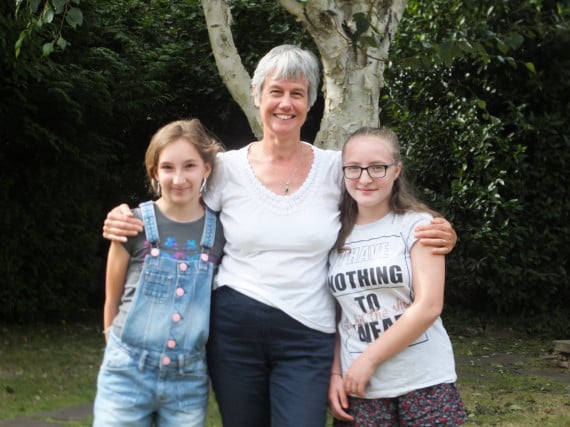
Organiser, Jane Hines (pictured) told the Chronicle, ’The children have almost nothing. The clothes they arrive in are frequently either too large or too small and so sending them home with clothing to sustain them is a priority.
’We want to send them back with a huge bag full of clothes so please get in touch if you have any you could donate. We are looking for girls and boys, winter and summer clothes. We can take school trousers and skirts but not uniform which identifies the school. We can also take shoes in near to new condition.’
While in Wales, the youngsters will also get appointments with opticians, dentists and a chiropractor. Many of them will have issues with their immune and hormonal systems from consuming local foods grown in soil still irradiated. Other items such as toothpaste and vegetable seeds will also be welcome by organisers.
For the Russian-speaking children it will be their first trip abroad, many of them were unaware of Wales’ existence before the journey was organised and a series of outings and educational events have been arranged throughout their stay.
Belarus has a scheme whereby families can borrow money from the state to purchase TVs and laptop computers but the repayments can often be prohibitive. The children, however, are all familiar with the internet and mobile phone use is widespread. With little else to occupy them in their homeland, cell phones are often the only entertainment available.
Friends of Chernobyl Raglan have been in operation since 2001 and have welcomed groups of children annually. Groups can return in five year cycles allowing them to gain from the experience of travel and to help their friends in Wales monitor their growth and health. The group raise funds for the children all year round to help with accommodation and travel costs as well as treats for the youngsters throughout their stay. They have a Facebook page at www.facebook.com/groups/108690739171968/where anyone able to help can contact Jane Hines and arrange a donation. Alternatively Jane can be contacted on 01291 650528 or 07498 780431.
Comments
This article has no comments yet. Be the first to leave a comment.