
It was probably the Romans who introduced watermills to Britain, although the earliest mention of them is in an Irish poem written early in the eleventh century. In Norman times they were the only source of power and if listed in the Domesday Book they were exempt from tithes. Their original purpose was to grind corn but in due course a large number were erected for other purposes, particularly in the early stages of the Industrial Revolution, when paper, woollen and cotton mills all used water power.
Monmouthshire is well blessed with brooks and little rivers which come tumbling down steep valleys and provide power that can be diverted along mill races to turn the wheels of watermills, which once produced flour, flannel, bonemeal and paper. The historian Fred Hando made a special study of the county’s watermills. He recorded no less than 45, and all but five were corn mills. Sadly, in 1964, he commented, ‘Wherever I travel in Monmouthshire, I hear of mills being dismantled, and of their wheels being sold (for about £5) to dealers in old iron.’
By the early 20th century, the availability of cheap electrical energy made the watermill obsolete, although some did continue to operate commercially. Thus today only a fraction of the country’s watermills have survived, and many are now private residences, or have completely disappeared, but fortunately some have been preserved or restored to enable visitors to see them in operation. The last two watermills in Monmouthshire to remain in operation were Skenfrith and Gelli Groes, near Pontllanfraith.



.jpeg?width=209&height=140&crop=209:145,smart&quality=75)
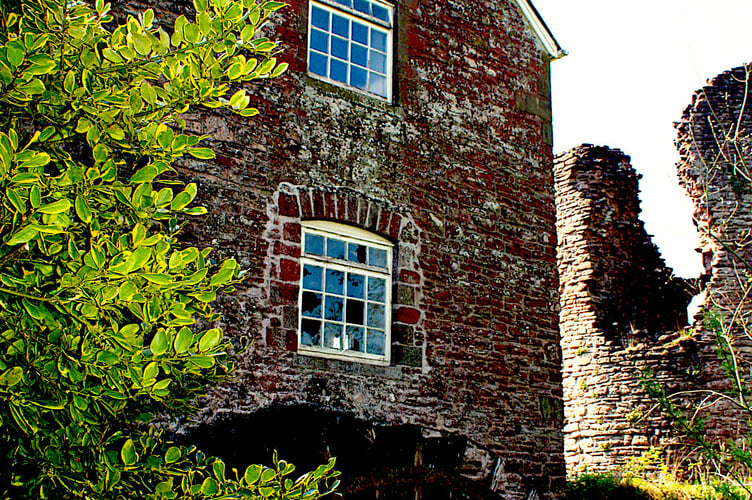
Skenfrith Mill, stands on the bank of the River Monnow close to the south east corner of the castle. It was originally built in 1500 and then reconstructed in 1867. In 1990 it was still functioning as a flour mill, but is now sadly derelict. Grade II Listed, it has a large iron-framed undershot wheel, which was supplied with water from a weir on the River Monnow and a short leat. in the mill’s later days the waterwheel was only used to operate the hoist which carried sacks of grain up to storage silos at the top of the mill. Then a flood in 2002 badly damaged the weir and it no longer exists.
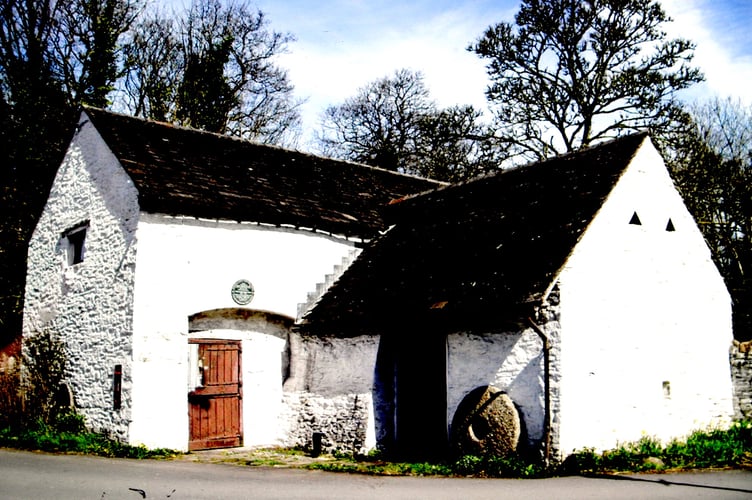
Gelligroes Mill was built around 1625 on the east bank of the River Sirhowy, and it was one of many small watermills in the Sirhowy Valley. They served the needs of the thriving agricultural community which existed before the area became industrialised in the nineteenth century.
The overshot wheel is 12 feet in diameter and 6 feet wide with an iron frame and wooden buckets. It turned twelve times a minute under the force of the mill race which was fed by the river Sirhowy. Ingenious gearing turned the two pairs of 4 feet wide mill stones 140 times per minute. One of them came from the Paris area and the other one was quarried at Penallt in the Wye Valley.
In 1874, the mill passed into the ownership of the Moore family who not only used the waterwheel to grind corn but also to power a generator that provided electricity for the mill and millhouse. They later installed a water turbine to provide electricity when the flow of water from the river was not sufficient to drive the waterwheel. In the 1900s a generator powered by the mill wheel was installed to charge batteries for farmers in advance of the extension of mains electricity to the area.
Artie (Arthur) Moore, born in 1887 was keenly interested in radio transmissions at the time when they were just being developed. Then at the turn of the century in the relative isolation of Gelligroes he built his own wireless transmitter and receiver.
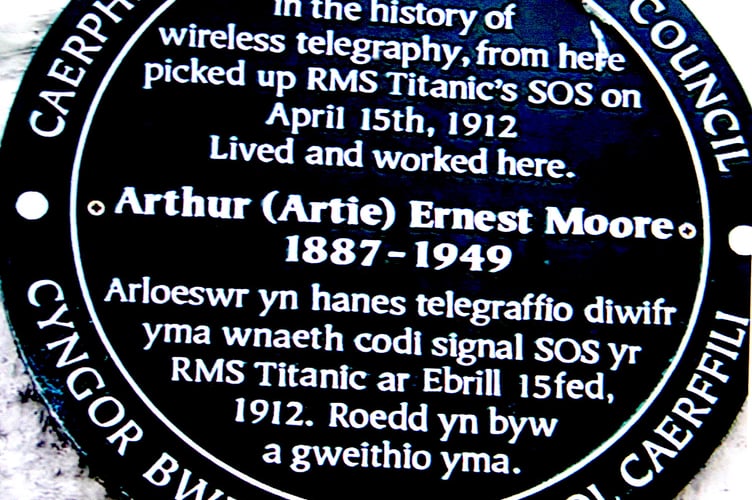
On April 14, 1912 he picked up distress signals from a ship which he identified as the Titanic which was making its maiden voyage to the USA. He initially picked up a faint signal in morse code which read: ‘CQD Titanic 41.44N 50. 2410’. Soon afterwards he received the message ‘Require immediate assistance. Come at once. We have struck an iceberg.’ The next message was ‘We are sinking fast. Passengers being put in boats.’
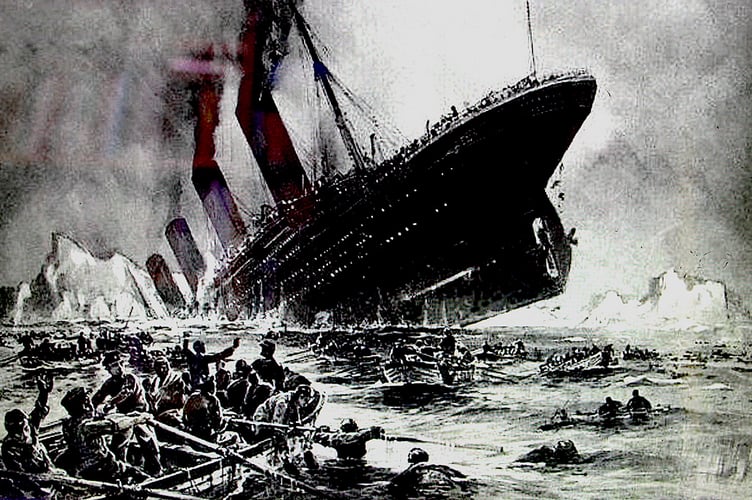
After the messages stopped, Artie ran to the local police station to relay the news, but the police just laughed in his face, for they believed that he was making it up because radio signals at that time were thought to have a much shorter range.
He then went home and told his family, but they did not believe him either because the Titanic was considered to be unsinkable. However, within two days of him picking up the signals reports of Titanic’s sinking appeared on newspaper front pages across the world and this resulted in Arthur Moore becoming a local celebrity. He was the first person in the UK and probably in Europe to hear the distress call.
One newspaper reported that ‘A young boy from the valleys of South Wales has witnessed through the modern invention of wireless, the death of a famous ship thousands of miles away.’ In order to hear the Titanic , 3,000 miles away his receiver must have had a very good antenna and it which was probably a large installation which he had strung across the valley.
Artie Moore died in Bristol on January 20 1949, and his obituary appeared in the Merthyr Express on February 5 1949, with the headline ‘He picked up the Titanic SOS’. It then told how ‘In 1912 he picked up the SOS message of the Titanic in the Atlantic when the Carpathia rushed to the rescue’.
In 1962 Gelligroes Mill was designated a Grade II Listed building because it has retained its machinery and is of unusual historic interest. It was still in use in the1970s, but later became derelict. It was restored and became the last mill operating commercially in Monmouthshire, but eventually it fell into disuse in the late 1980s and in 1992 became the property of David Constable who turned it into a candle factory.
His business ‘Candlemakers Supplies’ also provided equipment for people to make their own candles. He even had a Royal Warrant to make candles for Prince Charles - now King Charles III
Comments
We've recently changed our login process. If you have an account for commenting, you will need to re-register on the login window.
This article has no comments yet. Be the first to leave a comment.