
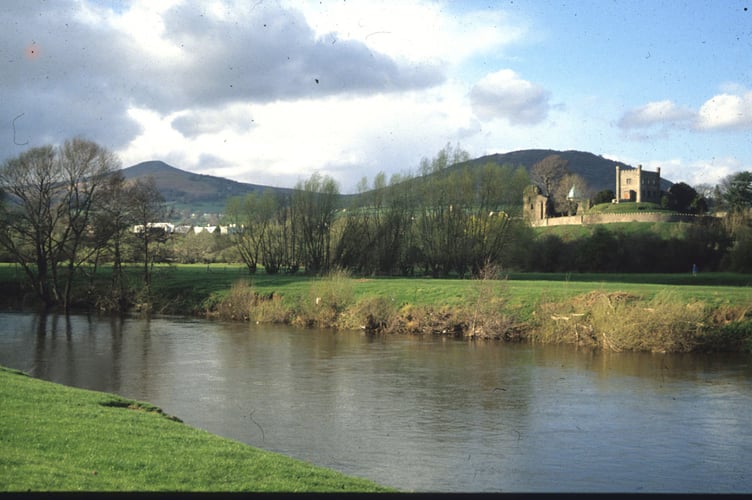
In 1963 I created the Three Peaks Trial as an annual event and after organising it for several years, I handed it over to a fellow enthusiast. Fifty three years later it is still held. This means a great deal to me that it still takes place in March, attracting hundreds of walkers, and I am proud of the fact that is the oldest Challenge Walk in Britain. This year it takes place on Saturday, March 28 and for more information visit the website: threepeakstrial.co.uk
To live in or near Abergavenny is particularly rewarding if you are a keen and active walker, for just like Rome it is surrounded by hills. They are not only good to look at but also provide excellent scope for stretching the legs and enjoying views in all directions.
I have spoken to people who have lived in Abergavenny all their lives and they remark to me ‘Yes I have been up the Sugar Loaf, but only once, and that was about thirty years ago.’ It is obvious that they are not regular walkers. so to them an ascent of the Sugar Loaf is just something that only needs to be achieved once in order to boast that they have been to its summit. Having accomplished that they have been content to merely gaze upwards at the Blorenge and Skirrid Fawr which also overlook their town.
I strongly believe that to know these peaks intimately it is necessary to ascend them on numerous occasions and at varying times of the year. It is only then that you can appreciate their moods and the ever-changing views, across the Vale of Usk, to the Black Mountains and eastern Monmouthshire.


.jpeg?width=209&height=140&crop=209:145,smart&quality=75)

In the autumn, I enjoy walking through St Mary’s Vale on the Sugar Loaf in order to enjoy the startling colours and to stand on the summit in darkness As you look down on the twinkling lights of Abergavenny it can seem as if you have never been there before. If you make the ascent on a grey clammy November day or in a keen March wind that cuts like a razor, you will not linger on the summit, but just pause to touch the trig’ point and then descend to escape from nature’s cold and buffeting force.
On another occasion I might struggle to a chosen summit through driving rain, stinging hail-stones or the flurry of a blizzard to reach an ice-encrusted trig’point. It is then that the times when I sweated my way upwards on a hot summer afternoon will seem unreal and hard to imagine. If you set out to experience such a wide variety of weather conditions it will enrich your knowledge and appreciation of these hills, and then every ascent becomes a memorable one.
A mist enveloped hill can conjour up feelings of sadness and loneliness, emphasising the possibility that no-one but yourself and your companions are out walking that day. Even rain has its attractions, for on some days it will ensure wonderful clarity to the views when a gap appears in the clouds and shafts of sunlight suddenly make it all seem very worthwhile.
Snow can also provide a touch of magic, even though it glares in strong sunlight, makes your legs ache when it is deep and your feet wet when it gets into your boots. But you will always long to see it on the hills again and take delight in plodding your way through a fairy land that bears no resemblance to a route that you are normally used to following.
A friend of mine once said to me that he did not like walking on the Blorenge because he found it boring. I strongly disagreed with his point of view and described some of the fascinating walks that are possible, particularly if you have an interest in industrial history.
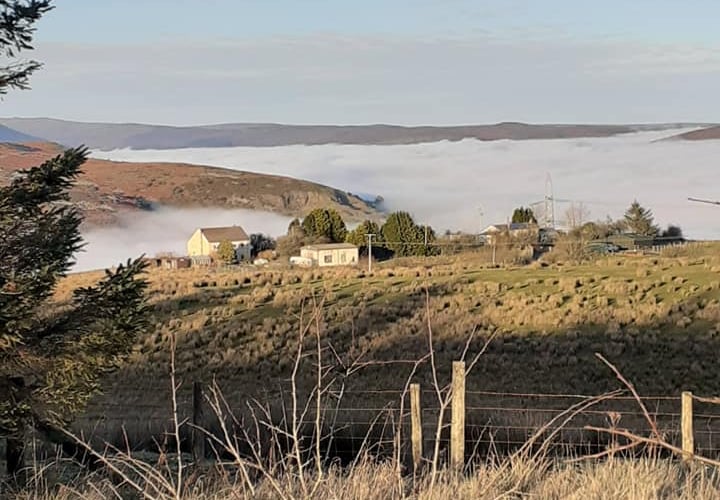
The Blorenge sits like an armchair overlooking Abergavenny and sometimes it seems to frown upon the town, but on a summer evening, when its northern slopes catch the evening light, it forms a serene and beautiful backdrop.
It is of course not a separate hill like the Sugar Loaf or Skirrid Fawr, but the abrupt termination of a long ridge that stretches from Pontypool, and reaches the escarpment overlooking Abergavenny. To approach this brooding hill from the north is undoubtedly a challenge, but a satisfying achievement, because when you reach the escarpment it provides a remarkable bird’s eye view over Abergavenny.
Lower down, it is possible to explore the tramroad constructed in the 19th century by the ironmaster Thomas Hill, but walkers who do not know its history may ponder on the origin and purpose of yesterday’s endeavours. Alternatively, one can seek out the hollow known as the Punchbowl, and imagine the mountain men over a hundred years ago prize fighting in this secret place.
In 1877 John White remarked that Sugar Loaf can be seen ‘rising like Vesuvius, to the clouds describing an outline remarkable for its undeviating smoothness and easy graduation.’ It is without doubt a landmark that can be seen from many miles away and from a distance the summit looks small and flat, but when you get there, you are surprised to find that it is a narrow ridge 300 yards long with a cluster of rocks at the western end.
Archdeacon William Coxe who stood on the summit in 1801 commented that during his time there he felt that ‘the air was more pure, the body more active, and the mind more serene, lifted up above the dwellings of men.’
Skirrid Fawr was my very first peak , when at the age of six, I was taken up it by my father and I well remember standing on the summit staring in wonder at the 360 degree view. Then a strong gust of wind snatched my school cap which was blown away beyond retrieval.
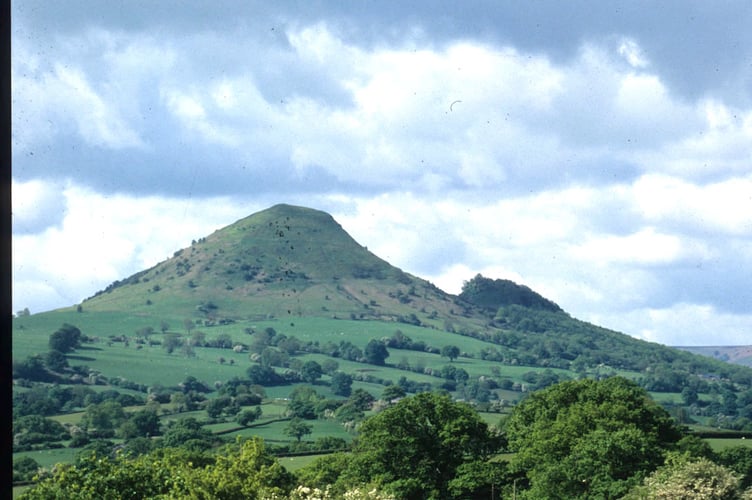
The writer Arthur Machen, when living near Caerleon could see Skirrid Fawr from his bedroom window and he commented: ‘On clear days I could see the pointed summit of the Holy Mountain, a pure blue in the far sunshine; it was a mountain peak in a fairy tale.’
Seen from different angles the Skirrid takes on a wide range of appearances. Sometimes it is a long ridge or a mere hump and at other times it appears dark and sinister with its weird gash silhouetted against the sky. Legend claims that this was caused when Noah’s Ark glided over during the Great Flood. Alternatively, it is a landslip that occurred at the time of the Crucifixion of Christ when the hill ‘was rent asunder by an earthquake and a bolt of lightning.
Comments
This article has no comments yet. Be the first to leave a comment.