
ALBERT Einstein once said the only reason for time to exist is so that everything doesn't happen all at once. But just imagine if it did? Things would get awfully messy and quick!
Yet putting the illusion of now to one side, it's probably best we take our time like we do our food, in attractive and easily digestible portions.
So let's turn our attention to 100 years ago to see how different the news was from our era and how well it sits in modern stomachs that have been cultivated by a steady diet of additives, microplastics and sugar-coated junk.
It’s safe to say that 1926 was a big year. In his laboratory in London, John Logie Baird gave his first public demonstration of a working television. Imagine that there are people still alive who were born in a pre-television era, and now we live in a world dominated by tiny screens.
Elsewhere, land at Broadway and Wall Street sold for a record $7 per square inch, three men danced the Charleston for 22 hours, National Geographic took the first-ever natural-colour undersea photos, the first talkie movie "Don Juan" was shown at New York’s Warner Theatre, Queen Elizabeth II, Marilyn Monroe and Fidel Castro were born and there was a General Strike in Britain because pay and conditions were so bad. Sound familiar?
One and a half million workers went out on strike and even newspapers stopped publishing.
Elsewhere, Winnie the Pooh made his first appearance, and Robert H. Goddard successfully launched the world's first liquid-fuelled rocket. Boom!
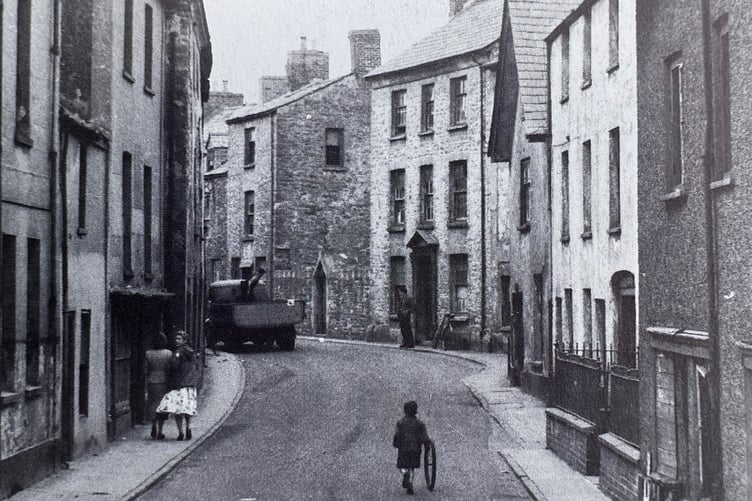
Meanwhile, back in Abergavenny, the front-page news on the first Chronicle of the new year is the tragic tale of many sheep being buried in snow in Crickhowell. Thankfully the wooly wanderers were ok, and just like the wet sheep, the local action heated up later that month with a report on three local lads, aged 13, 11, and 11, who were charged with stealing rabbit skins from a shop on Monmouth Road.
The chairman of the court said the older boy was evidently the ringleader and led the other boys astray. For his crime, he was given six strokes of the birch rod whilst his chums were let off with a caution.

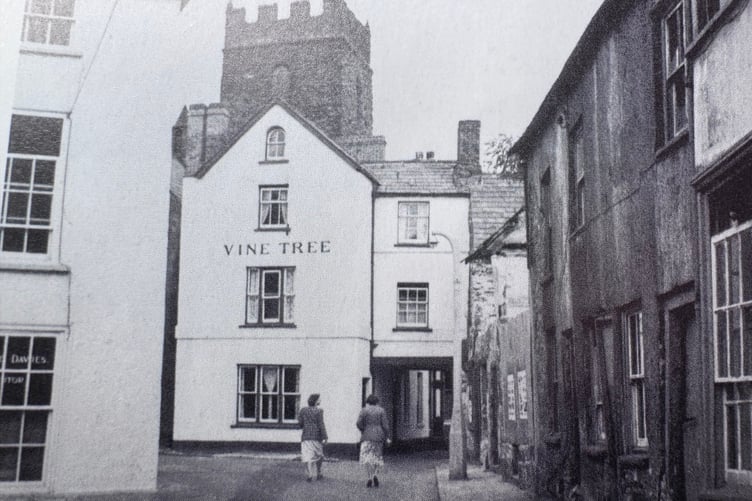
Elsewhere in the dark recesses of Abergavenny Town Council’s chambers, a councillor uttered the unthinkable and expressed his concern that “Castle Meadows was a no-man’s land.” Not because it was littered with drunken youth, foul-mouthed ne'er-do-wells and twopenny bandits, but because of the unsightly state of the footpaths. Oh dear! What’s a dignitary to do?
Relishing the knowledge that the pen is mightier than the sword, a resident of Stanhope Street going by the name of W.H.P. Hand wrote to the Chronicle and expressed his joy that, “It is quite to say the coming of Socialism is inevitable; it is but a problem of evolution. The present rotten and irrational system cannot endure. It must pass away. The people are rapidly awakening, and when they are fully awake they will not stand for it. The monster capitalism will be swept away.” I wouldn’t bank on that, dear boy!
At the Abergavenny Bowling Club Dinner, the following apologies for non-attendance were read out by some very distinguished people;
H.R.H. the Prince of Wales: “Had you dinner been held in November, I would certainly have stopped at Abergavenny.”
The Prime Minister (Mr Stanley Baldwin): “Sorry I cannot be with you. I should especially like to have met your Mayor and received a few hints on ‘cabinet’ making.”
The Chancellor of the Exchequer (Rt Hon. Winston S. Churchill): “Sorry, too busy to come. I should like to have a chat with your treasurer and got a few tips on how to get money out of impecunious bowlers. Like a true ‘Britton’ I’m sure he would have helped me.”
The Foreign Secretary (Sir Austen Chamberlain): “Should very much like to have come, but am too busy ensuring peace to get any peace myself. If my services are of any use to you at any time in settling any dispute on your green, you are welcome.”
Minister of Health (Mr Neville Chamberlain): “Glad to hear that the morality among bowlers is so low. Hope that my local representative. Mr. John Edwards, will be able to get more outdoor relief on the green next season.”
In their first match ever played between the two sides in Abergavenny, the English hockey team beat Wales on the “appropriate battleground” of Bailey Park.
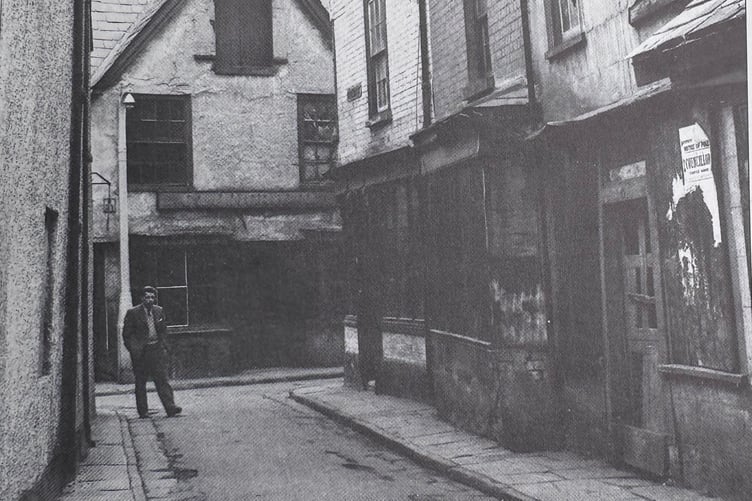
Two Govilon labourers found themselves before the court in May of this year after one was accused of threatening to kill the other because he had run over his duck on a bicycle.
The defendant, who claimed that his fellow labourer had run over is duck with a push-bike, is alleged to have snarled in grief, “I’ll knock your f**king head off and get justice for my poor quack quack.”
The defendant told his fellow labourer in court, “I told you that you were no man to come back and tell me you had killed the duck. If you told me I would have looked on it as an accident, and it would have been finished.”
The Chairman of the court, Col. W.D. Steel, ordered the two men to shake hands and the case was dismissed.
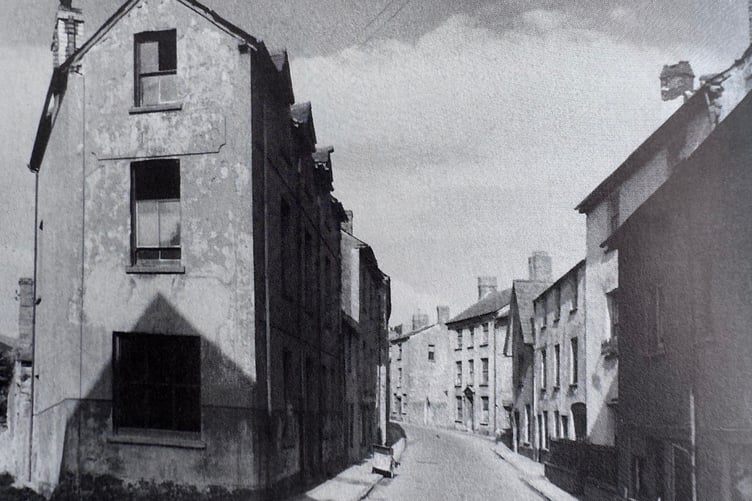
In his regular column, Sugar loaf Musings, the Chronicle’s “Gobannium” asks, “How many people know the origin of the term “bulldogs” as applied to Abergavenny men?
Col. W.D. Steel refers to this matter and gives an interesting explanation in an article on the early history of the Volunteer and Territorial movement which he has written for that fine book, ‘On the Western Front,’ dealing with the record of the third Monmouthshire Regiment in the war.
Col. Steel says of the volunteers, ‘The Abergavenny company wore bulldogs on their shakos, and were known as the ‘Bulldogs’, a nickname due to a special breed of dog peculiar to the town. I can just remember the last of these dogs owned by the old town crier. At his death, the strain died out.’”
Comments
This article has no comments yet. Be the first to leave a comment.