
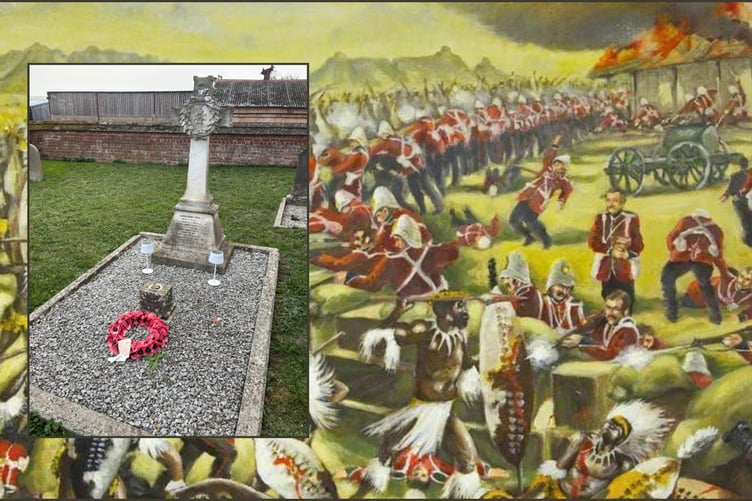
THE story of Rorke’s Drift travelled thousands of miles back to a small parish church last Thursday, where the life of one of its best known defenders has a deeply personal connection for me.
Private Alfred Henry “Harry” Hook was born at Churcham in 1850, survived the desperate battle in southern Africa and earned the Victoria Cross. He was also my great-great-great-uncle.
Reporting on an evening devoted to his story at St Andrew’s Church therefore meant writing about a member of my own family as well as a remarkable chapter of military history.
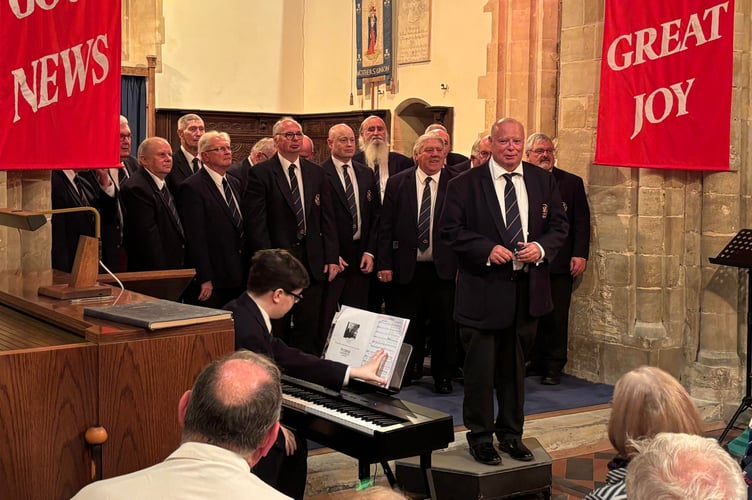
In Churcham, the churchyard contains Hook’s grave, making it an unusually appropriate setting for South African storyteller Rob Caskie’s account of the battle. The evening also featured Côr Meibion Morlais, a Welsh male voice choir whose music gave the commemoration another connection to the regiment and its later Welsh identity.
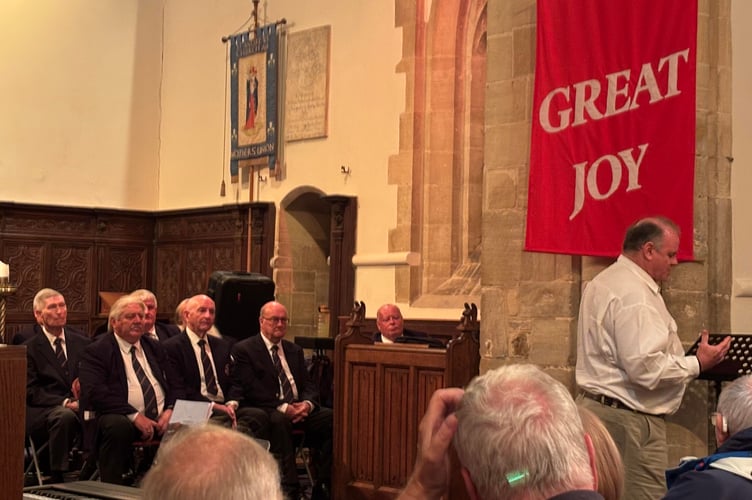
The choir opened at 7pm before Giles Cross welcomed the audience and Caskie began. His storytelling was captivating. With his unique, intense South African delivery, he held the room without a screen, visual effects or even a microphone, fixing individual listeners with eye contact and drawing them into the scenes he painted with words.
The story began not with a British triumph but with a catastrophe. Britain had invaded the independent Zulu Kingdom, seeking to extend imperial influence in southern Africa. On January 22, a large Zulu army overwhelmed the British camp at Isandlwana, inflicting a defeat that shook the invading force.
Survivors carried news of the disaster towards Rorke’s Drift, a mission station beside the Buffalo River being used as a supply depot and hospital. The exhausted horsemen were asked to release their horses and help defend the station, but refused to abandon the trusted animals they believed had saved their lives. Instead, they were instructed to ride back towards Isandlwana, up the slopes of the Oscarberg mountain, in an attempt to slow the advancing Zulu warriors and buy the defenders precious time to prepare.
Lieutenants John Chard and Gonville Bromhead, encouraged by Assistant Commissary James Dalton, prepared to hold the position. Roughly 150 men constructed makeshift defences using mealie bags, biscuit boxes and wagons. Around 4.30pm, approximately 4,000 Zulu warriors attacked.
What followed lasted through the night. The defenders fired from behind barricades as repeated assaults threatened to break their lines. Ammunition had to be distributed continuously, wounded men helped load rifles and positions were abandoned as the garrison withdrew towards a smaller defensive perimeter.
The hospital became the scene of some of the fiercest fighting. Zulu warriors forced their way into the building and its roof caught fire. Patients unable to move freely faced danger from both the attackers and the flames, while soldiers fought at close quarters to keep an escape route open.



This is where my ancestor’s story became inseparable from that of another local soldier. Private John Williams, born John Fielding in Abergavenny, was defending a distant room with other men when ammunition ran out and attackers broke in. He began making an opening through an internal wall to move patients into the adjoining room.
Williams hacked through room after room to move sick and wounded men away from the attackers. Caskie described how, by the end of the night, the relentless digging had left virtually no flesh remaining on his hands, injuries from which he would never fully recover. Williams eventually reached Hook, who held the attackers back while further partitions were broken through. Together, they helped eight patients escape the burning hospital.
Another Monmouthshire soldier, Robert Jones, who was born near Raglan, was also among those defending the hospital. Fighting alongside Private William Jones, he helped wounded patients escape the building as Zulu warriors advanced, with his bravery earning him the Victoria Cross.
By dawn on January 23, the Zulu force had withdrawn. Seventeen defenders were killed and hundreds of Zulu warriors lay dead. Eleven Victoria Crosses were awarded to men who had taken part, including Hook, Williams and Jones.
The defence became a celebrated Victorian story, particularly because it followed so quickly after the defeat at Isandlwana. Yet the contrast needs care. The British had invaded the Zulu Kingdom, and the defenders’ bravery does not erase the causes of the war or the courage of the Zulu warriors fighting to protect their country.
Rorke’s Drift did not decide the campaign. Its significance was largely symbolic, offering Britain a story of endurance after a disastrous defeat while often overshadowing the much larger Zulu victory earlier that day. Modern remembrance can recognise individual courage without overlooking that wider history.
The battle entered another generation’s imagination through the 1964 film Zulu. Stanley Baker played Lieutenant Chard, Michael Caine portrayed Bromhead and James Booth appeared as Hook. The film’s version of my ancestor, however, was notoriously different from accounts of the real man.
On screen, Hook was portrayed as a troublesome drinker who eventually rose to the occasion. Historical accounts instead describe a disciplined soldier and teetotaller. His family objected to the characterisation, a reminder that cinema can preserve a name while changing the person behind it.
Hook had joined the regular army at Monmouth in March 1877 after service in the Monmouthshire Militia. He later worked at the British Museum, continued his military association through volunteer service and returned to Gloucestershire after retirement. He died in 1905 and was buried at St Andrew’s.
His medal is preserved in the regimental collection at Brecon, The 24th Regiment of Foot, with which he served, later became the South Wales Borderers, whose history remains closely associated with Brecon.
One detail at Thursday’s event brought the past and present together. Colin Fielding, a direct descendant of Williams, was among those attending, as Caskie told the audience.
Throughout the evening, Caskie emphasised just how young and inexperienced many of the defenders had been, describing them as “green” soldiers facing unimaginable danger. As he spoke, his piercing gaze would occasionally settle directly on me, almost as though he were placing me among the men awaiting the Zulu advance.
Hook was just 28 when he fought at Rorke’s Drift, the same age I am today. For a moment, the 147 years separating us seemed to disappear.
The choir, founded in Ferndale in 1928, added another layer. Ferndale was the birthplace of Stanley Baker, star and producer of Zulu. After the talk, its performance of Men of Harlech was particularly powerful, giving the story an emotional musical conclusion before the reception.
One of Caskie’s most striking reflections concerned the men who died protecting patients in the hospital. In his telling, they were not dying for Queen and country, nor for their shilling a day, but for the comrades beside them. It was his personal interpretation, delivered with feeling, and it stayed with me.
That sentiment echoed the words on Hook’s grave: “If our time is come let us die manfully for our brethren’s sake, and not have a cause for reproach against our glory”. The inscription makes the importance of comradeship in how Hook wished to be remembered impossible to miss.
Giles Cross closed the formal proceedings, followed by a drinks reception with Bellevue wine from Stellenbosch and more music from Côr Meibion Morlais. It was a moment to reflect on the people behind the familiar names, and on the lives lost in the conflict.
Almost 148 years after Rorke’s Drift, his story was being told again in the parish where he was born and buried. This time, I was there not only as a reporter, but as part of the family whose history it had become.
Comments
We've recently changed our login process. If you have an account for commenting, you will need to re-register on the login window.
This article has no comments yet. Be the first to leave a comment.