
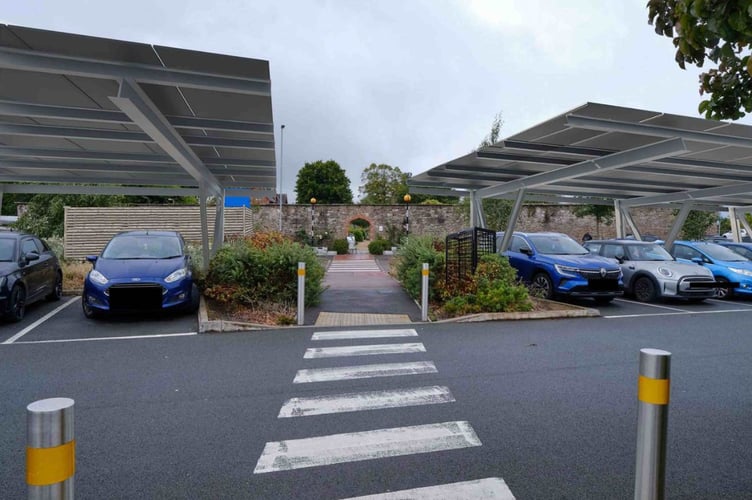
A PLAN to place solar panels in the car park of Gwent’s biggest hospital that was criticised by a politician has been approved.
The proposal to put up steel-framed “solar car ports” to cover parking bays in the 300 capacity main car park at the Grange University Hospital, in Cwmbran, has been questioned on cost grounds by Senedd Member for South East Wales Natasha Asghar.
The Conservative also said the panels would be purchased from JA Solar, a Chinese company linked to forced labour in the Xinjiang region, according to an investigation by Irish broadcaster RTÉ.
The Aneurin Bevan University Health Board, which runs the hospital, said information provided via a Freedom of Information request was based on examples given in a business case but procurement will be the responsibility of the contractor, once technical specifications have been approved, and it has had assurance it will comply with the modern slavery policy.


.jpeg?width=209&height=140&crop=209:145,smart&quality=75)

Ms Ashgar has also disputed the health board’s calculation the cost of the scheme will be replayed over 19 years and said, based on electricity costs, she believed payback would be over 24 years.
Torfaen Borough Council’s planning department had been considering the plans since they were submitted by Vital Energi Utilities, in May last year before granting approval this month.
The car park, to the south of the main hospital building, is softened by shrubs and trees and a connected network of zebra crossings provides a route for pedestrians from the listed Llanfrechfa Grange Walled Garden to the main hospital building.
Planning officer Caroline Pulley said in a report it had to take account of the visual impact on the character and appearance of the area, the impact on off-road parking provision at the hospital as well as ecology and biodiversity as “key considerations” in determing the application.
Ms Pulley said concerns had been raised about the visual impact, scale and overall appearance of the canopies and as a result the first row of car ports near the hospital entrance were removed while the central row of parking spaces, where trees are located, would remain unaltered.
“These changes help to lessen the overall visual impact of the development,” said Ms Pulley who added the concerns of the council’s landscape officer at “potential visual dominance of the structures” were “acknowledged and shared”
But she said: “The proposal would enable the hospital to generate its own electricity and reduce reliance on fossil fuels, aligning with the aims of national planning policy on sustainability. On balance, taking these factors into account, the visual impact of the proposed solar-panel car ports is now considered acceptable.”
In response to questions raised by the council’s highways department it was agreed to remove the car ports intended to cover disabled parking bays while it was accepted phased-construction will allow for the acceptable temporary loss of parking spaces.
A transformer, to feed the energy generated into the hospital’s supply, to the south of the car park will be screened by landscaping.
Comments
We've recently changed our login process. If you have an account for commenting, you will need to re-register on the login window.
This article has no comments yet. Be the first to leave a comment.