

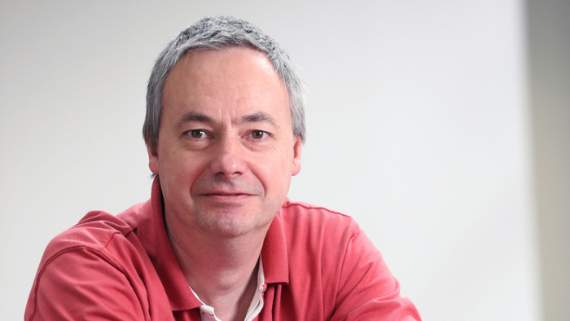
A leading cancer research scientist was found hanging in woods near his home wearing an outfit of rubber, having apparently attempted an act of sexual gratification that went wrong, an inquest heard on Thursday.
Recording a verdict of ‘misadventure’ at Newport Coroner’s Court, Gwent coroner David Bowen said he could not be sure Professor Alan Clarke had intended to take his own life and there was no evidence of any third party involvement.
Professor Clarke, aged 52, was director of Cardiff University’s European Cancer Stem Cell Research Institute and Cancer Research UK’s Cardiff Centre. He was also director of research in the university’s School of Biosciences.
The inquest heard that he and his family had moved to Llangeview near Usk about 15 years ago when he started working at Cardiff University.


His wife Kathryn agreed with the coroner’s suggestion that his work as director of the Institute and in research was quite stressful but said he enjoyed his job and had never talked about ending his own life.
He had been planning to take the children and the dog on an outing to the seaside just days after December 28.
The inquest heard that on Monday December 28 at around 4pm Professor Clarke went out for a walk with the family dog.
When he still hadn’t returned by around 7.15pm Mrs Clarke sought the help of a neighbour, Steve Rogers.
Mr Rogers said in a statement read out at the inquest that Mrs Clarke had come to his house ‘anxious and upset’ that evening, saying her husband was missing and asking for help to find him.
He said he went to another neighbour and the three of them started to search.
He said he could hear the distant sound of a dog’s ‘frantic barking’ and walked in that direction hoping it was the Clarke’s dog Tess.
He found the dog on the opposite side of a stream and crossed the stream and called out to her - but she wouldn’t move from where she was.
He said he reached her and calmed her down and looked around with a torch. He then saw a figure close by, leaning over but without his knees touching the ground , suspended from the bough of a tree by a dog lead tied around his neck.
Consultant pathologist Dr Ian Thompson said Professor Clarke had died as a result of asphyxiation.
The coroner, recording his verdict, said there was nothing to suggest there was any third party involved in his death and he could not be sure, given that Prof Clarke was dressed in an outfit of rubber, that he had intended to take his own life.
It was far more likely that his death was in the attempt of ‘some sort of sexual gratification that went wrong’.
* Professor Jim Murray, head of Cardiff University’s School of Biosciences, paid tribute to Professor Clarke in the days after his death.
He said his loss would be felt by all who knew him and the wider community.
“He was an invaluable colleague, a patient and thoughtful mentor and an outstanding scientist and leader,” he said.
Professor Clarke’s research focused on modelling intestinal, breast and prostate tumours and the ability to use these to study the relationship between normal stem cells and cancer stem cells and how these different cell populations contribute to tumorigenesis.
He also had a track record in pre-clinical testing of new drugs for breast cancer which, under his leadership, was extended to intestinal and prostate tumours.
Comments
This article has no comments yet. Be the first to leave a comment.