
A LAST-DITCH attempt to defer a contentious residential development right next to Abergavenny’s ‘most at risk’ architectural treasure has fallen on deaf ears.
Monmouth planners say they have no problem with eight units being built behind the 16th century Gunter Mansion which is currently the subject of a £200,000 renovation appeal by the Welsh Georgian Trust to establish the property as a tourist attraction and Catholic centre.
The scheme for six three-bedroom houses and two flats on the temporary car park site behind 34-39 Cross Street was approved by the county council’s planning committee, as expected, on Tuesday. Officers had recommended approval.
The proposed site revealed remnants of a Roman road and evidence of medieval occupation during an archaeological dig at the location in April.

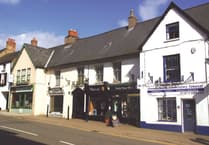

Six residents from the town, in a letter to the committee, urged members to hang fire while the site’s unique heritage potential was further explored.
In their statement they reckoned the committee had insufficient information to determine the application immediately.
“We would urge members to defer this decision, pending the receipt of additional and sufficient information regarding the immense impact on the local and indeed national heritage aspects surrounding this application,” they pleaded.
“We consider the scheme would substantially detract from well advanced proposals to develop a national and international tourist attraction,” the Priory Ward residents argued.
And they added, “The recent discovery of the Roman road on the site - a find described as ‘the first evidence of any Roman road within the town itself and therefore of high significance’ by Gwent and Glamorgan Archaeological Trust - has made consideration of the heritage impact of this planning application even greater.”
Sue Konieczny, of the Abergavenny Civic Society, said after the vote in favour of the development, “No Abergavenny councillor had the imagination to see that we could have our own version of Llancaiach Fawr Manor house - and that a decision to defer would have allowed time to properly research the orientation of the Roman road and maybe find other artefacts.
“It seems that our heritage and our history count for very little. Poor Abergavenny.”
The application was approved subject to a range of conditions which included greater control of window and door design.
Comments
This article has no comments yet. Be the first to leave a comment.