

‘AT a Death Cafe, people, often strangers, gather to eat cake, drink tea and discuss death’, or so it says on the website advertising Abergavenny’s own Death Cafe.
The Cafe has been meeting monthly at the King’s Arms for the last three months and on this occasion there were seven present, each with their own reasons for attending.
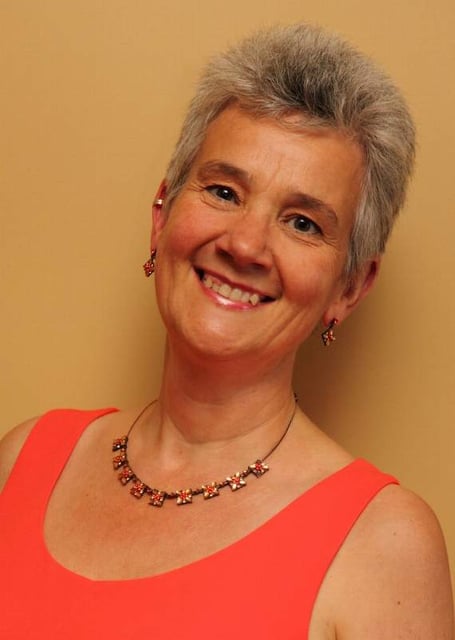
Our host, Abergavenny-based Jane Grayer describes herself as an independent celebrant - one who designs and conducts ceremonies which can be religious, non-religious or anywhere on the scale between.
The Death Cafe movement began, unsurprisingly, in the USA and there are now dozens of organised gatherings this side of the pond - informal get-togethers where the stated aim is to increase awareness of death to help people make the most of their finite lives.

While I am not in a constant state of dread about meeting the man with the scythe, I am mindful of the fact that, if my life were a musical, the finale would be a lot closer than the overture.
However, should I be told for whatever reason, that my days were numbered, I think I would feel more annoyed than afraid.
There is still so much I want to do and, like a young boy playing in the park in the increasing gloom of evening, I don’t want to be called in for the bath and the nit comb just yet.
Jane emphasised the need for people to reaffirm a relationship with death in an age when we are seemingly pushing it further and further away. ‘Death Cafes offer a place where people can talk about the end of their lives without accusations of being ‘morbid,’ she said.
In common with most people who once wore flared trousers, I have said my share of goodbyes; to parents, siblings, much-loved friends and a whole Battersea of dogs and cats. And it never seems to get any easier.
Jane said, ‘In my line of work I am constantly supporting families who are trying to come to terms with the loss of a loved one and this has raised my awareness of the fear that so many people feel when talking about death.’
‘A couple of generations ago, death was a very different thing, a closer thing. Families often prepared their loved ones for funerals, washed them, dressed them in their best clothes and laid them out in the front room for all the family, children included, to pay their respects.”
I may belong to the last generation in the UK who regularly experienced this.
“As a nine-year-old I can remember my grandfather’s coffin, balanced on the arms of his favourite chair and him lying in it, utterly motionless and vaguely shiny which caused me to wonder if my mother had polished him.
“He lay like a waxwork, moustache trimmed, hands resting over his middle. He even had his cufflinks on and, for reasons I have never been clear about, a book called ‘The Wonders of Ireland’ resting on the front of his trousers.
“The most obvious thing however was that it was just a shell, Granddad had gone.
Jane stated, ‘Because we no longer do the laying out and bathing, we no longer get the realisation that the person we knew is no longer there and without that realisation it can be more difficult to let go. Also our expectations have shifted. We now expect to live much longer.’
Julie, from Pontypool, agreed, ’Today, it all becomes too distant, as if the person is no longer yours. The undertaker combed my granddad’s hair in a way he would never have had it. It becomes impersonal.’
It’s a famous and oft-quoted truism that grief is love with no place to go. Denise lost her mother fourteen weeks ago and the pain of loss is still raw; she said, ’People say that when someone is suffering, it is a relief when they finally go, but not for me; I would have kept her with us as long as I could. It was not a relief to lose her.’
This contrasted with Julie’s experience who, when her mother was dying, visited unexpectedly and caught her about to take a month’s worth of strong painkillers in one go. She stopped her in the nick of time.
She said, ‘My mother’s last six months were horrendous, she was in terrible pain and my one regret is that when I saw her with the tablets, I didn’t just turn around and walk back out.’
Jane had emphasised that the primary function of a Death Cafe was not grief counselling but it was clear that on this occasion almost all attendees had a story to tell of lost loved ones. However, there was also speculation on what happens when the curtain comes down.
Pete, who moved from Brighton to Abergavenny, told the gathering he felt that death did not represent a complete end, ‘Death is a natural part of life, everything and everyone dies; every cell in our bodies is physically recycled, matter cannot be destroyed but neither can energy - that energy must go on and become part of something else.’
There appeared to be a loose agreement that something intangible survives death. Whether we are conscious of who we once were after the event is a matter of opinion.
Jane is a Buddhist and believes that when we accept that we are going to die then we are finally free to fully live without the fear of it.
‘Probably, having a faith can help, it can give you something to look forward to and hope for,’ she stated; adding, ‘the more conversations we have about death before it becomes imminent, the better. I do everything I can to enable and encourage people to talk freely and openly, so that they can remove the fear and be free to live their lives fully.
‘I’m repeatedly reminded of the distancing that currently happens in our society - where death is not a subject for discussion, and I feel that places where you can speak freely about death in a philosophical or practical way are so important.’
The impression I took away from the Cafe is of a place where we can stop and direct our attentions to that inescapable nagging that ticks away in the background for all of our lives; the unspoken and, for some, unspeakable, reminder that we are all finite, temporary, almost ethereal.
The fascination with death, how it feels and what happens next is as old as abstract thought itself and is father to all religions.
It has taxed the minds of scientists, artists and philosophers more than any other single subject. It is our only certainty and the one thing we have in common with everyone else.
When Shakespeare asked, ‘What dreams may come, when we have shuffled off this mortal coil?’ he encapsulated perfectly all the insecurities, fears and curiosity of humanity.
I have my own theories, but no definitive answer to that most natural of questions and, like everyone else strutting their fretful hours, I’m more than a little bit intrigued - so let’s talk about it!
The Death Cafe meets monthly and the next one is scheduled for Wednesday, August 1, at 5pm in the King’s Arms, Nevill Street. Abergavenny.
The Death Cafe also has a Facebook page for those who would like to know more and a website at http://deathcafe.com/deathcafe/6707/ .
Comments
This article has no comments yet. Be the first to leave a comment.