

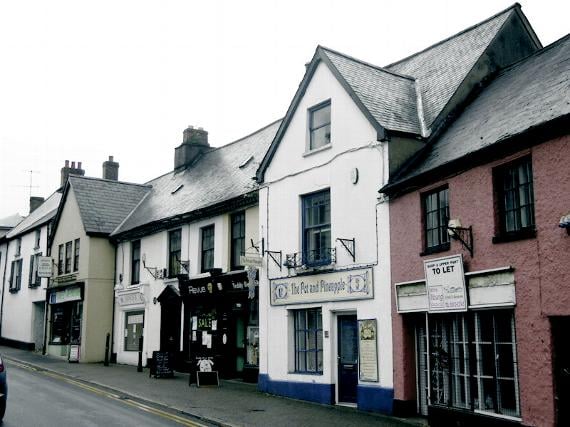
Abergavenny’s Gunter Mansion Project will be celebrating food and the enduring lure of markets to mark the town’s 2017 Food Festival.
Following a successful appeal, the Grade II-listed 17th Century mansion was bought for the town by the Welsh Georgian Trust, which will be applying for Heritage Lottery funding to restore it.
An exhibition on the history of Abergavenny’s markets will open in the mansion’s ground floor pop-up space on Friday, September 15, and on Food Festival Sunday, September 17, volunteers in costume will be selling home-made historic cakes, biscuits and sweets from the building from 10.30am – until stocks run out.
The fare on offer includes biscuits from Anglesey which may well be Britain’s earliest biscuit, gingerbread from the Tudor period, comfits (sweets) made for wealthy Elizabethan ladies and savoury puffs created for the Stuart dining table.

The Abergavenny Food Festival, considered to be one of the best in the UK, is centred on the town’s Market Hall and the themed food areas of the festival are held where different livestock and food markets would have been held when the Gunters built their town house.
The Markets exhibition at the Gunter Mansion will feature information boards from Abergavenny museum and around 20 colour photographs by Phil Bowyer of the cattle market which was situated in the heart of the town for 150 years until December 2013 when it moved to Raglan.
“Our current exhibition celebrates the importance of Abergavenny as a market town. Celebrating the markets where local produce and livestock were bought and sold since Roman times, make Abergavenny an important food destination,” said Tony Konieczny, organiser of the exhibition.
“Our annual Food Festival enhances this theme and has become internationally recognised, attracting new visitors to the Abergavenny Market experience.”
Historically, markets represented life before shops. In Abergavenny, they have long been the focus of trade in the town and its markets date back to the Middle Ages. A few decades after the Gunter Mansion was built in 1600, Charles I granted a charter to Abergavenny that passed the running of the market to the people of the town. In this document, there is reference to two weekly markets, on a Tuesday and a Friday (still the case today).
Up until the 1930s families were still hiring their children out as farm labourers or domestic help at hiring fairs in the entrance to the current Market Hall along with adult workers, women as well as men.
These were sometimes referred to as ‘mop fairs’ because young people and adults for hire carried an implement that indicated their skills, so women wanting domestic work carried mops.
A permanent exhibition in the pop-up space features photographs, drawings and information on the 17th Century Gunter Mansion’s history and planned restoration.
This summer, a visitor to the exhibition space announced that he was a Gunter – from Texas. Calvin Gunter, on a tour of his family history, had gone to Abergavenny Museum at the castle to see the old Gunter Mansion wall painting and then walked to the mansion itself because he knew there was a blue plaque on the building that he wanted to photograph.
What he had not expected was an exhibition of the history of the house including a family tree of his Abergavenny ancestors. Calvin hopes to visit again next year when the Friends of Gunter Mansion hold a Gunter Family Tree event.
The Grade II-listed house is of historical importance because it houses a secret chapel in the attic where Catholics worshipped at a time when it was illegal. The lawyer who built the house at the turn of the 17th Century, Thomas Gunter, and his family were practising Catholics and two Jesuit priests led mass in the secret chapel: Philip Evans and David Lewis, known as ‘Tad y Tlodion’ (‘Father of the Poor’).
A resurgence of Catholicism in Protestant Britain combined with rumours of a plot to murder the King by Spanish and French Catholics led to the arrest and execution of both the Gunter Mansion priests.
David Lewis became the last Catholic martyr in in Wales, and one of the last in Britain, when he was hung, drawn and quartered on 27 August 1679. A stained glass window in Our Lady and St Michael’s Catholic Church depicts Saint David Lewis and relics preserved from the mansion are on view at Abergavenny Museum.
For readers interested in the Gunter Mansion Project there is an opportunity to share your ideas about how the pop-up space could be used over the next 12 months on Saturday 23 September at Trinity Church Hall, Abergavenny from 1-4pm. If you RSVP to [email protected] the organisers will make sure there is enough cake to go round.
The Markets exhibition at The Gunter Mansion Project pop-up opens on Friday 15th September and is open to the public on Tuesdays, Fridays and Saturdays from 10.30am to 4pm. The historic food counter in the same venue is on the Sunday of the Food Festival, 17th September from 10.30am.
Comments
This article has no comments yet. Be the first to leave a comment.