
Following on from my cuckoo column last week, and the recent celebrations of Dawn Chorus Day, I thought I’d let you know that www.woodlands.co.uk is also celebrating the beauty of British birdsong, by sharing tips on how to identify what you’re hearing.
The list begins with the easily identifiable ‘chiffchaff’. Like the cuckoo, they are named after their simple repeated song sound, in this case, ‘chiff-chaff’ and are enthusiastic, often singing for minutes at a time. The bird itself is small and olive-brown, often flitting restlessly among branches as it hunts insects. If you can sit still for long enough you will be rewarded by seeing it flit though the tree canopies.
The blackbird is said to produce one of the most beautiful songs in the British countryside and people are often surprised to realise that it is the well known bird that is responsible for such a melodic song. Its tune is slow, rich and flute-like, with pauses between phrases that give it a calm, reflective sound.
They often sing from high perches in trees or on garden walls early in the morning or at dusk, leading the dawn chorus. However, they also make a harsh repeated ‘clucking’ sound when alarmed, to warn of perceived danger – and are great mimics, often mimicking a car alarm.



You won’t hear the great spotted woodpecker sing, but you will hear him ‘drum’ as he taps its beak quickly against tree trunks or branches. Woodpeckers drum on trees to establish territory boundaries, attract mates, and stay in contact with a partner. Unlike when they forage for food, this rapid pecking, or drumming, on resonant surfaces can reach speeds of up to 40 times per second.
I’m also incredibly lucky to have a couple of tawny owls, which visit the cottage every night. Their well-known ‘twit-twoo’ is usually a duet, with the female making the ‘twit’ call (which made me smile), while the male responds with the deeper ‘twoo.’
You can learn more about identifying bird songs by downloading the Merlin app. To your phone.
Malvern Spring how has kicked off the ‘RHS garden shows’, and the Chelsea Flower Show starts next week. I spent over 10 years visiting Chelsea Flower Show on the VIP and Press Day, before the show opened to the pubic, which I think will always be one of the privileged highlights of my life. Having unfettered access to the gardens, and to interview designers, construction teams and celebrities was always fascinating and a lovely break from actually doing the work myself.
Contributing to Sarah Eberle’s show garden, ‘On The Edge’, are the fabulously talented Yorkshire stone walling artisans Lydia and Cuthbert Noble.
I have competed in a dry stone walling competition with sister and brother duo, Linda and Bert, (obviously not in the same category – but the same field), and Bert (along with Rhubarb, his faithful collie) was the examiner when I passed my level 2 dry stone walling exam last year. Being proactive, and slightly obsessive, I don’t have too many things left on my bucket list, but being able to wall and create the calibre of features that are half as impressive as Linda and Berts, is one of them.
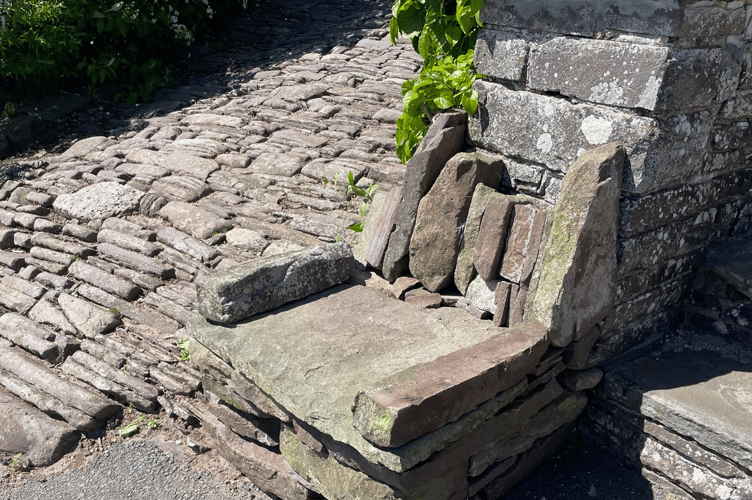
I am already building up a reputation for being a ‘dry stone chairer’ as I build up a dry stone furniture portfolio - more DSF (Dry Stone Furniture) than DFS - and I absolutely love it. It has often been said that I have sap in my veins but I also think that I have stone dust in my bones.
Comments
We've recently changed our login process. If you have an account for commenting, you will need to re-register on the login window.
This article has no comments yet. Be the first to leave a comment.