
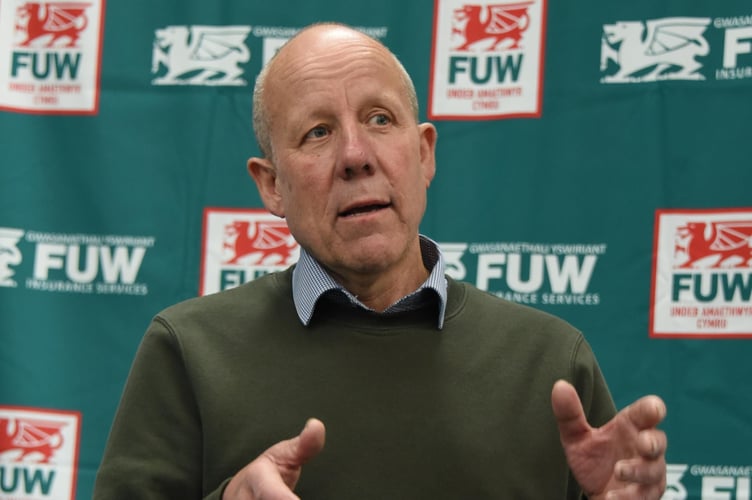
As May’s key Senedd election approaches, parties across the political spectrum are setting out their policies and priorities. Among the many issues rising up the agenda, the future of Welsh agriculture - and in particular livestock farming - has become an increasingly prominent and increasingly contentious topic.
In recent years, growing attention on climate change and the environmental responsibilities of farmers has brought livestock numbers into sharp focus. Much of this debate stems from recommendations by the Climate Change Committee (CCC), which suggest that nearly half of the proposed reductions in agricultural emissions could be achieved through a 19% reduction in livestock numbers, alongside a 17 per cent decrease in meat and dairy consumption. The land freed up, it is argued, could then be used for tree planting and other carbon sequestration measures.
However, such proposals raise serious concerns for the farming community. At our recent council meeting, the Farmers’ Union of Wales passed a motion calling on the Welsh Government to ensure that any current or future agricultural and environmental policies do not negatively impact livestock numbers in Wales.
Livestock farming is not just one part of Welsh agriculture - it is its backbone. It underpins the economies of our rural communities, and also sustains our communities, heritage, and the landscapes that define Wales.
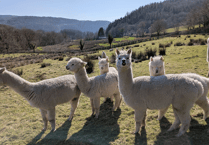


Importantly, livestock numbers in Wales have already declined significantly. Since 2000, sheep and lamb numbers have fallen by around 22%, while the beef herd has dropped by a third over the past two decades. Further reductions risk undermining the critical mass needed to support local supply chains, processors, markets, and abattoirs - threatening the wider rural economy and food production.
There are alternative approaches. In Scotland, the government has committed not to introduce policies specifically targeting reductions in livestock numbers, instead focusing on reducing emissions through efficiency, innovation, and improved land management. The FUW believes the Welsh Government should follow a similar approach.
Welsh farmers are already making significant strides in improving productivity and reducing emissions, while continuing to produce high-quality food to some of the highest standards in the world. The narrative that climate targets can only be met by cutting livestock numbers is overly simplistic and potentially damaging.
Instead, the focus should be on supporting farmers - through innovation, sustainable practices, and investment in productivity - so that environmental goals can be achieved without sacrificing the viability of family farms or the communities they sustain.
Comments
This article has no comments yet. Be the first to leave a comment.