
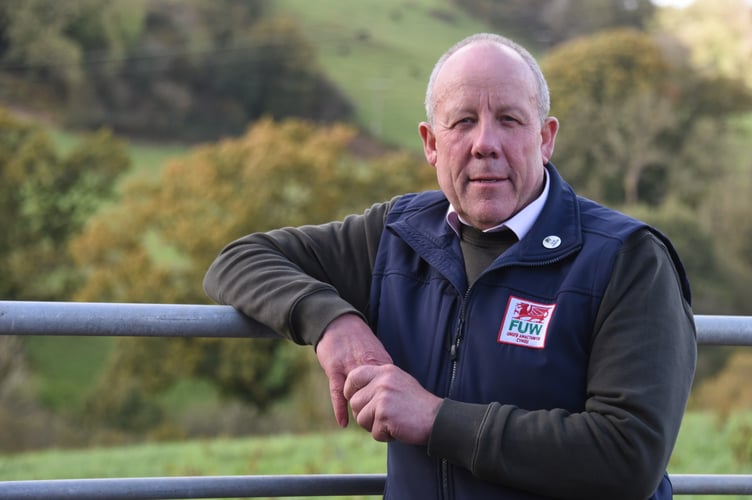
The proposal to establish a new National Park in North East Wales remains a significant concern for Farmers’ Union of Wales members living and working within and around the proposed boundary. Following further engagement with local members, the FUW has submitted an additional consultation response to Natural Resources Wales, highlighting a number of unresolved issues linked to the proposed Glyndŵr National Park.
Central to members’ concerns is the long-term funding and governance of a new National Park Authority. Funding is expected to come from Welsh Government grants alongside a levy on local authorities, however there is widespread uncertainty about whether this approach would offer sufficient stability in the long term. With existing National Park Authorities already under financial pressure, members question whether establishing a new body is realistic given ongoing constraints on public finances.
There is also concern that any additional financial burden placed on local authorities could further strain services relied upon by rural communities. From transport and education to healthcare and emergency services, many of these provisions are already stretched, and members fear that additional responsibilities could have unintended consequences for those living and working in rural areas.
Planning and development remains another key issue. Experience from existing National Parks suggests that planning processes can be more complex and time-consuming, creating delays for essential farm developments. This can affect everything from infrastructure improvements and diversification projects to compliance with regulatory requirements.


Concerns have also been raised about the potential impact to on-farm renewable energy developments. Restrictions in some designated areas have limited opportunities for farmers to invest in renewables, reducing both farm efficiency and the sector’s contribution to wider environmental objectives.
Housing affordability is another ongoing worry. National Park designation can place added pressure on local housing markets, making it more difficult for local families, young farmers and multi-generational farm businesses to remain within their communities.
While tourism can bring economic benefits, members have highlighted the pressures increased visitor numbers can place on rural infrastructure. Issues such as parking, road safety, emergency service capacity and rural crime all risk being exacerbated without adequate investment and resourcing.
The FUW maintains that many environmental and landscape objectives can be delivered through partnership working and existing policy mechanisms. The current National Landscape designation already provides strong protection, and the Union continues to urge Natural Resources Wales and the Welsh Government to fully assess the social, economic and environmental impacts before any further decisions are taken.
Comments
This article has no comments yet. Be the first to leave a comment.