

A NEW and extensive landscape restoration project led by farmers, supported by local conservation charities and funded by the Welsh Government is poised to revitalise biodiversity on the Sugar Loaf.
Sugar Loaf Mountain (Mynydd Pen-y-fâl), hugely popular with locals and hill walkers from around the world, has a long history of farming on its slopes. Farmers and visitors alike have seen the mountain change in recent decades from a complex ecosystem supporting an array of habitats including heather and whinberry, to one smothered by bracken.
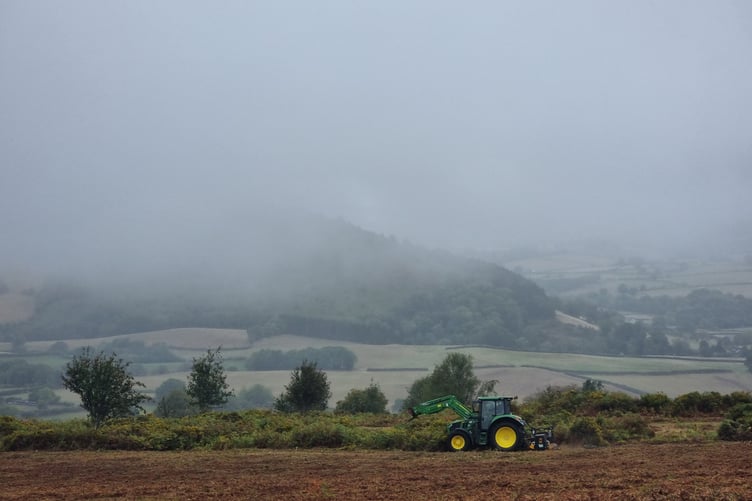
Alongside bramble, the bracken is damaging the rich habitat mosaic, negatively impacting many species of birds, insects, plants and trees, and reducing grazing for livestock.
In some areas, the spread of bracken and bramble has significantly reduced the diversity of habitats and grazing available.
A band of local farmers recently teamed up with local charity Stump Up For Trees and the National Trust (owners of Sugar Loaf Common) to establish a Community Interest Company called ‘Sugar Loaf Regeneration Farm Partnership’.
In 2025, the CIC submitted a detailed funding application to the Welsh Government's Integrated Natural Resources Scheme (INRS), which supports collaborative, landscape-scale action by farmers, foresters, land managers and other partners.
“The collaborative aspect of the Scheme grabbed our interest. Conservationists, the local community and farmers all working together is clearly the key to creating resilient landscapes for the future,” Robert Penn, co-founder of Stump Up For Trees said.
Earlier this year, the Sugar Loaf CIC received a contract for £900,000 to be spread over a 2.5-year project, delivering a long list of ecological restoration and climate resilience measures that will combine to benefit not only the Sugar Loaf, but also the local community.



Funded activities include: an extensive bracken management programme to restore diverse habitats and improve grazing; natural flood management interventions to control the flow of water down the mountain in extreme weather; enhanced ancient woodland management; stone wall restoration; targeted tree planting on farms adjacent to the Common; conservation grazing of cattle on the Common; and, significantly after a summer like the one we have just witnessed, the mitigation of wildfire risk through cutting fire breaks in vegetation and reducing the overall fuel load.
The entire project will support the resilience of farms and increase amenity access to the Common for the local community.
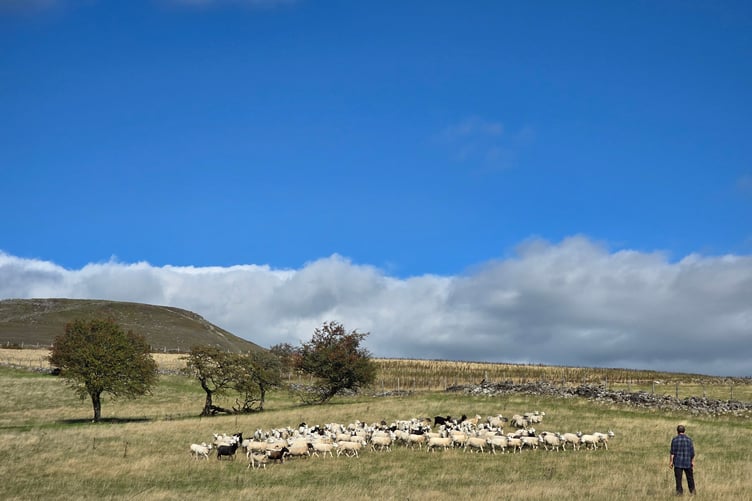
Sandy Smith, a director of the CIC and local farmer whose family have been on the Sugar Loaf for generations, said, “With the change in climate and weather conditions for farming, we felt it was the right time to gather together as farmers to do something positive for the mountain. This scheme will help farmers who graze livestock on the
Common, but it will also encourage biodiversity back.”
It is not only the farmers and the habitat on the mountain that stand to benefit from this project; the actions and interventions will also directly serve the local community. Planned works include natural flood management interventions on the Afon Cibi, a river that flooded part of Abergavenny last November during heavy rain.
Farmers on the hill have put aside sections of their land to restore ancient ponds, create wetland areas and hold back water in the Cibi catchment. In return, the increased water-holding capacity on their land will help them to weather periods of drought and improve the fertility of
their fields, as well as creating crucial habitat for birds and aquatic wildlife.
“We now have over 20 farmers and smallholders engaged as members of the Community Interest Company. They can add their voices to our plans and access benefits such as biodiversity surveys, hydrological surveys, training courses and events to support resilience and woodland management plans, as well as community solutions to problems such as water supply and invasive bracken,” Project Manager, Dave Pearson-Smith said.
“We want to increase the number of members significantly as the project progresses, to incorporate more local voices in our decisions and work at an even larger scale.”
Those who spend time on the hill for work or play will start to notice the changes almost immediately.
A significant schedule of bracken control works has already begun on the Common, as has the cutting of fire breaks in vegetation, while dry stone walls repairs are about to commence. Farm ponds will begin to be restored this year and ‘scrapes’ (known locally as ‘dew ponds’) will start to reappear, supporting access to water for livestock and a greater variety of wildlife. Tree planting to create hedges and shelter belts along farm boundaries will take place this winter. In coming seasons, cattle will begin to graze the Common alongside sheep.
Llyr Gruffydd MS, Cabinet Minister for Rural Resilience and Sustainability, said. “The Sugar Loaf project is a great example of what can be achieved when farmers, land managers and local organisations come together to work at scale. By using shared knowledge of the land, they are securing a more resilient future for the Sugar Loaf and the communities around it. This new government is supporting practical action to strengthen farm resilience, restore nature, and help communities adapt to extreme weather risks, such as flooding, drought and wildfire.”
The local community are invited to get involved in the project, through volunteer days, community events and guided walks on the mountain. In combining the efforts of the farmers at the heart of this project with those of the local community, it is hoped the project will preserve and improve the Sugar Loaf for the generations to come.
The public launch event for the project took place on Tuesday, October 13 at the Borough Theatre, Abergavenny, hosted by Kate Humble.
For further information visit www.sugarloaf-cic.org
Comments
We've recently changed our login process. If you have an account for commenting, you will need to re-register on the login window.
This article has no comments yet. Be the first to leave a comment.