
More schools in Wales this year have made the top tier - the ‘green’ category - in the annual, colour-coded ratings published on Tuesday.
A total of 425 primary and secondary schools are now classed as ‘green’ (highly effective), with 827 ‘yellow’ (effective) and 244 ‘amber’ (in need of improvement).
The number of schools in the ‘red’ category, the ones needing the most improvement, fell again to 46.
Seven primary schools in the Chronicle’s circulation area are ranked ‘green’: Gilwern Primary School; Goytre Fawr Primary; Cantref Primary; Deri View Primary School, Usk Primary School, Llanvihangel Crucorney County Primary School and, across the border in Powys, Llangynidr CP School.
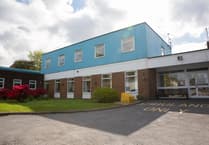



For Deri View in Abergavenny it’s a remarkable achievement.
Only three years ago the school was in the amber category, progressing to yellow last year.
Chair of Governors Maggie Harris said, “This is a huge rise in standards and we’re absolutely thrilled. All the hard work of the staff and children has really paid off, enabling them to achieve such a wonderful result.”
Six primary schools in the area are categorised as ‘yellow’ - Cross Ash County, Ysgol Gymraeg y Fenni, Llanfoist Fawr, Crickhowell Community Primary, Llangattock Church in Wales and Llanbedr Church in Wales.
Three more are ‘amber’ - Llantilio Pertholey CV, Raglan and Our Lady and St Michael’s.
There are no local schools with the lowest ranking.
Among Welsh secondary schools Crickhowell High School is ranked ‘green’ while Abergavenny’s King Henry VIII School is ‘yellow’.
The Welsh Government believes the colour coding helps identify the schools that need the most help, support and guidance to improve.
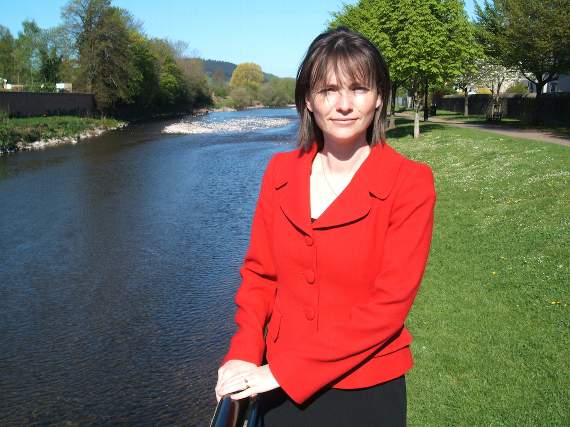
Education Minister Kirsty Williams (pictured) said, “This system is not about grading, labelling or creating crude league tables but about providing support and encouraging improvement in our schools.
“It is about putting schools into a position that helps them to identify areas they can strengthen and what they need to do achieve further improvements.
“The figures we have published today show that 84.4% of primary and 64.6% of secondary schools are now in the green and yellow categories.
“This increase is to be welcomed, as these schools will have a key role to play in supporting other schools, sharing their skills, expertise, and good practice.
“In this way they will be making a vital contribution to our national mission of driving forward improvements in Welsh schools and moving us towards a self-improving system.”
The colour coding results follow on from education watchdog Estyn’s annual report last week which found seven out of ten primary schools were ‘good or better’ but only four out of ten of the secondary schools it inspected.
Teaching unions have generally given a cautious welcome to the system, providing it is only part of wider methods of evaluating schools.
Rob Williams, director of policy at head teachers’ union NAHT Cymru, said, “We still believe that for categorisation to work at its best, it needs to be part of a co-ordinated school improvement system in Wales.”
He added, “As Estyn highlighted in their recent annual report, variability still exists across Wales and the additional focus on schools in the amber and red categories does not mask the huge funding disparities that continue to exist between schools.
“We know that the Welsh Government is listening to school leaders and their concerns about a system that uses single cohorts of pupil data in isolation, with no inclusion of the progress those individual pupils make whilst in a school.”
UCAC, Wales’s education union which represents 5,000 teachers, headteachers and lecturers in all education sectors across Wales says the colour banding results reflect hard work in schools.
A spokesperson said, “Although we cannot be happy with a system that places one school against another, UCAC believes that today’s announcement appears to be very positive. It shows that standards have improved in both the primary and secondary sector.”
“This reflects the hard work carried out in our schools by devoted teachers in teaching and supporting children of all ages.
“It shows the considerable efforts of our schools while facing the enormous challenges of heavy workload, lack of financial resources and staff cutbacks.”
Comments
This article has no comments yet. Be the first to leave a comment.