

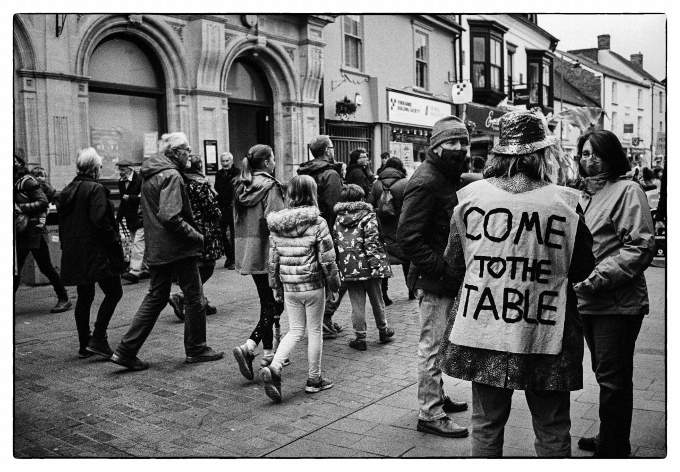
Crowds of people took to the streets of Abergavenny on Saturday to show support for the COP26 conference in Glasgow.
The vigil took place in St John’s Sqaure where organisers were inviting people to ‘Come to the Table’ and show support for all nations attempting to tackle global warming.
The event in Abergavenny was captured on camera by local people including award winning photographer David Collyer who took the black and white images (www.davidcollyerphotographic.com)
David has recently been shortlisted in a competition run by the Royal Photographic Society for his work shot during the first wave of the Covid pandemic.


The colour pics shown here include one of two toddlers - the message is colourful but stark - that climate change will affect this generation and beyond unless there is transformational change.
Saturday saw climate movements gather across the world to add their voice to demands for climate justice as research shows the poorest nations are suffering the most.
The Abergavenny demonstration was organised under the banner Come to the Table and brought a theatrical flair to the event as people walked in silence behind a large stretcher-borne globe, with animal masks worn amid flying colourful ribbons.
Posting on Facebook, Andy Green said: “Amazing display guys - no excuses we all need to do something for climate change and our future generations.”
Connie Orbach said: “Well done everyone, it was great to be part of a global day of protest.”
Mari Davies said: “It’s almost impossible to live in modern society without using things that in some way contribute to climate change. This is the world we live in. There are still realistic ways to reduce our individual carbon footprints, where possible. Governments need to invest more in renewable energy and oil companies need to stop putting billions into drilling for new oil against scientists’ advice. This particular march was happening because of COP26 and people were marching because they are fearful about what the future holds if world leaders don’t make the radical changes needed.”
Gillian McPhillips said: “The more that individuals, companies and countries engage and inform themselves of the facts, the more chance there is of an integrated solution to this complex challenge that we’ve created for ourselves.”
Comments
This article has no comments yet. Be the first to leave a comment.