
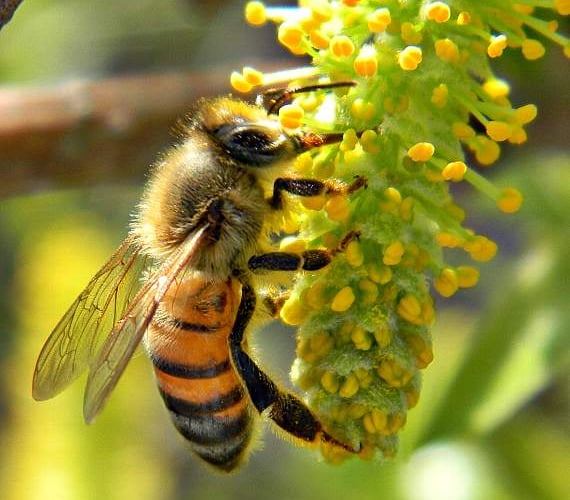
SCHOOL children and community groups in Monmouthshire are being taken under the wing of beekeeping experts in a move to boost the local bee population.



They are supported by a rural regeneration project - The BEES (Breeding, Education, Environment & Skills) initiative - set up with support of the Welsh Government Rural Communities - Rural Development Programme 2014-2020.
Councillor Bryan Jones, Monmouthshire’s cabinet member with responsibility for biodiversity said, ‘The aim is to improve resilience in bee populations and increase understanding of the importance of bees within ecosystems.
‘This will be done by providing training for schools, community groups and other organisations interested in learning more about bees. The programme will also explore opportunities to manage local bee populations through closer collaboration between beekeepers.’
Honey bees – wild and domestic – perform about 80% of all pollination worldwide and a single bee colony can pollinate 300 million flowers each day; seventy of the top 100 food crops, supplying about 90% of the world’s nutrition, are pollinated by bees. However, honeybees are in crisis worldwide.
Scientists acknowledge that bee numbers are in decline due to a variety of factors including pesticides, drought, habitat destruction, nutrition deficit, air pollution and climate change.
Comments
This article has no comments yet. Be the first to leave a comment.