
ARTHUR Reynolds, the son of a mill stone maker, was born at Llandogo in 1859.
On the 1881 census he is a servant in the house of Colonel John Williams-Morgan at Bolgoed Hall, Llanspyddid, near Brecon.
He started a relationship with Elizabeth James, a 24-year-old servant in a neighbouring property called Cefn-Park mansion.



They were married the following year and by 1886 were living in a small cottage in Priory Lane, Abergavenny.
The 1911 census reveals that they had eleven children but one had died in infancy.
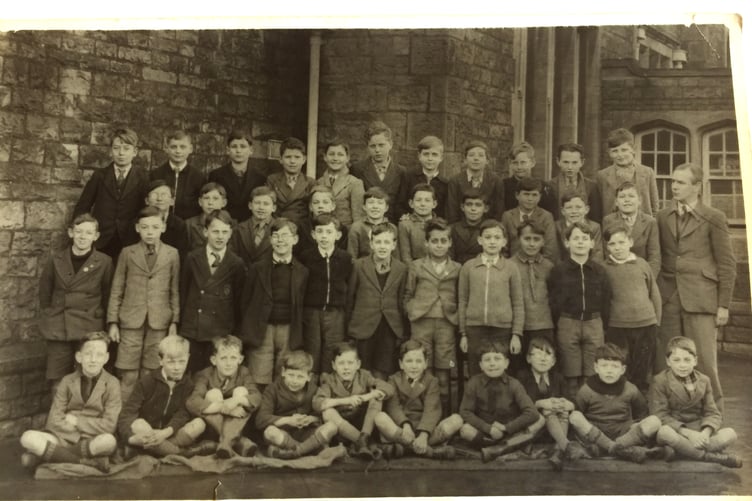
Of their eight sons, seven had enlisted in the army at the outbreak of the First World War. The youngest of the seven, Redvers Victor Reynolds, was born in 1900 and the Hereford Road Boy's School register shows that there was another boy called Redvers Henry Edwards, also born in 1900.
Redvers Reynold's medal index card shows that he was awarded the 1915 Star. This meant that he was under age when he joined up.
His unusual name and year of birth suggests that he was named after Sir Redvers Henry Buller, VC, who was Commander-in-Chief during the Second Boer War.
He was instrumental in raising the siege of Ladysmith in 1900 and he was given a hero's welcome on his return to his home town of Crediton in Devon. The local Wetherspoons pub there is named after him.
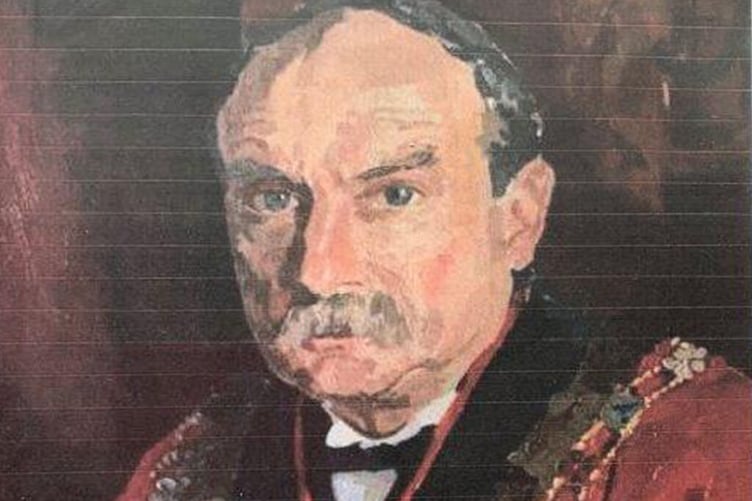
In late 1918 and early 1919 the Abergavenny Chronicle published the results of a street survey that had been commissioned by the Mayor, Councillor Zacariah Wheatley.
Researchers had asked each household how they had contributed to the war effort. The newspaper headline ran: “Abergavenny Roll of Honour, nearly 1400 names on the list.” This was a fine record for a town whose population was under 9000.
Priory Walk details the following information on the seven Reynolds brothers:
Private Frederick Henry Reynolds - 2nd Mons, overseas, wounded.
Sergeant Albert Edward Reynolds - Artillery, overseas, wounded.
Private Evan John Reynolds - 3rd Mons, overseas, wounded, killed.
Private William Thomas Reynolds - Royal Engineers, Home Service.
Private Cyril Reynolds - Royal Engineers, overseas, wounded 3 times.
Private C. Reynolds - 3rd Mons, overseas, wounded twice.
Private Redvers Victor Reynolds - 3rd Mons, overseas.
Sadly, but not surprisingly, Pte. Evan John Reynolds was killed during the Battle of the Somme on the 16th of July 1916.
He lies in a Commonwealth War Graves cemetery at Avelny Wood (Lancashire Dump) in France. His widow, Ruth Reynolds, died a few years later aged just 31.
The boys were all ex-pupils of Hereford Road Boy's School and the headmaster composed his own Roll of Honour for his former pupils.
In June of 1916 one of the old boys, Captain Campbell RFA, paid a visit to the school to see the Roll of Honour and he gave a talk to the boys whilst he was there.
He gave a summary of his military career since leaving the school in 1883 when Mr. Duck was a teacher.
He had served on the North West frontier in India as well as South Africa and he was now serving in France. Captain Campbell impressed on the boys the value of self-discipline, smartness in appearance and manner, respect for authority and self-improvement by further studying after leaving school.
One of the Reynolds girls, Elizabeth Ann, married Samuel John Jones at St. Mary’s Church, Abergavenny on the 23rd of June 1907.
Samuel was one of those real hard characters that eventually turned his life around.
The Abergavenny Chronicle of the 30th of September 1909 sees him being summoned to court by his father-in-law Arthur Reynolds. Samuel had gone to Priory Walk to look for his wife who was staying with her parents. Arthur had opened the door and told Samuel to clear off. A scuffle ensued and they both fell to the floor which resulted in Arthur having an arm broken.
The case was dismissed as they both gave different accounts of what had happened. But then, in the same court, Samuel had another case to defend for being drunk and disorderly and for using bad language in Cross Street.
It was his seventeenth appearance before magistrates for similar offences and he was fined 5 shillings with 5 shillings costs.
The Chronicle of the 1st of January 1915 told a very interesting story from the same Private Samuel John Jones. He was home from the front as he was recovering from pneumonia.
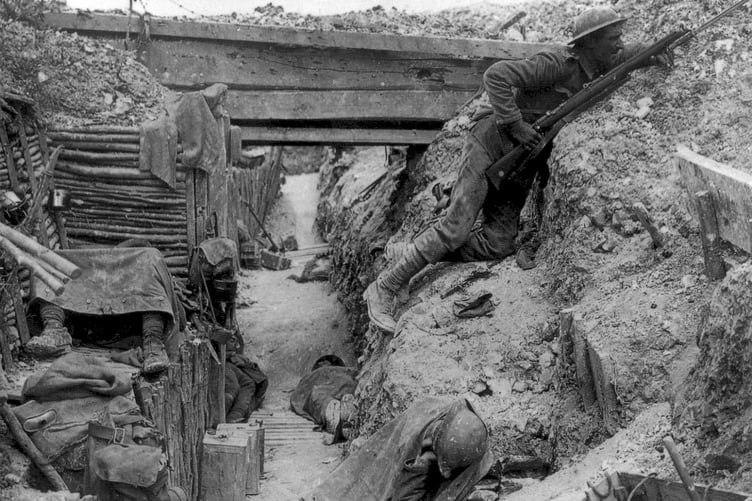
In a very long interview with a reporter, he said that he had been a reservist in the Cheshire Regiment when the war broke out and had gone over to France with the British Expeditionary Force.
He had taken part in some of the worst fighting of the war as the strength of the German Army was at its peak in 1914.
He had been in the tactical retreats and had been very close to exploding shells that had killed other soldiers all around him.
At one point he had endured 28 days of non-stop rain without any cover. But he had every admiration for the British Tommy who never retreated unless ordered to. Private Jones said he was quite prepared to go back when fit but was not particularly anxious to renew the nerve-shattering experience.
One week in the trenches was enough to shatter any man's nerves.
His next reported appearance in court was in April of 1916. Samuel was now 30 years old, having been discharged from the army, and was working in a munitions factory in Ebbw Vale.
He was being summoned to court by his wife, Elizabeth Ann Jones, for persistent cruelty to her and she was asking for a separation order, with maintenance, and custody of their three children.
Samuel was also charged with being drunk and disorderly and assaulting a policeman.
The prosecution said that there had been numerous occasions when there had been reports of violence in their house and Samuel was usually found to be the worse for wear through drink.
Samuel told the court that he had never been the same since he'd been blown up by a mine at the front.
His wife was granted the separation order with a £1 a week maintenance together with custody of the three children. He was also fined £1 for the assault on the policeman.
Two years later the Chronicle reported that there was an altercation at the Jones' house in Lewis's Lane. A policeman heard quarrelling between Samuel and his wife and Samuel was using very bad language.
The policeman produced a piece of paper for the Bench on which he had written down the words used by the defendant.
The magistrate asked Samuel how many times had the police been called to his house.
Samuel replied that had no bearing on this case. He was reminded that this was his 25th appearance in court. Samuel told the magistrate that he had gone to France in 1914 and had been in several engagements and was also blown up by a mine in 1915, being the only one of 30 who came out alive.
He was told that “Good men lose their lives but others come through alright.” He was fined £1 and bound over to keep the peace.
Samuel Jones was not one to learn any lessons from his behaviour as just a few days before the Armistice was signed in November 1919, he appeared in court again but this time as the wronged party.
He had summoned his neighbour in Lewis's Lane, Thomas Irons, who was also an ex-army man, for assaulting him. Samuel said he was sitting in his house and was having a few words with his wife about the children when Thomas made an appearance and said: “Hello Jones, you be shouting again, be you. I will come in there and job you.”
Samuel told him to go and look after his own house. In next to no time both men were brawling as Samuel pulled Thomas into the house. Thomas was asked if he had seen any weapon used against him.
He replied: “No, he was on top of me and pulled me all over the house and knocked the legs out of the chairs. I have been through the six biggest battles from Mons to La Bassee, and I have never had what I had now.”
Samuel was asked if this was the first time the two men had been at odds with each other and he said that Thomas had met him recently in Market Street and said: “If I catch you shouting any more, I'm going to screw your neck around.”
When told that Samuel was rather fond of a row after he had a little drink, he replied: “I may be sometimes.” Samuel's wife, Elizabeth Jones, confirmed that Samuel had had a glass or two, but she had seen him very much worse for drink.
Despite the fact that it was Thomas Irons who had been summoned to court, the magistrate decided to fine Samuel five shillings including costs.
The next time that Samuel Jones made the news was reported in the Abergavenny Chronicle of the 4th of June 1937 when he was now a Town Councillor and living with his wife and family in St. Michael's Road, Abergavenny.
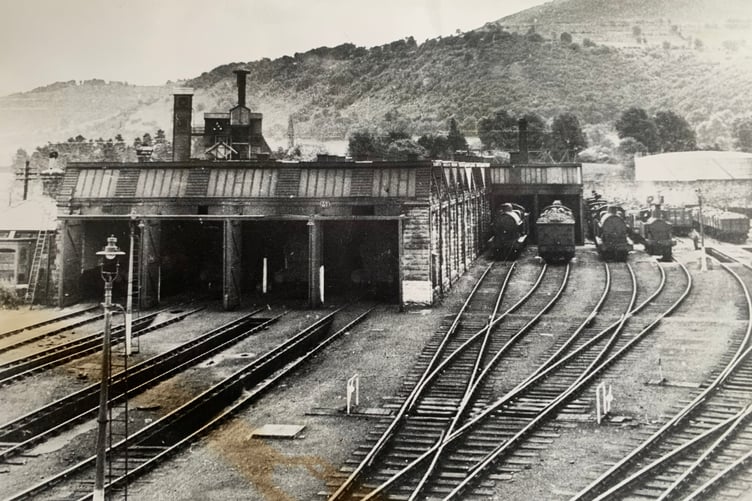
The town had hosted 3200 soldiers of the East Lancashire Territorials for two weeks of training. Many horses had been used during the exercises and now it was time for them to go back to their barracks via a train waiting at Brecon Road Station.
Arrangements had been made so that the departure would be an occasion for a public parade through the streets of Abergavenny and many people had turned out to see them off.
The column of men and horses stretched from the station all the way back to Pen-y-Pound and a group of five horses were waiting by the railway bridge at the junction of Pen-y-Pound and The Old Hereford Road. The riders had dismounted and they were holding the horse's reins.
The engine of the train waiting at the station was on top of the bridge. Without warning there was an escape of steam from the engine that came with a loud noise at which the five horses took fright and bolted down Pen-y-Pound.
The paths on both sides of the roadway were lined with spectators who had to scramble for cover. The horses were made to turn towards the Brecon Road. At the junction of Brecon Road and St. Michael's Road four of the horses carried straight on but one of them turned right into St. Michael's Road.
The horse did not know that this road was a dead end and so he turned around and raced back the way he had come. Samuel Jones was living in St. Michael's Road and he was there as one of the spectators and he was minding twenty children on the corner with Brecon Road.
One of the children, five-year-old Doris Blizzard, decided to cross the road to where her mother was on the other side just as the horse was approaching. Samuel sprang into action and threw himself on top of the girl and they hit the ground just as the horse reached them.
Samuel suffered some severe injuries from the horse's hooves but the little girl was unharmed. Samuel spent three weeks in hospital before he was allowed home.
One of his fellow Councillors suggested that the Carnegie Foundation should be approached to see if his actions were commendable enough to be awarded the Carnegie Medal for Heroism. This was done and he received the medal along with an award of £10. (The Carnegie Medal is awarded to anyone who risks their own life in order to save the life of another).
Councillor Samuel John Jones died at his home in St. Michael's Road on the 14th of July 1951 aged 68 years.
The other Reynolds daughter, Edith Mary Reynolds, married William Charles Tomkins in 1922. William and his two brothers, George Peter Tomkins and James Tomkins, all served in the army during the First World War.
Comments
This article has no comments yet. Be the first to leave a comment.