
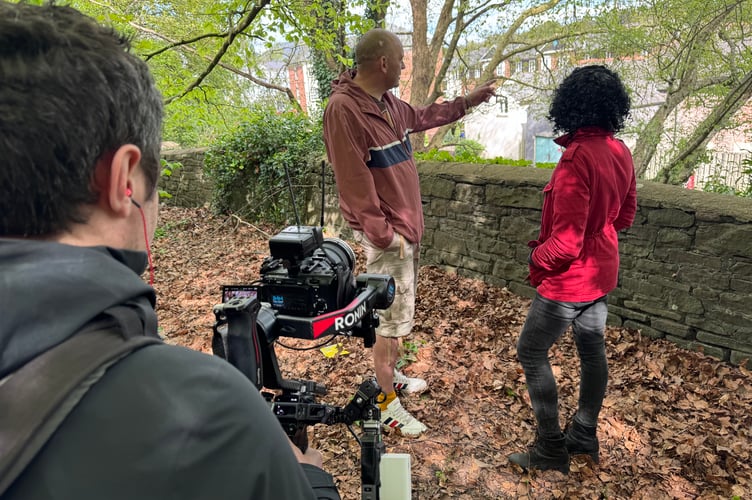
THE team behind ITV’s Vanished Wales was filming on the streets of Abergavenny today for a forthcoming episode on the town.
The series, which reveals the lost landmarks of Wales, from missing villages along the Wales Coast Path, to a top toy factory and an iconic ferry service, were in Abergavenny for a special episode on the areas of the town that have changed beyond all recognition such at Tudor Street, Mill Street, Castle Street, St.John’s Square, and Flannel Street.
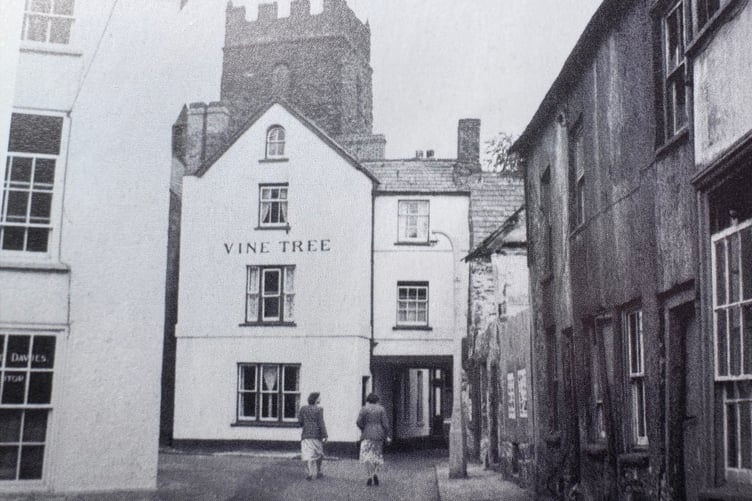
In 1957, civic planners gave the green light to wholesale slum clearances, which systematically destroyed much of the old part of Abergavenny, changing it beyond recognition.

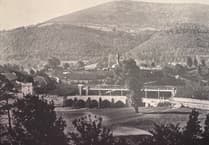

In a gung-ho fashion, many fine Elizabethan buildings, and more importantly, people’s homes were bulldozed to make way for the sharp-edged utilitarianism and banal box designs of modernity.
The historic dwellings and public houses in Tudor Street and St John’s Square were replaced with a Police Station, a magistrates' court, a Job Centre, and a Post Office.
And the ramshackle charm and unique character of Castle Street and Mill Street were replaced with a car park and an industrial site.
Hindsight is a wonderful thing, and although Abergavenny town centre is now designated a conservation area, back then, with a few notable exceptions, much of old Abergavenny, including Tudor Street, Castle Street, Mill Street, and Byfield Lane was deemed to boast “nothing of architectural interest.”
Under the watchful eye of Cardiff architect, Sir Percy Thomas, Flannel Street and other unique and historic parts of old Mother Aber were slapped, slammed, smashed, torn, bashed and bulldozed into oblivion.
Having read about how the planner’s dream went dramatically wrong in old Chronicle stories and books on Abergavenny, the producer of Vanished Wales, Carwyn Jones, felt it would make an ideal story for them.
The programme will include pictures by the late Albert Lyons and interviews with the Chronicle’s Tim Butters and the “Boy from Tudor Street” himself, Bryn Yemm.
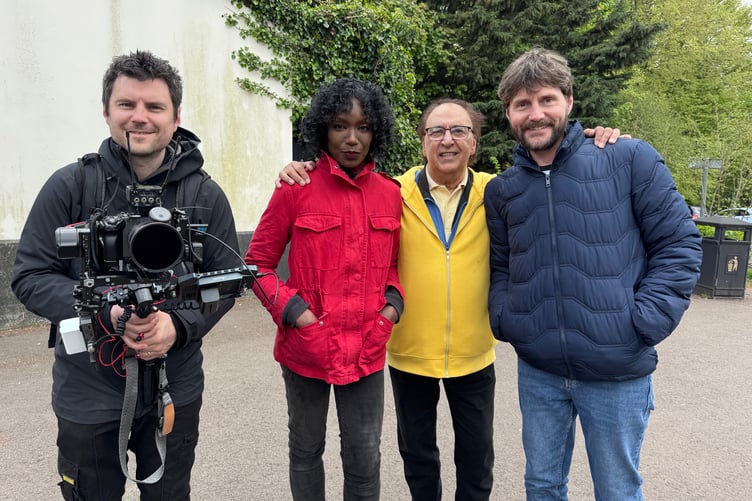
Tim explained, “Carwyn got in touch to ask if I’d walk them around the old areas of Abergavenny and tell them a little history about the town. I said, that’s fine, but you really need to speak from someone who was alive during that period and lived in those streets, and so I put them in touch with Bryn, who has always been a great ambassador for old Abergavenny, particularly Tudor Street.
“Of course, Bryn was more than happy to be involved with anything that puts his hometown on the map.”
Tim added, “Large parts of the town bear little resemblance to the way they once looked. For those of us born in the aftermath of Abergavenny’s great sea change, it’s difficult to visualise the winding streets, towering dwellings, cobbled pathways, and beaten up charm of an Abergavenny that has now vanished.
“Fortunately, we can still capture a little bit of that old-time magic through fading photographs and the scattered recollections of those who once lived in the streets that are no more.
“To that end, The Chronicle has supplied Vanished Wales with some great pictures by the late photographer Albert Lyons, who was integral in documenting the old streets of the town before they were lost to oblivion.
“So I’d like to think the episode will also be a tribute to that great lensman's visionary nature as well as to what once was.”
Comments
We've recently changed our login process. If you have an account for commenting, you will need to re-register on the login window.
This article has no comments yet. Be the first to leave a comment.