
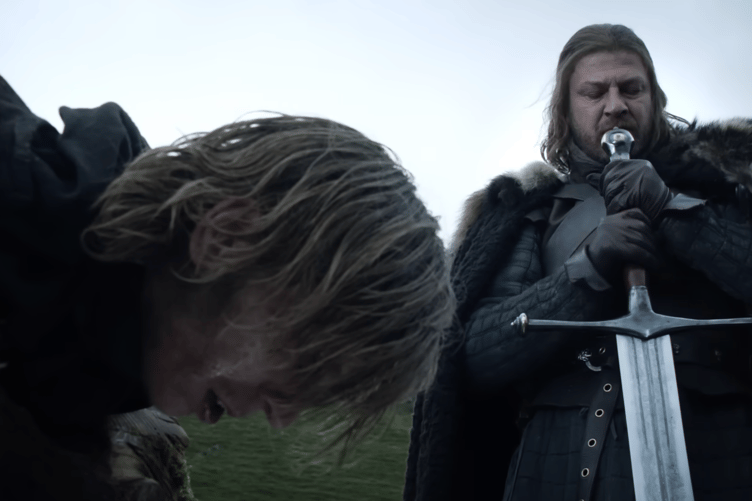
A GROWING body of historical commentary is drawing renewed attention to the real medieval conflict that inspired Game of Thrones — and to the Welsh Tudor king whose role in ending that war was left out of the global television phenomenon.
The Wars of the Roses, England’s first full-scale civil war, raged through the 15th century as two rival dynasties — the House of Lancaster and the House of York — fought for the English crown. Rooted in competing claims of descent from King Edward III, the conflict was marked by assassinations, shifting loyalties, dynastic betrayal, and brutal open warfare among England’s ruling elite.
These events did not remain confined to history books. They provided the primary inspiration for Game of Thrones, as openly acknowledged by its creator George R. R. Martin.
Martin has stated repeatedly that:
• The Wars of the Roses were a primary inspiration
• The conflict between House Stark and House Lannister mirrors York versus Lancaster
• English medieval dynastic politics formed the backbone of his fictional world
His most frequently cited explanation, paraphrased accurately, is clear:
“The Wars of the Roses were the inspiration for the struggle between the Starks and the Lannister’s — two families fighting over the throne.”




The parallels are unmistakable. House Lannister mirrors Lancaster: wealthy, southern, politically ruthless, and symbolically associated with red and gold. House Stark reflects York: a northern power base, a reputation for honour, and pale heraldic symbolism. Even the culture of dragons echoes older British myth — particularly the Welsh tradition of the Red Dragon (Y Ddraig Goch), representing the native Britons, triumphing over the White Dragon of Saxon legend.
While Game of Thrones dramatised the chaos and brutality of civil war, it omitted the historical resolution — one of the most remarkable political ascents in British history — achieved by a Welshman.
That man was Henry VII.
.jpeg?trim=86,0,149,0&width=752&height=501&crop=752:501)
Henry VII: The Welsh Tudor King Who Ended the War
Henry Tudor was born in 1457 at Pembroke Castle in West Wales. He spoke Welsh, identified with his Welsh heritage, and spent part of his youth under the protection of the powerful Herbert family — at Raglan Castle near the English border, only a few miles from the present-day home of the author behind this research.
The author now lives in a property of medieval origin once owned by the Herbert dynasty, creating a rare personal and geographic continuity with the Tudor story.
Henry’s rise was anything but inevitable.
His father, Edmund Tudor, came from modest Welsh noble stock — the Tudors of Penmynydd on Anglesey. His mother, Lady Margaret Beaufort, was a great-granddaughter of John of Gaunt of Lancaster, giving Henry a legitimate, if dangerous, claim to the English throne.
Margaret gave birth at just thirteen years old, nearly dying in the process, and was never able to conceive again. Edmund Tudor had already died of plague after being captured and imprisoned by Yorkist forces.
The child born into the Wars of the Roses was, at once:
• A Lancastrian heir
• A Tudor of Welsh royal descent
• A political threat to Yorkist power
To survive, Henry was sent into exile, spending years in Wales, Brittany, and France. To many in Wales, he was not merely a refugee but the embodiment of ancient prophecy — a descendant of Cadwaladr and Rhodri Mawr, destined to restore honour and unity.
The Return of the Red Dragon
In 1485, Henry returned not to England but to Wales, landing at Mill Bay, Milford Haven. From there he marched through the Welsh heartlands, gathering support from local levies, noble families, and allies who saw in him the return of a native prince. A contemporary Welsh poet recorded simply: “The Welsh rose for their own.”
At Bosworth Field, Henry defeated and killed Richard III — the last English king to die in battle — and claimed the crown as Henry VII.
Crucially, Henry did what no warrior king before him had achieved. By marrying Elizabeth of York, he united Lancaster and York, ending the civil war that had torn England apart.
The red and white roses were symbolically fused in the Tudor Rose — a political and cultural reconciliation absent from Game of Thrones’ fictional narrative.
Henry’s pride in his Welsh heritage was unmistakable. He named his firstborn son Arthur, invoking the great Welsh king of legend who had fought the Saxons before England became a country and signalling a dynasty that would unite Welsh spirit with English authority.
Under the Tudors, Welsh nobles rose to prominence, Welsh customs received renewed respect, and for the first time in centuries, Wales stood aligned with royal power rather than resisting it.
Henry VII was, in every meaningful sense, the first Welsh-speaking king to sit on the English throne since the early medieval rulers of Cymru (Wales)
The Welsh Legacy Beyond Britain
Henry VII’s reign brought stability to Wales and opened new horizons. Trade expanded through Bristol and the ports of South Wales. Exploration was encouraged.
Among those operating at the intersection of royal policy and maritime ambition was Richard ap Amerike, a Welsh-born Bristol merchant and royal customs officer whose name would later become associated with the earliest transatlantic ventures and who many believe gave his name to the new continent -AMERICA.
This Welsh-led stability and outward vision laid foundations that would echo far beyond Britain — into the New World.
The Ending History Gave Us
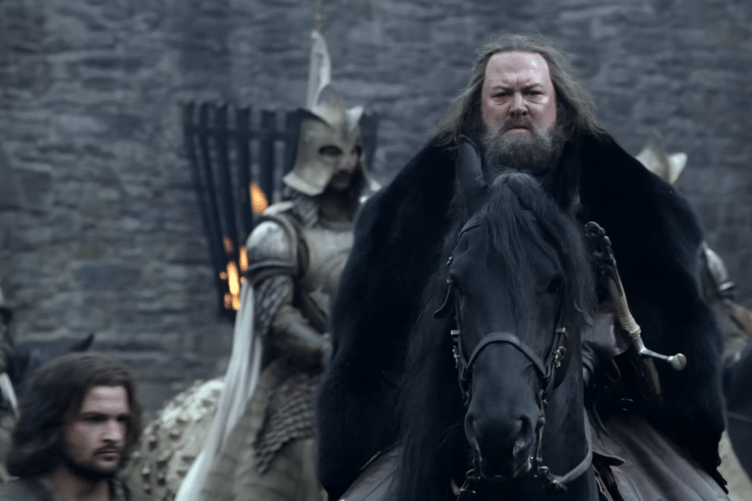
Game of Thrones captured the savagery of dynastic war with extraordinary power. But history offers something even more compelling: a Welsh-born king who survived exile, returned under the Red Dragon, united rival houses through marriage, and forged a new royal order from chaos.
It is a reminder that while fiction may dramatise the conflict, Wales provided the ending.
The Fighting Welsh by Andrew J Sutton was launched officially on 4 July 2026 in recognition of America’s 250th year of Independence and is now available on Amazon.
Comments
We've recently changed our login process. If you have an account for commenting, you will need to re-register on the login window.
This article has no comments yet. Be the first to leave a comment.